Cybersecurity for Connected Home: Top Routers 2026 U.S. Review
Advertisements
Securing your smart devices in 2026 requires a high-performance router with advanced cybersecurity features, crucial for protecting U.S. connected homes from evolving digital threats.
As our homes become increasingly interconnected, the importance of robust cybersecurity for the connected home cannot be overstated. In 2026, with an explosion of smart devices, from intelligent thermostats to security cameras, the router stands as the first line of defense against potential digital threats. This article delves into the critical role of advanced protection and reviews three top-rated routers specifically designed to safeguard U.S. users.
The evolving threat landscape for connected homes
The proliferation of smart home devices has undeniably brought convenience and efficiency into our daily lives. However, this convenience comes with an inherent cybersecurity risk. Every new device connected to your home network represents a potential entry point for malicious actors, making the router’s role in security more paramount than ever before.
Threats are constantly evolving, ranging from sophisticated phishing attempts targeting personal data to ransomware attacks that can lock down entire home networks. Unsecured smart devices can be exploited to create botnets, launch distributed denial-of-service (DDoS) attacks, or even grant unauthorized access to sensitive personal information. Understanding these risks is the first step toward building a truly resilient connected home.
Common vulnerabilities in smart home ecosystems
- Weak default passwords: Many smart devices come with easy-to-guess default credentials, often left unchanged by users.
- Outdated firmware: Manufacturers frequently release security patches, but users often neglect to update their device firmware.
- Lack of encryption: Some devices transmit data without proper encryption, making it vulnerable to interception.
- Insecure communication protocols: Older or poorly implemented protocols can create backdoors for attackers.
The interconnectedness means a vulnerability in one device can compromise the entire network. A robust router acts as a gatekeeper, inspecting traffic, blocking suspicious connections, and ensuring that only authorized and secure data flows in and out of your home. Without this central defense, individual device security measures might not be enough to withstand a determined attack.
In conclusion, the modern connected home faces a complex array of threats. Recognizing these vulnerabilities and understanding the critical need for a strong, intelligent router is essential for maintaining digital safety in 2026. Proactive security measures, starting with the right hardware, are no longer optional but a necessity for peace of mind.
Key cybersecurity features to look for in a 2026 router
Choosing a router in 2026 goes far beyond just raw speed and Wi-Fi coverage. For robust cybersecurity for the connected home, specific advanced features are non-negotiable. These features form the foundation of a secure network, protecting your data and devices from the myriad of online threats that exist today.
Modern routers designed for security integrate hardware and software solutions to provide comprehensive protection. These capabilities work in tandem to monitor network activity, block known threats, and manage access, ensuring your smart home ecosystem remains private and secure.
Integrated threat intelligence and AI-driven protection
Top-tier routers now leverage artificial intelligence and real-time threat intelligence feeds to identify and neutralize emerging threats. This means your router can detect unusual network behavior or attempts to access malicious websites before they can harm your devices.
- Intrusion Prevention Systems (IPS): Actively scan network traffic for signatures of known attacks and block them in real-time.
- Malware and virus protection: Some routers include built-in antivirus engines to scan downloads and prevent infections.
- Botnet detection: Identify and block communication with known botnet command-and-control servers.
Another crucial aspect is strong encryption protocols, such as WPA3, which offer superior protection over older standards. Additionally, features like VPN passthrough or even integrated VPN clients allow for encrypted communication, protecting your online privacy even further. Parental controls with content filtering and time limits are also increasingly sophisticated, adding another layer of security for family households.
Ultimately, a router equipped with these advanced cybersecurity features acts as an intelligent guardian for your connected home. It provides peace of mind by actively defending against threats, ensuring that your smart devices operate securely and your personal data remains protected from unauthorized access.
Reviewing Router 1: The SentinelGuard X-Pro 5000
The SentinelGuard X-Pro 5000 emerges as a formidable contender in the realm of cybersecurity for the connected home, particularly for U.S. users in 2026. This router is engineered with security as its core principle, offering a suite of features that go beyond standard network protection. Its design emphasizes both robust performance and an impenetrable defense against digital threats.
From its industrial-grade hardware encryption to its intuitive security dashboard, the X-Pro 5000 is built for users who prioritize peace of mind. It aims to simplify complex cybersecurity concepts, making advanced protection accessible even to those without extensive technical knowledge.
Performance and security integration
The X-Pro 5000 boasts impressive Wi-Fi 6E capabilities, ensuring high speeds and low latency across multiple devices. What truly sets it apart, however, is its dedicated security co-processor that handles threat detection and mitigation without impacting network performance. This means your streaming and gaming won’t stutter while the router is actively fending off cyberattacks.
- AI-powered threat detection: Utilizes machine learning to identify zero-day exploits and unusual network behavior.
- Multi-layered firewall: Combines Stateful Packet Inspection (SPI) with deep packet inspection for comprehensive protection.
- Secure IoT network segmentation: Automatically isolates smart home devices onto a separate network to prevent lateral movement of threats.
- One-year subscription to SentinelGuard Protect: Includes VPN, parental controls, and advanced malware protection.
User feedback consistently highlights the X-Pro 5000’s ease of setup and the clarity of its security alerts. The companion mobile app provides real-time insights into network health, blocked threats, and device activity, empowering users to stay informed and in control. While its price point is on the higher end, the investment is justified by its unparalleled security features and high-performance capabilities, making it a top choice for discerning U.S. consumers.
In essence, the SentinelGuard X-Pro 5000 is a powerhouse for connected home cybersecurity, offering a blend of speed, reliability, and cutting-edge protection that makes it a standout option for 2026.
Reviewing Router 2: The NetShield Guardian 7
For U.S. users seeking a balance between advanced security and user-friendliness, the NetShield Guardian 7 presents a compelling option for cybersecurity for the connected home in 2026. This router is designed with the average consumer in mind, offering powerful protection without an overly complicated setup or management process. It prioritizes intuitive controls alongside robust defense mechanisms.
The Guardian 7 focuses on proactive threat prevention, aiming to stop malicious activity before it even reaches your devices. Its integrated security suite is continuously updated, reflecting NetShield’s commitment to staying ahead of emerging cyber threats.
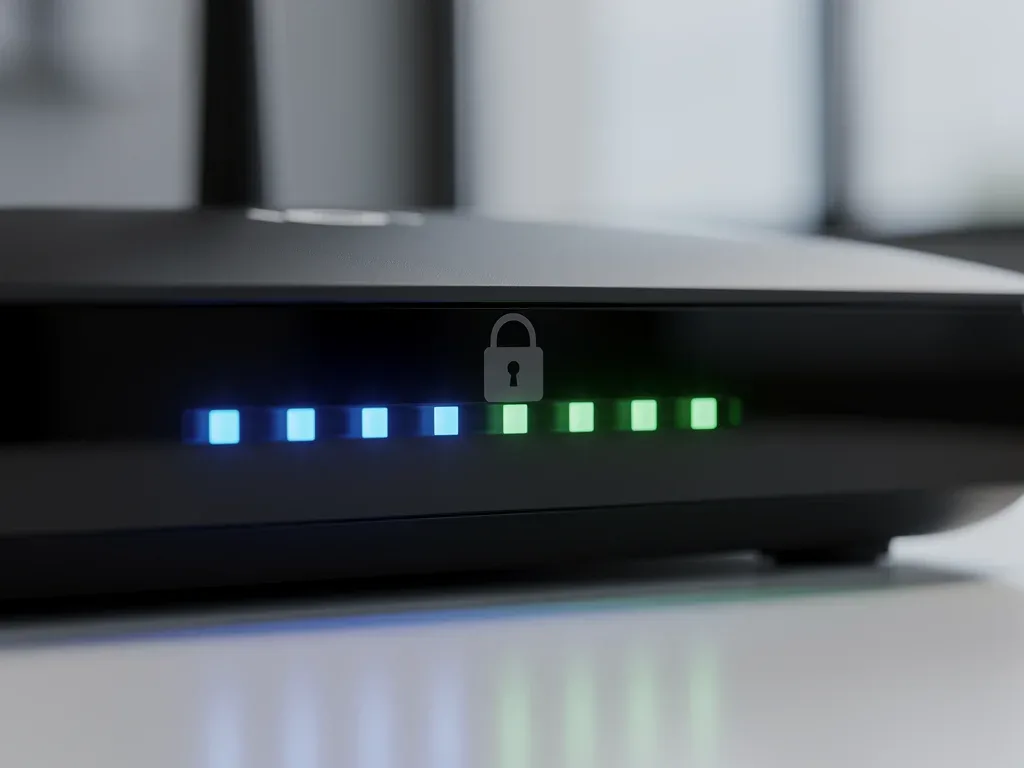
Simplified security with powerful results
Equipped with Wi-Fi 6 technology, the Guardian 7 delivers reliable speeds suitable for most modern households. Its standout feature is the NetShield Secure OS, a proprietary operating system that integrates security deeply into the router’s architecture. This ensures that all network traffic is constantly monitored and filtered for suspicious content.
- Automatic firmware updates: Ensures the router always runs the latest security patches without manual intervention.
- Advanced parental controls: Features content filtering, time scheduling, and usage reports for comprehensive family protection.
- Guest network isolation: Easily create a separate, secure network for guests, keeping your main network private.
- Denial-of-Service (DoS) attack prevention: Protects your network from being overwhelmed by malicious traffic.
The NetShield Guardian 7 also includes a lifetime subscription to its basic security services, which is a significant value proposition. While it may not offer the extreme customization or raw processing power of some higher-end models, its streamlined approach to security makes it an excellent choice for families and users who prefer a ‘set it and forget it’ solution. The mobile app is exceptionally well-designed, providing clear insights and control over security settings.
In summary, the NetShield Guardian 7 offers an accessible yet powerful solution for connected home cybersecurity. Its blend of automated protection and user-friendly features makes it an ideal router for U.S. households prioritizing simplicity and reliable defense in 2026.
Reviewing Router 3: The OmniSecure Hub 8
The OmniSecure Hub 8 is positioned as a premium choice for cybersecurity for the connected home, catering to U.S. users with extensive smart home ecosystems and a need for enterprise-grade protection. This router goes beyond conventional home network security, offering features typically found in business environments, scaled down for residential use. Its robust hardware and sophisticated software suite make it a formidable guardian for any digital household.
Designed for maximum throughput and resilience, the OmniSecure Hub 8 ensures that even the most demanding smart home setups remain fast, responsive, and, most importantly, secure. It represents the pinnacle of home network protection for the tech-savvy consumer.
Enterprise-grade security for the home
Featuring tri-band Wi-Fi 6E, the OmniSecure Hub 8 is built to handle dozens of connected devices simultaneously without a drop in performance. Its security architecture is what truly distinguishes it, incorporating a dedicated security processor and multiple layers of defense to create a virtually impenetrable barrier against cyber threats. The router proactively scans for vulnerabilities and actively blocks suspicious activities, offering real-time protection.
- Deep Packet Inspection (DPI) with AI: Analyzes traffic patterns to detect and block sophisticated intrusions and malware.
- VPN server and client functionality: Allows for secure remote access to your home network and encrypted internet browsing.
- Multi-factor authentication (MFA) for network access: Adds an extra layer of security for managing router settings.
- Advanced traffic shaping and QoS: Prioritizes critical devices and services while maintaining security oversight.
The OmniSecure Hub 8 also offers comprehensive network analytics, allowing users to delve deep into their network’s performance and security posture. While its advanced features might require a steeper learning curve for some, the benefits of such granular control and unparalleled protection are significant. It comes with a generous three-year warranty and a premium support package, underscoring its high-end positioning. For those who demand the absolute best in security and performance for their connected home, the OmniSecure Hub 8 stands as a leading option in 2026.
In conclusion, the OmniSecure Hub 8 delivers top-tier cybersecurity and performance, making it an excellent investment for U.S. users with complex smart home needs who prioritize ultimate digital defense.
Making the right choice: factors for U.S. consumers in 2026
Selecting the ideal router for cybersecurity for the connected home in 2026 involves more than just picking the fastest or most feature-rich option. U.S. consumers must consider several factors tailored to their specific needs, budget, and technical comfort level. The right choice will seamlessly integrate into your lifestyle while providing robust protection.
It’s crucial to assess your current smart home ecosystem, anticipated future growth, and the level of security management you’re comfortable with. A router that is overly complex for your needs might lead to neglected security features, while an underpowered one will leave you vulnerable.

Evaluating your specific security needs
Consider the number and type of smart devices you own. A household with only a few basic smart plugs will have different security requirements than one with multiple security cameras, smart locks, and health monitors. Routers with IoT segmentation are particularly beneficial for homes with many smart devices, as they isolate potential threats.
- Budget considerations: High-end routers offer more features but come at a premium. Balance cost with the level of protection you need.
- Technical proficiency: Some routers offer advanced customization, while others prioritize ease of use and automated security.
- Future-proofing: Opt for Wi-Fi 6 or Wi-Fi 6E to ensure compatibility with future devices and faster speeds.
- Subscription services: Many advanced security features are offered as part of a subscription. Factor this ongoing cost into your decision.
Another important aspect is the manufacturer’s commitment to security updates and customer support. A router is only as good as its ongoing maintenance. Look for brands that have a solid track record of releasing timely firmware updates and providing responsive technical assistance. Reading user reviews and expert analyses can also provide invaluable insights into real-world performance and reliability.
Ultimately, the best router for your connected home cybersecurity in 2026 is one that provides a strong defense against threats, fits your budget, and is manageable for your technical skill set. Careful consideration of these factors will lead to an informed decision and a more secure digital living space.
Future trends in connected home cybersecurity for U.S. users
The landscape of cybersecurity for the connected home is constantly evolving, with new threats and protective measures emerging regularly. For U.S. users in 2026, understanding these future trends is crucial for staying ahead of potential risks and ensuring long-term digital safety. The convergence of AI, quantum computing, and increasing device intelligence will shape the next generation of home network security.
We can anticipate routers becoming even more intelligent and autonomous in their defense capabilities, moving towards predictive threat detection rather than just reactive blocking. This proactive stance will be vital as cyberattacks grow in sophistication and frequency.
Anticipated advancements in router security
One significant trend is the deeper integration of AI and machine learning directly into router hardware. This will enable routers to learn the unique behavioral patterns of your home network, allowing them to instantly flag and neutralize any deviations that could indicate a breach. This personalized security profile will make it harder for generic attacks to succeed.
- Decentralized security models: Moving towards blockchain-based security for IoT devices, offering enhanced integrity and tamper-proofing.
- Quantum-resistant encryption: As quantum computing advances, routers will need to adopt new encryption standards to protect against future decryption capabilities.
- Enhanced privacy controls: More granular control over data sharing from smart devices, giving users greater agency over their personal information.
- Self-healing networks: Routers that can automatically identify and remediate vulnerabilities without user intervention.
Furthermore, expect to see greater emphasis on unified security platforms that manage not just the router, but all connected devices in a holistic manner. This will involve cloud-based security services that provide real-time monitoring and threat intelligence across multiple devices, offering a single pane of glass for home security management. The goal is to create an ecosystem where every device contributes to the overall security posture, rather than acting as an isolated vulnerability.
In conclusion, the future of connected home cybersecurity for U.S. users in 2026 and beyond points towards more intelligent, autonomous, and integrated security solutions. Staying informed about these advancements will be key to maintaining a safe and resilient digital home environment.
| Key Aspect | Brief Description |
|---|---|
| Evolving Threats | Smart devices increase vulnerability; robust routers are essential against phishing, ransomware, and botnets. |
| Key Router Features | Look for AI-driven threat intelligence, IPS, WPA3 encryption, and IoT network segmentation. |
| Top Router Examples | SentinelGuard X-Pro 5000 (high-end), NetShield Guardian 7 (user-friendly), OmniSecure Hub 8 (enterprise-grade). |
| Future Trends | Anticipate AI-integrated routers, quantum-resistant encryption, and unified security platforms. |
Frequently Asked Questions about Connected Home Cybersecurity
Why is router security so critical for my connected home in 2026?▼Your router acts as the primary gateway between your home network and the internet. With numerous smart devices, a secure router prevents unauthorized access, malware, and data breaches, safeguarding your entire digital ecosystem from evolving cyber threats.
What specific features should I prioritize in a new security-focused router?▼Prioritize AI-driven threat detection, Intrusion Prevention Systems (IPS), WPA3 encryption, and IoT network segmentation. These features offer real-time protection, secure data transmission, and isolate vulnerable smart devices from your main network.