Portable Power Stations: Charging & Capacity for US Adventures 2026
Advertisements
Choosing the right portable power station for U.S. outdoor adventures in 2026 involves balancing charging speed, capacity, and durability, ensuring your devices remain powered during any excursion.
As outdoor enthusiasts across the United States increasingly seek to combine the thrill of nature with the convenience of modern technology, the demand for reliable portable power solutions has skyrocketed. In 2026, understanding the nuances of portable power stations is more critical than ever. We delve into a comprehensive comparison of four leading models, focusing on their charging speed and capacity, to help you prepare for your next U.S. outdoor adventure.
Understanding Portable Power Station Essentials
Before diving into specific models, it’s crucial to grasp the fundamental concepts that define a portable power station’s utility. These devices are essentially large, rechargeable batteries equipped with various output ports, designed to power or charge electronics and small appliances in off-grid settings. Their evolution has been rapid, with 2026 models offering unprecedented efficiency and features.
The core appeal lies in their versatility. From keeping your smartphone charged to running a mini-fridge or even powering medical equipment, a good portable power station can be a game-changer for camping, RV trips, emergency preparedness, or even backyard gatherings. However, not all power stations are created equal, and understanding their specifications is key to making an informed choice.
Key Specifications to Consider
- Capacity (Wh/mAh): This indicates how much energy the power station can store. Watt-hours (Wh) are generally a more accurate measure for larger devices, while milliamp-hours (mAh) are often used for smaller gadgets like phones. A higher Wh means more power for longer durations.
- Output Ports: Look for a variety of AC outlets, USB-A, USB-C (especially Power Delivery for fast charging), and sometimes 12V DC car ports. The number and type of ports determine what devices you can power simultaneously.
- Charging Speed (Input): How quickly can the power station itself be recharged? This can vary significantly, from a few hours with AC wall chargers to much longer durations with solar panels or car chargers.
- Output Power (W): This refers to the maximum wattage the power station can deliver to connected devices. Ensure it meets the requirements of your most power-hungry gadgets.
Ultimately, a portable power station is an investment in convenience and preparedness. Selecting the right one involves a careful assessment of your power needs, the types of activities you engage in, and the specific features that will enhance your outdoor experience. The market in 2026 offers sophisticated options, making informed choices paramount.
Model 1: The EcoFlow Delta Pro – Unmatched Power for Extended Trips
For those embarking on lengthy U.S. outdoor adventures or requiring significant power, the EcoFlow Delta Pro stands as a formidable contender in 2026. This powerhouse is designed for serious off-grid living, offering an impressive blend of capacity and rapid charging capabilities that few can match. It redefines what’s possible for portable energy solutions.
Its robust construction and comprehensive feature set make it a favorite among RV owners, remote workers, and anyone needing a reliable energy source far from the grid. The Delta Pro isn’t just about raw power; it’s about smart power management and scalability, allowing users to tailor their energy setup to their exact needs.
Capacity and Output
The Delta Pro boasts an astounding base capacity of 3600Wh, expandable up to 25kWh with extra batteries. This means it can power almost any appliance, from a full-sized refrigerator to power tools. Its AC output can reach 3600W, with a surge capacity of 7200W, accommodating high-demand devices with ease. The array of ports includes multiple AC outlets, USB-A, 100W USB-C, and DC ports, ensuring compatibility with a vast range of electronics.
Charging Speed and Efficiency
One of the Delta Pro’s most remarkable features is its charging speed. It can be fully recharged from 0-80% in just one hour via AC wall outlet, a feat almost unheard of for a unit of its size. This is largely due to EcoFlow’s X-Stream technology. Solar charging is equally impressive, supporting up to 1600W of solar input, allowing for a full recharge in 2.8-5.6 hours with optimal sunlight. This dual-charging capability provides immense flexibility in diverse outdoor settings.
- AC Charging: 0-80% in 1 hour (X-Stream technology)
- Solar Charging: Up to 1600W input, 2.8-5.6 hours for full charge
- Car Charging: 12V/24V support
- EV Charging: Unique capability for fast charging at EV stations
The EcoFlow Delta Pro is a testament to advanced portable power technology. Its high capacity and rapid charging options make it an ideal choice for those who refuse to compromise on power, even in the most remote U.S. outdoor locations. While its size and cost are considerable, the peace of mind and operational freedom it provides are unparalleled.
Model 2: Jackery Explorer 1000 Pro – Balanced Performance for Weekend Warriors
For many U.S. outdoor enthusiasts, the sweet spot for a portable power station lies in a balance of capacity, portability, and charging speed without the overkill of a behemoth unit. The Jackery Explorer 1000 Pro, updated for 2026, strikes this balance beautifully, making it an excellent choice for weekend camping trips, tailgating, and short-term emergencies.
Jackery has built a reputation for user-friendly, reliable devices, and the Explorer 1000 Pro continues this legacy. It’s designed for ease of use, with intuitive controls and a sturdy build that can withstand the rigors of outdoor life. Its compact design doesn’t sacrifice performance, offering a robust power solution in a manageable package.
Capacity and Output
The Explorer 1000 Pro offers a respectable 1002Wh capacity, sufficient to power essential devices for several days. It features three pure sine wave AC outlets providing a continuous 1000W output (2000W surge), two USB-C PD 100W ports, and two USB-A ports. This configuration allows for simultaneous charging of multiple devices, from laptops and cameras to drones and small portable coolers.
Its capacity is ideal for powering a projector for an outdoor movie night, keeping camera batteries topped up during a photography expedition, or running a CPAP machine overnight. The 100W USB-C PD ports are particularly valuable for rapidly charging modern laptops and tablets, reducing downtime significantly.
Charging Speed and Portability
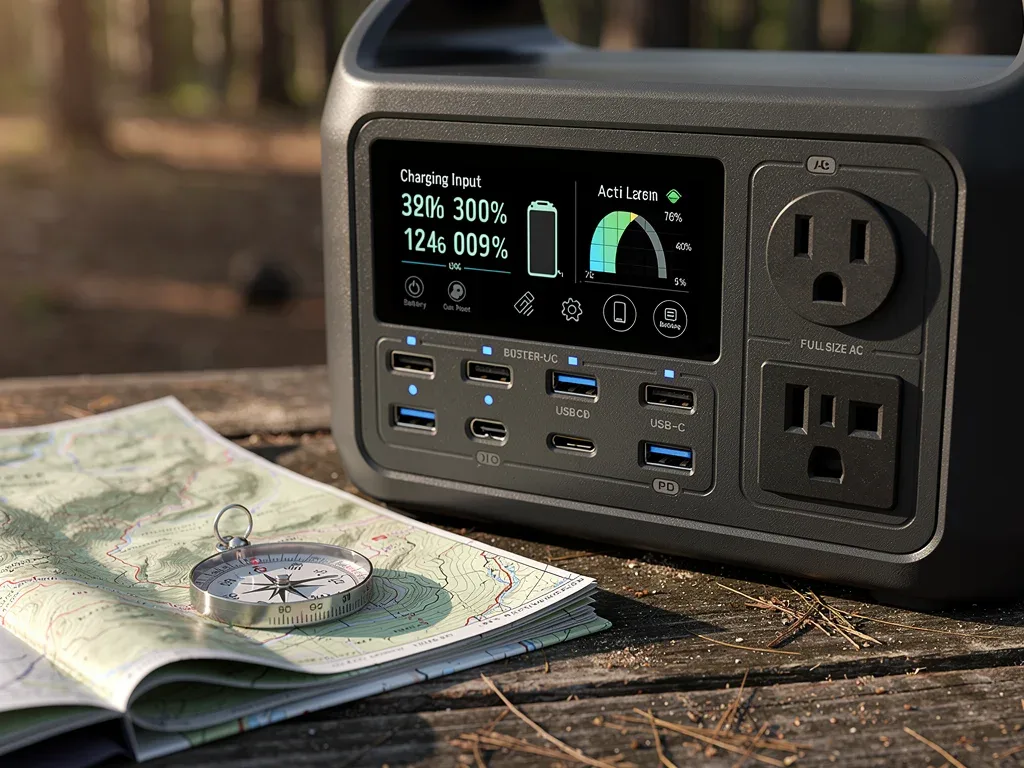
One of the Jackery Explorer 1000 Pro’s strong suits is its relatively fast charging. It can be fully recharged via an AC wall outlet in about 1.8 hours. When paired with Jackery’s SolarSaga 200W solar panels, it can achieve a full solar recharge in approximately 1.8 hours (with four panels) or 7.5 hours (with one panel) under optimal conditions. This makes it highly efficient for solar-powered adventures.
- AC Charging: Approximately 1.8 hours for a full charge
- Solar Charging: As fast as 1.8 hours with multiple SolarSaga 200W panels
- Car Charging: 12V adapter for convenient on-the-go recharging
The Explorer 1000 Pro weighs around 25 lbs, making it manageable to carry for short distances. Its foldable handle and durable casing contribute to its overall portability and resilience. This model offers a fantastic balance for those who need reliable power without the bulk or expense of the largest units, proving that balanced performance is often the most practical choice for typical U.S. outdoor enthusiasts in 2026.
Model 3: Goal Zero Yeti 700 – Compact and Reliable for Light Backpacking
For backpackers, hikers, and those who prioritize minimal weight and footprint, the Goal Zero Yeti 700 (a hypothetical 2026 iteration building on their established line) provides a compelling solution. This model is designed for efficiency and portability, offering enough power for essential devices without becoming a burden on the trail. It caters to the minimalist outdoor adventurer.
Goal Zero has long been synonymous with rugged, dependable solar-ready power solutions. The Yeti 700 embodies this philosophy, providing a compact yet capable unit perfect for keeping communication devices, headlamps, and small cameras powered during multi-day excursions. Its streamlined design and user-friendly interface make it an accessible option for all skill levels.
Capacity and Output
The Yeti 700 features a modest yet sufficient 676Wh capacity, ideal for charging smartphones multiple times, powering a tablet, or running small LED lights for extended periods. It offers a 500W pure sine wave AC output (1000W surge), two 60W USB-C PD ports, and two USB-A ports. While not designed for heavy-duty appliances, it perfectly serves the needs of light-to-medium power users.
Its output is carefully calibrated to support a range of personal electronics, ensuring that you can stay connected and capture memories without carrying excessive weight. The 60W USB-C PD ports are particularly beneficial for modern devices that support fast charging protocols, allowing for quicker turnaround on essential gadgets.
Charging Speed and Durability
The Goal Zero Yeti 700 can be recharged from a wall outlet in approximately 3-4 hours. When paired with Goal Zero’s Nomad 100 solar panel, it can achieve a full solar recharge in about 7-14 hours, depending on sunlight conditions. This slower solar charging is a trade-off for its smaller size and intended use, where consistent, long-term power isn’t the primary goal but rather intermittent top-ups.
- AC Charging: Around 3-4 hours for a full charge
- Solar Charging: 7-14 hours with a Nomad 100W panel
- Car Charging: Convenient 12V car charger input
Weighing in at roughly 15 lbs, the Yeti 700 is significantly lighter than its larger counterparts, making it more practical for carrying in a backpack. Its durable casing and integrated carrying handle ensure it can withstand the bumps and scrapes of outdoor travel. For those who prioritize agility and essential power, the Goal Zero Yeti 700 is an excellent, reliable companion for U.S. outdoor adventures in 2026.
Model 4: BLUETTI AC200MAX – Versatility and Expandability for RVers
The BLUETTI AC200MAX, a prominent player in the 2026 portable power station market, is engineered for users who demand versatility and the option to grow their power system. It caters particularly well to RV enthusiasts, van lifers, and those who need a semi-permanent, yet portable, power solution that can adapt to changing needs. Its modular design is a significant advantage.
BLUETTI has consistently pushed the boundaries of battery technology, and the AC200MAX exemplifies this with its robust build, comprehensive port selection, and impressive expandability. It’s a system designed to evolve with your power demands, offering both immediate utility and future-proofing in one package.
Capacity and Output
The AC200MAX comes with a substantial 2048Wh LiFePO4 battery, known for its longevity and safety. This capacity can be expanded further by connecting up to two BLUETTI B230 (2048Wh each) or B300 (3072Wh each) battery modules, potentially reaching an astounding 8192Wh. Its 2200W pure sine wave AC inverter (4800W surge) can handle most household appliances, making it suitable for extended off-grid living.
It features a remarkable 15 output ports, including four AC outlets, a 30A NEMA TT-30 outlet (perfect for RVs), two 100W USB-C PD ports, four USB-A ports, a 12V/30A Super DC outlet, and two 12V/3A DC outlets. This extensive array ensures that virtually every device you own can be powered simultaneously and efficiently.
Charging Speed and Modular Design
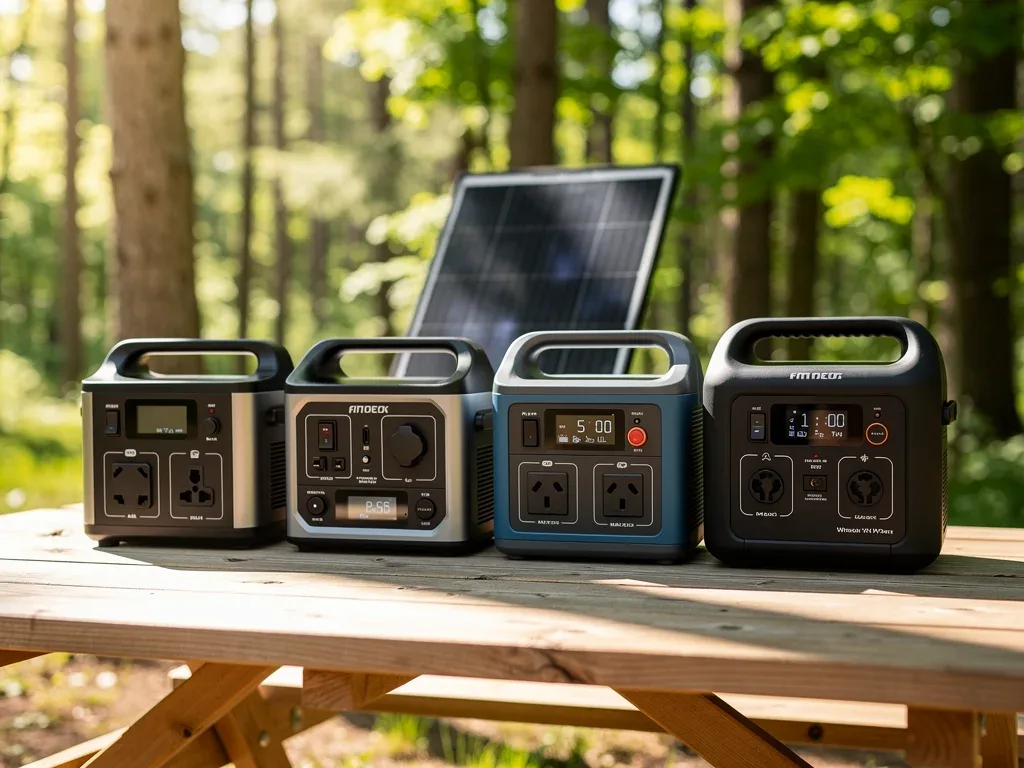
The AC200MAX offers flexible and fast charging options. It can be recharged via AC input in about 5.5-6 hours. However, its true charging prowess shines with dual input. Combining AC and solar input (up to 900W solar + 500W AC) allows for a rapid 1400W total input, fully recharging the unit in approximately 2 hours. This hybrid charging capability is a significant advantage for maximizing uptime in varied environments.
- AC Charging: 5.5-6 hours for a full charge
- Solar Charging: Up to 900W input, ~3-4 hours with optimal conditions
- Dual Charging: AC + Solar (1400W total) for a 2-hour rapid recharge
- Car Charging: 12V/24V support
While heavier than smaller units, its robust build quality and expandability make it an excellent long-term investment. The BLUETTI AC200MAX represents the pinnacle of versatile and expandable portable power, making it an indispensable asset for RVers and those seeking a scalable energy solution for their U.S. outdoor adventures in 2026.
Comparing Charging Speeds and Capacity: A Deeper Dive
When selecting a portable power station, the interplay between charging speed and capacity is paramount. A high capacity unit is only truly effective if it can be recharged efficiently, especially in time-sensitive outdoor scenarios. Conversely, a fast-charging unit with insufficient capacity will leave you wanting more power.
The models reviewed – EcoFlow Delta Pro, Jackery Explorer 1000 Pro, Goal Zero Yeti 700, and BLUETTI AC200MAX – each offer distinct profiles in this regard, catering to different user needs and adventure types. Understanding these differences helps in aligning the product with your specific requirements for U.S. outdoor adventures in 2026.
Analyzing Performance Across Models
The EcoFlow Delta Pro leads in both raw capacity (3600Wh expandable) and AC charging speed (0-80% in 1 hour). This makes it ideal for users who need maximum power and minimal downtime, such as those running sophisticated equipment or living off-grid for extended periods. Its solar input is also top-tier, allowing for quick replenishment even in remote locations.
The Jackery Explorer 1000 Pro offers a balanced 1002Wh capacity with a respectable 1.8-hour AC recharge time. Its solar charging, especially with multiple panels, is notably efficient for its size. This balance makes it perfect for weekend trips where moderate power needs are combined with the desire for quick turnarounds between uses.
- EcoFlow Delta Pro: Highest capacity, fastest AC charge, excellent solar.
- Jackery Explorer 1000 Pro: Good capacity, fast AC and solar charging for its size.
- Goal Zero Yeti 700: Lowest capacity, slower charging, but highly portable.
- BLUETTI AC200MAX: High expandable capacity, versatile dual charging for efficiency.
The Goal Zero Yeti 700, with its 676Wh capacity and 3-4 hour AC charge time, sacrifices speed and ultimate capacity for superior portability. It’s designed for users whose primary concern is weight and space, and who have lighter power demands. Solar charging is slower but still effective for maintaining essential devices over several days.
Finally, the BLUETTI AC200MAX provides a strong 2048Wh base capacity with the unique advantage of significant expandability. Its dual-charging capability (AC + Solar) achieving a 2-hour recharge with 1400W input is a standout feature, offering impressive flexibility for RVers or those with evolving power needs.
In conclusion, the best choice depends entirely on your specific adventure profile. Are you a minimalist backpacker, a weekend camper, or an RV full-timer? Each portable power station discussed here offers a tailored solution to keep you powered up for your U.S. outdoor adventures in 2026.
Future Trends and Considerations for 2026 and Beyond
The landscape of portable power stations is constantly evolving, with innovations rapidly changing what’s possible for outdoor enthusiasts. Looking ahead to 2026 and beyond, several key trends are shaping the future of these essential devices, promising even more efficient, sustainable, and integrated power solutions for U.S. outdoor adventures.
Manufacturers are not just focusing on raw power; they are also integrating smarter technologies, enhancing user experience, and addressing environmental concerns. This holistic approach ensures that portable power stations remain at the forefront of outdoor tech, adapting to the growing demands of a connected world, even in the wilderness.
Emerging Technologies and Sustainability
One significant trend is the continued improvement in battery chemistry. While LiFePO4 (Lithium Iron Phosphate) is already prevalent for its safety and longevity, research into solid-state batteries and other advanced chemistries promises even greater energy density, faster charging, and enhanced safety. This will lead to lighter, more compact units with even higher capacities.
Integration of smart features is also on the rise. Expect more sophisticated apps for remote monitoring and control, predictive analytics for power consumption, and seamless integration with smart home ecosystems. Furthermore, the emphasis on sustainability will grow, with manufacturers focusing on recyclable materials, longer product lifespans, and more efficient solar charging solutions.
- Advanced Battery Chemistry: Lighter, higher capacity, safer batteries.
- Smarter Integration: Enhanced apps, remote control, predictive power management.
- Sustainable Design: Focus on recyclability and extended product lifespans.
- Bi-directional Charging: Power stations acting as home backup and vehicle-to-grid (V2G) solutions.
Another area of rapid development is the efficiency of solar panels. Flexible, lightweight, and more efficient solar panels will become standard, making solar recharging more practical and less cumbersome for all types of outdoor activities. Expect to see power stations with integrated, deployable solar arrays that optimize energy harvesting.
The future of portable power stations in the U.S. for outdoor adventures will likely involve devices that are not just power banks but intelligent energy hubs. These hubs will offer bidirectional charging, advanced grid integration, and even serve as components in a larger, decentralized energy network. The goal is to provide seamless, reliable power, no matter how far off the beaten path your adventures take you.
| Key Feature | Description |
|---|---|
| EcoFlow Delta Pro | High capacity (3600Wh), fastest AC charging (0-80% in 1 hr), ideal for extended off-grid use. |
| Jackery Explorer 1000 Pro | Balanced 1002Wh capacity, fast 1.8-hour AC recharge, excellent for weekend camping trips. |
| Goal Zero Yeti 700 | Compact 676Wh, highly portable, suitable for light backpacking and essential device charging. |
| BLUETTI AC200MAX | Expandable 2048Wh, versatile 15 ports, rapid dual (AC+Solar) charging, perfect for RVs. |
Frequently Asked Questions About Portable Power Stations
What is the most important factor when choosing a portable power station?▼The most crucial factor is balancing capacity (Wh) with your specific power needs. Consider what devices you’ll charge and for how long. For light use, a smaller capacity is fine; for extended trips or high-power appliances, a larger capacity is essential to avoid running out of power prematurely.
How does charging speed affect my outdoor adventure?▼Fast charging speed minimizes downtime, allowing you to quickly replenish the power station from AC, solar, or car. This is vital for multi-day trips where charging opportunities might be limited or intermittent, ensuring your essential gear is always ready for use.
Can portable power stations be charged by solar panels?▼Yes, most modern portable power stations are designed to be charged by solar panels. The efficiency depends on the power station’s input capabilities and the wattage of the solar panels. This eco-friendly option is ideal for remote locations and extended off-grid stays.
What is the difference between Watt-hours (Wh) and Watts (W)?▼Watt-hours (Wh) measure the total energy capacity a power station can store, indicating how long it can power devices. Watts (W) refer to the rate of power delivery or consumption at any given moment, representing how much power a device needs or how much the station can output.
Are portable power stations safe to use in all weather conditions?▼While many portable power stations are built ruggedly, most are not fully waterproof. It’s crucial to check the IP rating for water and dust resistance. Always protect your power station from direct rain, extreme temperatures, and excessive humidity to ensure safety and longevity during outdoor use.
Conclusion
The landscape of portable power stations for U.S. outdoor adventures in 2026 offers an impressive array of options, each tailored to specific needs and preferences. From the immense capacity and lightning-fast charging of the EcoFlow Delta Pro, perfect for extensive off-grid living, to the balanced performance of the Jackery Explorer 1000 Pro for weekend warriors, and the ultralight portability of the Goal Zero Yeti 700 for backpackers, there’s a solution for every type of adventurer. The BLUETTI AC200MAX further expands the possibilities with its modular design and versatile charging, ideal for RVers seeking scalable power. Choosing the right unit involves a careful consideration of your power demands, intended use, and the importance of factors like charging speed, capacity, and portability. As technology continues to advance, future models promise even greater efficiency, sustainability, and smart integration, ensuring that staying powered up in the great outdoors becomes increasingly seamless and reliable.