2026 U.S. Economic Outlook: AI, Jobs, and Future-Proofing
Advertisements
Understanding the 2026 U.S. Economic Outlook is essential for anyone navigating today's rapidly shifting labor market. As artificial intelligence transitions from hype to core infrastructure, workplace automation is actively reshaping job roles across every major sector.
While intelligent automation threatens to displace millions of traditional positions, it is simultaneously creating entirely new career categories. Professionals who adapt to these technological shifts will find unprecedented opportunities in an increasingly high-tech economy.
Building an adaptable skill set is no longer optional—it is the ultimate strategy for long-term career resilience. Here is an insider breakdown of how automation is transforming the workforce and how you can future-proof your income.
The AI Revolution and its Economic Imperative
The U.S. economy stands at the precipice of a profound transformation, driven by the rapid advancement and adoption of AI-driven automation. This technological wave is set to redefine productivity, operational efficiency, and the very structure of the labor market.
Projections indicate that by 2028, approximately 15% of existing jobs in the U.S. could be significantly impacted, either through automation or complete displacement. This figure, though substantial, also underscores the dynamic nature of economic evolution.
However, this is not solely a narrative of job loss; it is equally a story of creation, with new roles and industries emerging. Navigating this duality is paramount for individuals and policymakers alike to ensure a smooth transition and foster inclusive growth.
Understanding Job Displacement: Sectors at Risk
Certain sectors are inherently more susceptible to the immediate effects of AI-driven automation due to the repetitive or rule-based nature of their tasks. Manufacturing, administrative support, and transportation are often cited as prime candidates for significant overhaul.
Within these sectors, roles involving data entry, assembly line operations, and routine customer service are already seeing increased automation. This trend is expected to accelerate, pushing companies to re-evaluate their workforce needs and operational models.
According to a recent report by the National Bureau of Economic Research, up to 3.5 million jobs in manufacturing alone could be directly affected by AI and robotics by 2028. This highlights the urgent need for strategic planning and workforce development initiatives.
Administrative and Clerical Roles
Administrative and clerical functions, traditionally a large segment of the workforce, face substantial transformation. AI is increasingly capable of handling tasks such as scheduling, data management, and basic communication, leading to a reduction in demand for manual execution.
Companies are investing heavily in AI-powered tools that streamline office operations, from automated email responses to sophisticated document processing. This shift necessitates a re-evaluation of skill sets required for administrative support, emphasizing digital literacy and analytical capabilities.
Automated data entry and processing
AI-powered customer service chatbots
Robotic process automation (RPA) in finance
Transportation and Logistics
The transportation and logistics industries are also ripe for AI-driven disruption, particularly with the advent of autonomous vehicles and advanced route optimization algorithms. Trucking, delivery services, and warehouse operations are all undergoing significant changes.
While fully autonomous systems are still developing, semi-autonomous technologies are already enhancing efficiency and reducing the need for human intervention in certain capacities. This evolution demands new skills in monitoring, maintenance, and complex system management.
Autonomous long-haul trucking
Drone and robot delivery services
Automated warehouse management systems
Emerging Opportunities: The Rise of New Professions
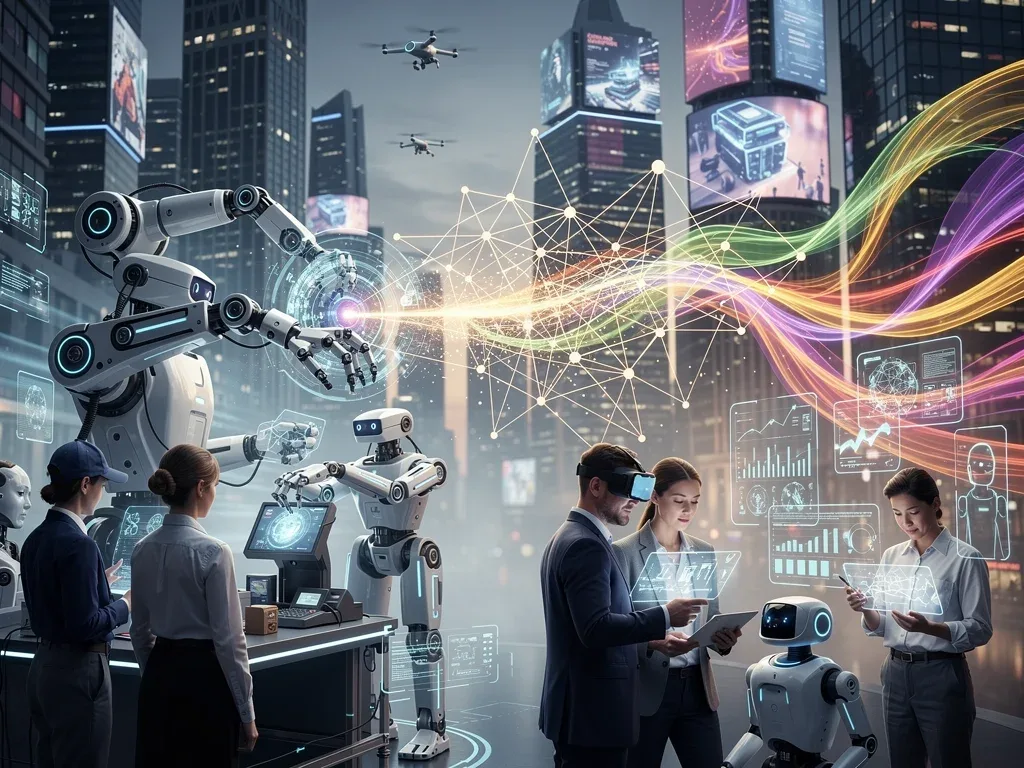
While AI-driven automation will displace jobs, it simultaneously acts as a powerful engine for the creation of entirely new roles and industries. This phenomenon, often termed 'job creation through innovation,' requires a forward-thinking approach to education and skill development.
The demand for professionals in AI development, data science, cybersecurity, and advanced robotics is already surging. These roles are critical for designing, deploying, and maintaining the very systems driving this economic transformation.
Furthermore, AI's integration frees human capital from repetitive tasks, allowing for a greater focus on creativity, critical thinking, complex problem-solving, and interpersonal skills. These uniquely human attributes will become increasingly valuable in the future workforce.
AI Development and Data Science
The core of the AI revolution lies in its development and the data that fuels it. This creates immense opportunities for AI engineers, machine learning specialists, data scientists, and ethical AI researchers. These professionals are at the forefront of innovation.
Their work involves designing algorithms, building intelligent systems, and interpreting vast datasets to extract actionable insights. The demand for these highly specialized skills is expected to outpace supply for the foreseeable future, driving competitive salaries and career growth.
Machine learning engineering
Data analytics and interpretation
Ethical AI framework development
Human-AI Collaboration Specialists
As AI becomes more ubiquitous, the need for individuals who can effectively bridge the gap between human and artificial intelligence will grow. Human-AI collaboration specialists will design interfaces, optimize workflows, and train employees to work alongside AI systems.
These roles emphasize soft skills such as communication, empathy, and change management, combined with a strong understanding of AI capabilities. Their objective is to maximize the combined strengths of human ingenuity and AI efficiency.
AI system trainers and educators
Human-robot interaction designers
AI ethics and governance consultants
Future-Proofing Your Career: Strategies for Adaptation
In the face of AI economic impact, proactively adapting one's career path is no longer an option but a necessity. The most effective strategy involves continuous learning, skill diversification, and a focus on capabilities that AI cannot easily replicate.
Upskilling and reskilling initiatives, both employer-led and individual, will be crucial for remaining relevant in a dynamic job market. Investing in education and certifications in emerging fields can provide a significant competitive advantage.
Furthermore, cultivating soft skills such as creativity, emotional intelligence, and complex problem-solving will be paramount. These attributes are inherently human and become more valuable as AI handles routine tasks.
Embracing Continuous Learning
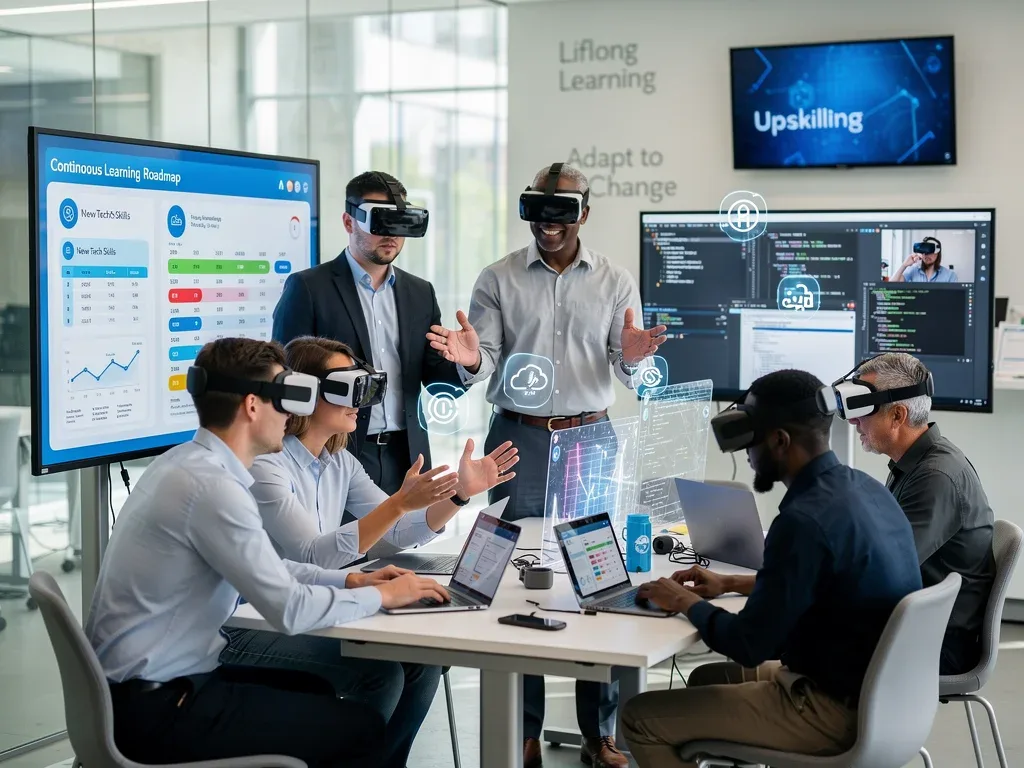
The pace of technological change demands a commitment to lifelong learning. Professionals must actively seek out new knowledge and skills, whether through formal education, online courses, or industry certifications. This proactive approach ensures adaptability.
Focusing on digital literacy, understanding AI fundamentals, and specializing in areas where human oversight or creativity is essential will provide a strong foundation. Platforms offering micro-credentials and specialized bootcamps are gaining prominence.
Online courses in AI and data science
Certifications in cybersecurity and cloud computing
Workshops on advanced analytical tools
Developing Uniquely Human Skills
While AI excels at processing information and executing tasks, it struggles with nuanced human attributes. Skills like critical thinking, creativity, emotional intelligence, and collaborative leadership will become increasingly prized in an AI-augmented workplace.
These skills enable innovation, foster strong team dynamics, and address complex, ill-defined problems that require human intuition and judgment. Developing these capabilities will differentiate individuals in the job market.
Creative problem-solving techniques
Enhanced emotional intelligence and empathy
Effective communication and negotiation
Policy Responses and Economic Adjustments
Governments and policymakers face the significant challenge of managing the economic transition brought about by AI-driven automation. Effective policy responses are crucial to mitigate negative impacts and maximize the benefits of this technological shift.
Investments in education and workforce retraining programs are paramount, alongside social safety nets designed to support displaced workers. Policies promoting innovation while addressing ethical concerns surrounding AI deployment are also gaining traction.
Discussions around universal basic income (UBI), adaptable social welfare systems, and incentivizing companies to invest in their workforce's future are becoming more prominent. These measures aim to ensure a more equitable distribution of AI's economic gains.
Regional Disparities and Social Equity
The impact of AI-driven automation is unlikely to be uniformly distributed across the United States. Regional economies heavily reliant on manufacturing or administrative services may face greater initial challenges compared to innovation hubs.
Addressing these regional disparities will require targeted investments in infrastructure, education, and economic diversification. Policies must be tailored to the specific needs of different communities to prevent widening socio-economic gaps.
Ensuring equitable access to new educational opportunities and technological resources is fundamental. This includes bridging the digital divide and providing support for underserved populations to participate in the new economy.
Investment Trends and Business Adaptation
Businesses across all sectors are rapidly adapting to the realities of AI economic impact. Investment in AI technologies is soaring, with companies seeking to enhance efficiency, reduce costs, and gain a competitive edge.
This adaptation often involves reconfiguring business models, automating routine processes, and reallocating human capital to higher-value tasks. Early adopters of AI are already demonstrating significant productivity gains and market leadership.
Companies are also focusing on fostering a culture of innovation and continuous learning among their employees. This proactive approach helps integrate AI tools effectively while ensuring their workforce remains skilled and engaged.
The Role of Education in Shaping the Future Workforce
Educational institutions are critical partners in preparing the workforce for the 2026 U.S. Economic Outlook. Curricula must evolve to emphasize STEM fields, digital literacy, and the development of critical thinking and creative problem-solving skills.
Collaboration between academia and industry is essential to ensure that educational programs align with the evolving demands of the job market. Apprenticeships, internships, and project-based learning can provide practical experience with emerging technologies.
Furthermore, promoting interdisciplinary studies that combine technical skills with humanities and social sciences can foster a more holistic understanding of AI's societal implications. This approach cultivates well-rounded professionals capable of navigating complex challenges.
Key Point | Brief Description |
|---|---|
Job Impact | 15% of U.S. jobs affected by AI automation by 2028. |
New Opportunities | Significant growth in AI, data science, and human-AI roles. |
Career Adaptation | Continuous learning and soft skill development are crucial. |
Policy & Equity | Governments must support retraining and address regional disparities. |
Frequently Asked Questions About AI's Economic Impact
How will AI-driven automation impact the U.S. job market by 2028?▼
AI-driven automation is projected to impact approximately 15% of U.S. jobs by 2028, leading to both displacement in routine tasks and significant creation of new roles, particularly in technology and human-AI collaboration fields.
Which sectors are most vulnerable to AI automation?▼
Sectors such as manufacturing, administrative support, and transportation are identified as highly vulnerable due to the repetitive nature of many tasks. Roles like data entry, assembly, and basic customer service face accelerated automation.
What new job opportunities will AI create?▼
AI will generate demand for roles in AI development, data science, cybersecurity, and robotics. New professions focusing on human-AI collaboration, ethical AI, and advanced analytical interpretation will also emerge and grow rapidly.
How can individuals future-proof their careers against AI's impact?▼
Future-proofing involves continuous learning, upskilling in digital and technical competencies, and developing uniquely human skills such as creativity, critical thinking, and emotional intelligence, which AI struggles to replicate.
What role do government policies play in this economic transition?▼
Government policies are crucial for investing in education, workforce retraining programs, and social safety nets. They must also foster innovation while addressing ethical concerns and regional disparities to ensure an equitable transition.
Impact and Implications
The AI economic impact on the U.S. economy by 2026 and beyond signifies a profound structural shift, not merely a cyclical adjustment. It underscores the urgency for both individuals and institutions to adapt proactively.
What happens now involves a critical period of transition where investment in human capital, strategic policy-making, and a societal commitment to lifelong learning will determine the ultimate success of navigating this new landscape.
We must monitor how educational systems evolve, how businesses integrate AI responsibly, and how government initiatives support a just transition for all workers, ensuring the benefits of AI are widely shared across the nation.