Retail Spaces 2029: 5 Innovations Transforming US Shopping
Advertisements
By 2029, retail spaces in the US will be radically transformed by five key innovations, integrating advanced technology, hyper-personalization, and sustainable practices to create immersive and highly efficient shopping experiences.
The landscape of American commerce is on the cusp of a profound evolution. By 2029, the way we shop, interact with brands, and experience physical stores will be dramatically redefined. This article delves into the future of retail spaces, revealing five groundbreaking innovations set to transform US shopping experiences, offering an insider’s look at what consumers and businesses can expect.
The rise of hyper-personalized experiential retail
The days of generic shopping experiences are quickly fading. Consumers are increasingly seeking personalized interactions that resonate with their individual preferences and lifestyles. By 2029, retail spaces will leverage advanced data analytics and AI to curate highly individualized customer journeys, making every visit feel uniquely tailored.
This shift goes beyond simple product recommendations; it encompasses the entire store environment, from the lighting and music to the product displays and staff interactions. Retailers are investing heavily in technologies that can understand customer behavior in real-time, allowing for dynamic adjustments to the shopping experience.
AI-driven consumer insights
Artificial intelligence will be at the forefront of this personalization wave. AI systems will analyze vast amounts of data, including past purchases, browsing history, social media activity, and even biometric data (with consent), to create comprehensive customer profiles. This deep understanding enables retailers to anticipate needs and preferences before the customer even articulates them.
- Predictive analytics: AI algorithms will forecast future purchasing patterns, allowing retailers to stock relevant inventory and offer timely promotions.
- Real-time customization: Digital signage and interactive displays will adapt content based on individual shopper profiles as they navigate the store.
- Personalized recommendations: Store associates, equipped with AI tools, can provide highly relevant product suggestions and styling advice.
Immersive brand storytelling
Retail spaces will transform into immersive environments where brands can tell their stories in compelling ways. This involves integrating digital and physical elements to create multi-sensory experiences that engage customers on an emotional level. Think of stores becoming more like galleries or entertainment venues, where products are part of a larger narrative.
For example, a clothing brand might use augmented reality to show customers how a garment is made, from the raw materials to the finished product, emphasizing its sustainability efforts. Or a tech company might create a simulated environment where customers can experience their products in a real-world context, like testing a smart home device in a virtual living room setting.
The goal is to move beyond transactional exchanges, fostering deeper connections between consumers and brands. This enhanced engagement not only boosts sales but also cultivates brand loyalty, which is crucial in a competitive market. The future of retail will be less about pushing products and more about creating memorable experiences that resonate long after the customer leaves the store.
Seamless omnichannel integration
The distinction between online and offline shopping will become virtually nonexistent by 2029. Retailers will master omnichannel integration, providing a seamless and consistent experience across all touchpoints, whether a customer is browsing on their phone, interacting with a chatbot, or visiting a physical store. This convergence is driven by consumer demand for flexibility and convenience.
The true power of omnichannel lies in its ability to empower the customer to choose how, when, and where they engage with a brand. This means inventory systems are unified, loyalty programs are universal, and customer service is consistent, irrespective of the channel used.
Click-and-collect advancements
Click-and-collect services, already popular, will become even more sophisticated. Stores will feature dedicated, automated pickup lockers accessible 24/7, reducing wait times and increasing convenience. Some retailers might even integrate drone delivery or robotic retrieval systems for an even faster experience.
- Automated lockers: Secure, self-service stations for quick and easy order retrieval, often integrated with mobile apps.
- Curbside pickup optimization: Enhanced logistics and notification systems to ensure minimal waiting times for customers arriving by car.
- In-store fulfillment efficiency: Retail staff will use advanced inventory management tools to quickly locate and prepare online orders for pickup, optimizing store operations.
Endless aisle and virtual inventory
Physical stores, while still crucial, will no longer be limited by their physical inventory. Through interactive screens and augmented reality, customers will have access to an ‘endless aisle’ of products available online, allowing them to browse and purchase items not physically present in the store. This expands product offerings without requiring vast floor space.
Imagine walking into a boutique and, even if your size or preferred color isn’t in stock, you can instantly view it virtually, see how it looks, and order it for home delivery or later pickup. This technology not only enhances the customer experience but also optimizes inventory management for retailers, reducing the need for extensive backroom storage and minimizing unsold stock.
The integration of virtual inventory ensures that every customer query can be met, regardless of immediate stock levels. This seamless blend of physical browsing with digital access creates a truly comprehensive shopping experience, maximizing customer satisfaction and sales potential.
Augmented reality and virtual reality shopping
Augmented Reality (AR) and Virtual Reality (VR) are no longer just concepts for gaming; they are rapidly becoming integral to the retail experience. By 2029, these technologies will transform how consumers interact with products, personalize their choices, and visualize purchases, both in-store and at home. These immersive tools bridge the gap between imagination and reality, offering unprecedented levels of engagement.
The adoption of AR and VR allows customers to ‘try before they buy’ in ways previously unimaginable, reducing returns and increasing purchase confidence. Retailers are investing in these technologies to create memorable, interactive shopping journeys that set them apart from competitors.
Virtual try-on experiences
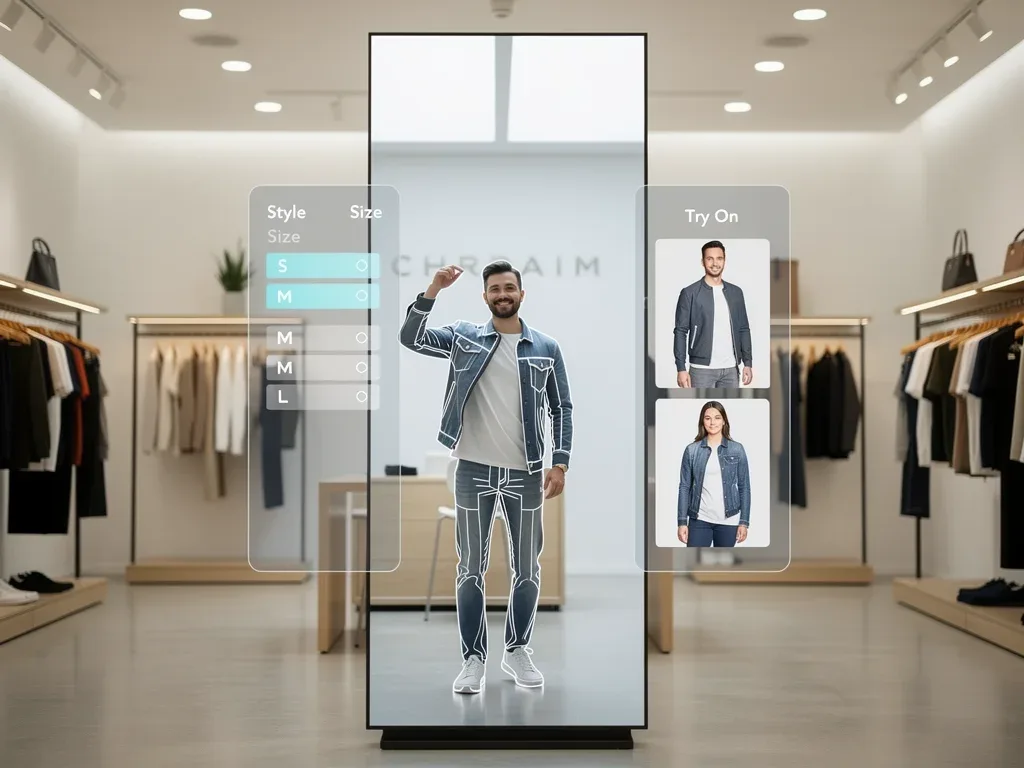
AR mirrors and apps will allow customers to virtually try on clothing, accessories, and even makeup without physically touching the products. This innovation is particularly valuable in a post-pandemic world, addressing hygiene concerns while enhancing convenience. Customers can see how different items look on them, experiment with various styles, and even receive AI-powered fashion advice.
Furniture retailers are already employing AR to let customers visualize how a sofa or table would look in their living room before making a purchase. This eliminates guesswork and helps consumers make more informed decisions, leading to higher satisfaction and fewer returns. The accuracy and realism of these virtual experiences will only improve, making them indispensable tools for shoppers.
VR-enhanced product exploration
Virtual reality will take product exploration to an entirely new level. Imagine stepping into a virtual showroom where you can examine a new car model from every angle, customize its features, and even take it for a virtual test drive. Or exploring a luxury home in a VR environment, walking through rooms and interacting with virtual furnishings.
VR experiences can transport customers to the origin of a product, like a coffee plantation or a textile factory, providing a deeper understanding of its craftsmanship and ethical sourcing. This immersive storytelling builds trust and connection, making the shopping experience more engaging and educational. Retailers are leveraging VR to create unique brand narratives and demonstrate product value in compelling ways.
The combination of AR and VR will create a dynamic retail environment where the physical and digital seamlessly merge, offering customers unparalleled freedom to explore, customize, and decide on their purchases. This technological leap will redefine consumer expectations for engagement and convenience.
Sustainable and ethical retail practices
Consumer awareness of environmental and social issues is growing, and by 2029, sustainable and ethical practices will be non-negotiable for successful retailers. Retail spaces will reflect a commitment to eco-friendliness, circular economy principles, and transparent supply chains. This shift is driven by both consumer demand and regulatory pressures.
Brands that prioritize sustainability will build stronger trust and loyalty with their customer base. This goes beyond just offering eco-friendly products; it encompasses the entire operation, from store design and energy consumption to waste management and employee welfare.
Eco-friendly store designs
New retail constructions and renovations will increasingly incorporate sustainable design principles. This includes using recycled and locally sourced materials, optimizing natural light, installing energy-efficient systems, and integrating green spaces. Stores will become living examples of environmental responsibility, educating consumers and inspiring greener choices.
- Renewable energy: Solar panels and other renewable energy sources will power retail establishments, reducing their carbon footprint.
- Waste reduction: Advanced recycling programs, composting, and packaging-free options will minimize waste generated in stores.
- Biophilic design: Incorporating natural elements like plants, water features, and natural ventilation to create healthier and more appealing shopping environments.
Circular economy models
The retail sector will move away from a linear ‘take-make-dispose’ model towards a circular economy. This means products are designed for durability, repairability, and recyclability. Retailers will offer services like product repair, rental, refurbishment, and resale programs, extending the lifespan of goods and reducing waste.
For example, fashion brands might offer rental services for special occasion wear, or electronics retailers could have take-back programs for old devices, ensuring proper recycling or refurbishment. This not only benefits the environment but also creates new revenue streams and strengthens customer relationships by promoting responsible consumption.
Transparency in the supply chain will also be paramount. Consumers will demand to know where products come from, how they are made, and the social and environmental impact of their purchases. Retailers will use blockchain and other technologies to provide verifiable information, building trust and demonstrating their commitment to ethical sourcing.
Robotics and automation in retail operations
Automation and robotics will play a significant role in optimizing retail operations by 2029, enhancing efficiency, reducing labor costs, and improving the overall customer experience. These technologies will handle mundane and repetitive tasks, freeing up human staff to focus on more complex, customer-facing interactions that require empathy and problem-solving skills.
From inventory management to customer service, robots and AI-powered systems will streamline various aspects of retail, leading to faster service, fewer errors, and a more organized store environment. This doesn’t necessarily mean fewer jobs, but rather a shift in the nature of retail work.
Automated inventory management
Robots equipped with sensors and AI will autonomously navigate retail stores, scanning shelves to monitor stock levels, identify misplaced items, and detect potential theft. This real-time inventory data will significantly reduce out-of-stock situations, improve product placement, and optimize supply chain logistics.
These robotic assistants can work overnight or during off-peak hours, ensuring shelves are always stocked and organized before stores open. This not only improves store efficiency but also enhances the customer experience by ensuring product availability and a tidy shopping environment. Human employees can then focus on customer engagement rather than manual stock-taking.
AI-powered customer service and assistance
While human interaction remains vital, AI-powered chatbots and humanoid robots will handle routine customer inquiries, provide product information, and guide shoppers to specific items within the store. These intelligent assistants can operate 24/7, offering immediate support and freeing up human staff for more complex problem-solving and personalized consultations.
For instance, an AI assistant might answer common questions about return policies or product specifications, while a robotic guide could lead a customer directly to the correct aisle for a specific product. This blend of AI and human support ensures efficient service for all types of customer needs, enhancing overall satisfaction and operational fluidity.
The integration of robotics and automation will not replace the human element but rather augment it, creating a more efficient, responsive, and ultimately more satisfying retail ecosystem. It will allow retail workers to focus on high-value tasks that require creativity, empathy, and personal connection.
Community hubs and mixed-use spaces
By 2029, retail spaces will evolve beyond mere transaction points, transforming into vibrant community hubs and mixed-use developments. This trend reflects a broader societal shift towards valuing experiences and connection over simple consumption. Retailers are realizing that physical spaces need to offer more than just products to attract and retain customers.
These new retail environments will integrate diverse offerings, including entertainment, co-working spaces, wellness centers, and educational workshops, creating destinations where people can gather, learn, and socialize. The goal is to foster a sense of belonging and make the retail visit a holistic and enriching experience.
Experience-driven retail destinations
Shopping malls and individual stores will become ‘experience centers’ designed to entertain and engage visitors. This could include pop-up events, live performances, cooking classes, fitness studios, or interactive art installations. The emphasis shifts from buying things to doing things, with products often serving as props or complements to the experience.
- Pop-up markets: Temporary spaces for local artisans, food vendors, and emerging brands, creating dynamic and ever-changing offerings.
- Entertainment zones: Integrated cinemas, arcades, escape rooms, or virtual reality lounges to extend dwell time and attract diverse demographics.
- Wellness and recreation: Yoga studios, meditation spaces, or indoor sports facilities that complement retail offerings and promote a healthy lifestyle.
Flexible and adaptable spaces
Retail environments will be designed with flexibility in mind, allowing for rapid reconfiguration to host different events, seasonal themes, or pop-up shops. Modular fixtures, movable walls, and advanced digital displays will enable retailers to constantly refresh their spaces, keeping the experience novel and exciting for repeat visitors.
This adaptability also extends to smaller retail formats, like micro-stores or kiosks, which can be easily deployed and customized for specific product launches or local events. The future retail space will be a dynamic canvas, constantly evolving to meet changing consumer demands and provide fresh reasons for customers to visit.
By becoming true community anchors, these mixed-use retail spaces will offer compelling reasons for people to leave their homes and engage in physical commerce, fostering social connections and creating memorable experiences that online shopping simply cannot replicate. This transformation is key to the long-term viability of physical retail.
| Key Innovation | Impact by 2029 |
|---|---|
| Hyper-Personalized Retail | AI-driven insights will tailor every aspect of the shopping journey, creating unique and relevant experiences for each customer. |
| Seamless Omnichannel | Online and offline experiences will merge flawlessly, offering consistent service and flexible shopping options like advanced click-and-collect. |
| AR/VR Shopping | Augmented and virtual reality will enable virtual try-ons and immersive product exploration, boosting confidence and engagement. |
| Sustainable Practices | Retailers will adopt eco-friendly designs and circular economy models, driven by consumer demand for ethical and responsible consumption. |
Frequently asked questions about future retail
How will AI impact personalized shopping experiences?▼AI will analyze vast customer data to offer highly tailored product recommendations, dynamic in-store displays, and even personalized staff interactions. This creates a unique shopping journey for each individual, anticipating their needs and preferences before they are explicitly stated, enhancing loyalty and satisfaction.
What does seamless omnichannel integration mean for shoppers?▼It means a consistent and fluid experience across all shopping channels – online, mobile, and physical stores. Customers can start a purchase online and finish in-store, or vice versa, with unified inventory, pricing, and customer service, providing ultimate flexibility and convenience regardless of the chosen touchpoint.
How will AR and VR change product visualization?▼AR mirrors and apps will allow virtual try-ons for clothing and makeup, while VR will enable immersive product exploration, like test-driving a car or walking through a virtual home. These technologies reduce uncertainty, enhance product understanding, and significantly boost consumer confidence before making a purchase decision.
Why are sustainable practices becoming crucial in retail?▼Growing consumer awareness and regulatory pressures are driving retailers towards eco-friendly store designs, circular economy models, and transparent supply chains. Brands prioritizing sustainability build stronger trust and loyalty, appealing to an increasingly environmentally conscious customer base and ensuring long-term viability.
How will robotics and automation impact retail staff?▼Robotics and automation will handle repetitive tasks like inventory management and basic inquiries, freeing up human staff. This allows employees to focus on high-value interactions requiring empathy, problem-solving, and personalized customer service, ultimately enhancing both operational efficiency and the quality of human engagement in stores.
Conclusion
The future of retail spaces in the US by 2029 is undeniably dynamic, driven by a convergence of technological innovation, evolving consumer expectations, and a heightened focus on sustainability. From hyper-personalized experiences powered by AI to immersive AR/VR shopping, seamless omnichannel integration, and the transformation of stores into community hubs, the retail landscape is set for a radical overhaul. Retailers who embrace these five key innovations will not only survive but thrive, creating engaging, efficient, and ethical shopping environments that resonate deeply with the modern consumer and redefine the very essence of commerce.