Selvedge Denim Care: 3-Stage Wash for Indigo Fades
Advertisements
Proper selvedge denim care balances cleanliness, fabric longevity, fit, and the type of indigo fades you want to develop. There is no universal rule requiring months of wear before the first wash.
Washing less frequently can encourage higher-contrast fades, while regular appropriate washing can help remove dirt and oils that contribute to fiber wear. The best schedule depends on use and condition.
This guide uses a practical three-stage routine built around gentle washing, careful rinsing, and air drying. Always check the manufacturer's care instructions before applying any general method.
Understanding Selvedge Denim and Its Unique Character
Selvedge denim is identified by its self-finished woven edge, traditionally produced on narrow shuttle looms. That construction is separate from whether the fabric is raw, rinsed, sanforized, or washed.
Raw denim has undergone little or no post-dye washing, allowing wear patterns to develop gradually. Some selvedge jeans are raw, but many selvedge products are prewashed or otherwise treated.
Indigo fades develop as surface dye gradually abrades from areas exposed to movement and friction. Whiskers, honeycombs, pocket outlines, and seam fades vary from wearer to wearer.
The Importance of Initial Wear Period
There is no mandatory six-month or twelve-month waiting period before washing raw denim. Jeans should be cleaned when odor, dirt, sweat, or general condition makes washing appropriate.
Waiting longer can produce sharper contrast because creases receive more concentrated abrasion before the surrounding fabric lightens. Earlier washing generally creates softer and more blended fade patterns.
Cleanliness also matters for longevity because accumulated dirt and oils can increase abrasion within heavily stressed areas. Fade preference should therefore be balanced against actual garment condition.
Factors Affecting Indigo Fades
Fade development depends on dyeing method, fabric construction, denim weight, finishing, and individual wear patterns. Two similar-looking jeans can therefore age quite differently.
Movement determines where repeated creasing occurs around the thighs, knees, pockets, and seat. Work, walking, cycling, sitting, and carried objects all influence those patterns.
Washing frequency changes contrast but does not prevent raw denim from fading. Cleaner denim can still develop distinctive character through continued wear and appropriate care.
Preparation for Washing: Setting the Stage
Before washing, read the garment label and determine whether the denim is sanforized, unsanforized, raw, or one-washed. Those differences can affect shrinkage and washing decisions.
Empty every pocket and check the jeans for loose threads, damaged seams, or stains that may need attention. Repairs are easier before a small weakness becomes larger.
Using cool water and gentle handling generally helps limit unnecessary color loss and shrinkage. Manufacturer-specific instructions should override generic denim-care advice whenever they differ.
Turning Jeans Inside Out
Turning jeans inside out can reduce direct friction against the dyed exterior during washing. This is a common care recommendation for dark and raw denim.
The method also exposes the interior more directly to water and detergent. Sweat, skin oils, and other residues commonly accumulate on that side of the garment.
Inside-out washing cannot prevent all indigo loss because some dye release is normal. It simply helps make the cleaning process gentler on visible surfaces.
Fastening Buttons and Zippers
Close zippers before washing so exposed teeth and sliders are less likely to catch surrounding fabric. Secure buttons when the manufacturer's care instructions recommend doing so.
Closures should not be forced if the wet garment becomes difficult to manipulate. The goal is controlled handling rather than creating unnecessary tension around hardware.
Checking rivets, buttons, and zipper attachment points also helps identify early wear. Small repairs can prevent damage from expanding during washing or regular use.
Stage 1: The Initial Soak (Cold Water Immersion)
A gentle cold-water soak can serve as the first stage when hand washing raw denim. It saturates the fabric and begins loosening dirt without intensive mechanical agitation.
An initial soak is not mandatory for every selvedge garment, especially products already washed or preshrunk. Unsanforized shrink-to-fit denim may require different preparation according to the manufacturer.
Some indigo may tint the water during soaking, particularly with new raw denim. Dye release is expected and should not automatically be interpreted as fabric damage.
Selecting the Right Detergent
Choose a mild detergent suitable for dark clothing or delicate fabrics. Strong bleaching agents and optical brighteners can alter the color more aggressively than necessary.
Specialized denim detergent is optional rather than essential. A conventional mild detergent can work well when used in an appropriate amount.
More detergent does not mean cleaner denim and can make rinsing more difficult. Follow product dosing instructions and account for the amount of water being used.
Soaking Process and Duration
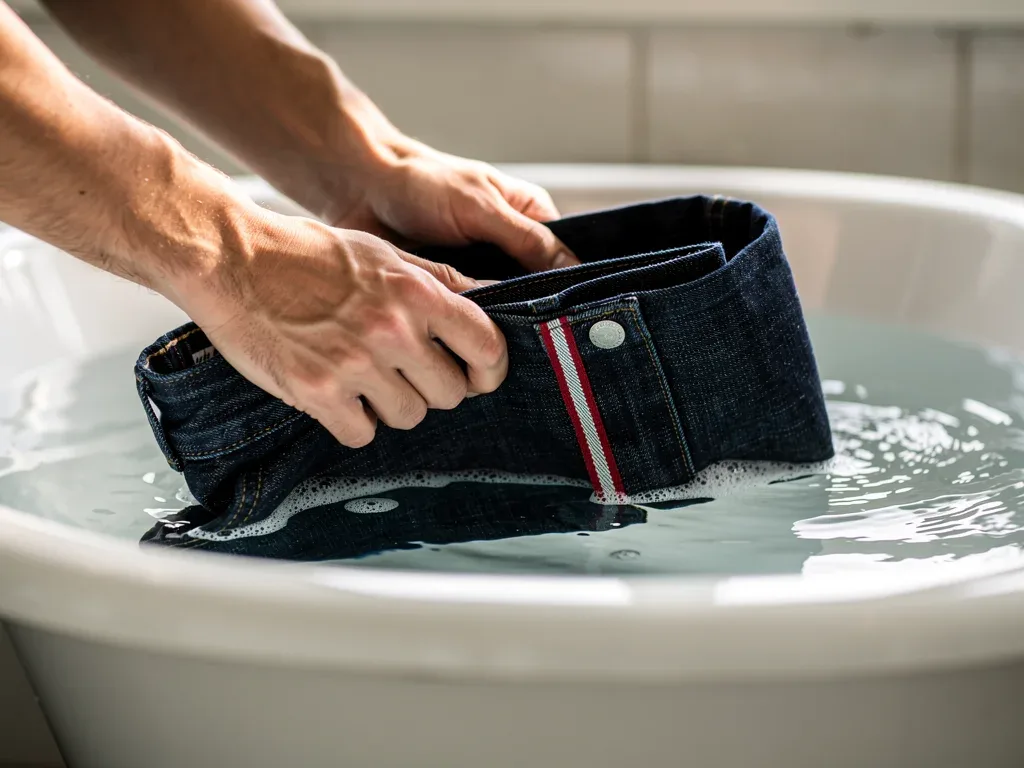
Fill a clean basin or bathtub with cool water and immerse the jeans evenly. Press trapped air from the fabric instead of aggressively scrubbing or twisting it.
Add a small quantity of mild detergent when the soak is serving as the washing stage. Allow enough time for the fabric to become saturated and loosen surface soil.
There is no universal requirement for exactly 45 or 60 minutes. Follow the garment and detergent instructions while keeping exposure moderate and the process gentle.
Stage 2: Gentle Hand Wash (Targeted Cleaning)
After soaking, lightly work the water through the denim rather than scrubbing the entire surface. Controlled movement helps remove soil while limiting unnecessary abrasion.
Hand washing provides greater control over high-wear areas and visible stains. A gentle machine cycle may also be acceptable when the manufacturer permits machine washing.
Cold water remains useful for managing color loss and shrinkage. Excessive heat and harsh agitation generally create a more aggressive wash result.
Addressing Stains and Grime
Inspect cuffs, pockets, the waistband, seat, and other areas where visible grime tends to accumulate. Treat individual spots before increasing agitation across the whole garment.
Use a damp cloth, soft brush, or fingers with a small amount of mild detergent. Blot or lightly work the area instead of scrubbing aggressively.
Stain treatment should be tested cautiously because localized rubbing can create lighter patches. Avoid chlorine bleach unless the manufacturer specifically permits its use.
Rinsing Thoroughly
Drain the wash water and refill the basin with clean, cool water. Move the jeans gently to release detergent trapped between the fibers.
Repeat the rinse when visible suds or detergent remain. The goal is clean fabric without prolonged unnecessary handling.
Avoid aggressively wringing the jeans because twisting wet denim can distort the garment. Press out excess water gradually before moving to drying.
Stage 3: Drying (Shape Preservation and Fade Protection)
Air drying is generally the gentler option for selvedge and raw denim. It reduces exposure to the heat and tumbling associated with machine drying.
Dryer heat can increase shrinkage and may accelerate fading depending on the garment. Unsanforized fabrics require particular attention because residual shrinkage can be substantial.
Drying method should ultimately follow the manufacturer's instructions and your desired fit. Keeping the jeans away from intense heat provides the most conservative approach.
Avoiding Machine Dryers
Machine drying is best avoided when preserving fit, color, and minimum shrinkage is the priority. Heat can affect even denim that has already been sanforized.
That does not mean a dryer instantly destroys every pair of selvedge jeans. Some products may permit tumble drying, but the result can include greater shrinkage and fading.
Users seeking controlled natural fades usually benefit from air drying instead. It offers a more predictable and less aggressive finish after washing.
Proper Air Drying Techniques
Gently press excess water from the jeans without twisting the fabric. A clean towel can absorb additional moisture before the garment is hung or laid flat.
Hang the jeans securely or lay them flat according to available space and manufacturer guidance. Smooth severe folds so they do not dry into unnecessary hard creases.
Dry in a ventilated area away from intense direct heat. Shade can also help limit unnecessary color change from prolonged strong sunlight.
Post-Wash Maintenance and Longevity
Good denim care continues between full washes through inspection, stain treatment, and timely repairs. Waiting until fabric damage becomes severe can make repairs more difficult.
Wash frequency should respond to actual wear rather than an arbitrary calendar. Jeans exposed to sweat, dirt, or frequent use may require cleaning sooner.
Long-term character develops through the combination of wear and maintenance. Clean denim can still produce personalized indigo fades over time.
Spot Cleaning Between Washes
Minor spills can often be treated without washing the entire garment. Use a damp cloth and mild soap where appropriate.
Blot carefully instead of rubbing aggressively because excessive localized friction can lighten indigo. Work from the outside of the affected area toward the center.
Allow the treated area to dry fully before evaluating whether additional cleaning is needed. Persistent or unusual stains may require professional advice.
Storage and Handling
Store dry denim in a cool environment with reasonable airflow. Do not place damp jeans into drawers or closed containers where moisture can remain trapped.
Jeans may be hung or folded neatly according to available storage and personal preference. There is no requirement to avoid folding selvedge denim entirely.
Extended exposure to strong sunlight can alter color even during storage. Keeping garments away from unnecessary heat and moisture helps preserve their condition.
Addressing Common Selvedge Denim Concerns
Raw and selvedge jeans can behave differently depending on finishing, fabric, and manufacturer. Understanding the specific garment is more useful than applying one rule to every pair.
Shrinkage and indigo transfer are two common concerns during early ownership. Both can usually be managed with appropriate expectations and care.
Labels and brand specifications remain important because manufacturers know how their particular fabrics were processed. General denim advice cannot replace product-specific information.
Managing Shrinkage
Unsanforized denim has not received the same preshrinking treatment as sanforized fabric and can shrink noticeably when soaked or washed. The amount varies by textile.
Sanforized denim is more dimensionally stable, while one-washed garments may have already released much of their potential shrinkage. None of these categories guarantees an exact percentage.
Cold water and air drying can help limit additional shrinkage. Buyers of shrink-to-fit denim should follow the sizing and soaking instructions supplied by the manufacturer.
Dealing with Indigo Crocking (Transfer)
New dark and raw denim can transfer excess dye onto clothing, footwear, furniture, and other light surfaces. This phenomenon is commonly called crocking.
Transfer tends to be more noticeable when the jeans are new or wet. Pairing fresh raw denim with dark accessories and fabrics can reduce visible staining.
Washing usually reduces loose surface dye over time, although some transfer can continue. Exercise additional caution around white shoes, light upholstery, and pale bags.
The Philosophy of Selvedge Denim Fades
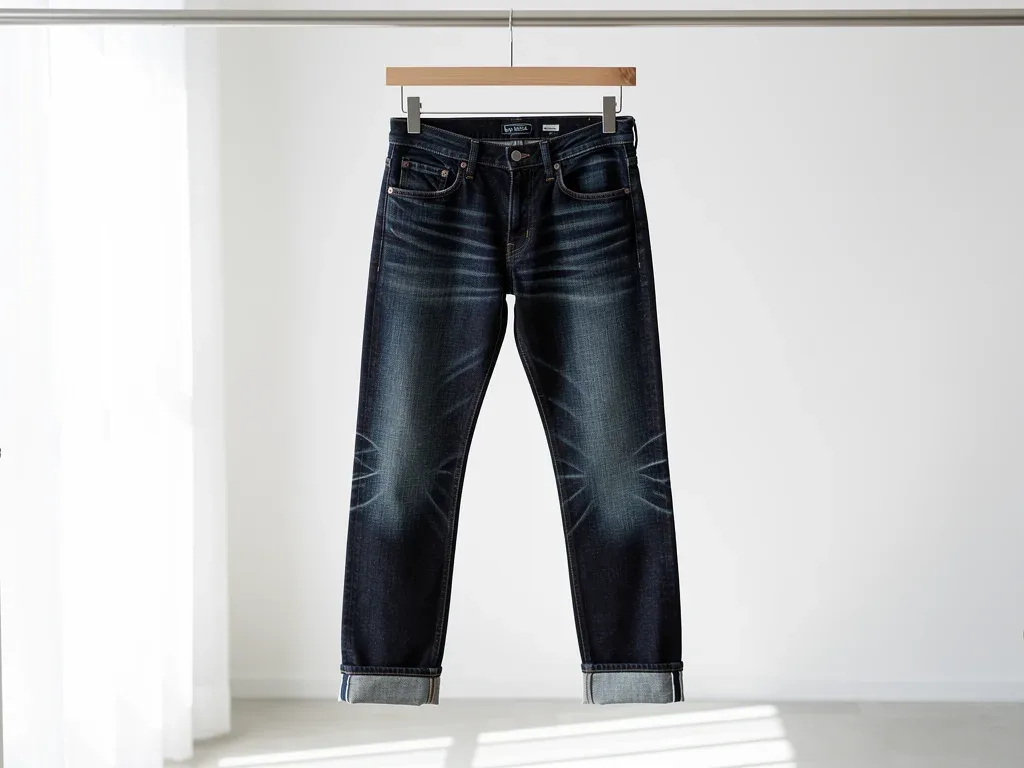
The appeal of natural fades comes from the way repeated wear creates patterns unique to an individual garment. No two pairs need to develop identically.
This approach can also encourage owners to keep and repair garments instead of replacing them purely because their appearance changes. Aging becomes part of the design.
That philosophy overlaps with some ideas in sustainable fashion. Longevity matters most when the garment actually remains useful and worn.
Patience and Personalization
High-contrast fades develop through repeated friction at creases and contact points. More time before washing can increase contrast, but waiting indefinitely is unnecessary.
Regular wear gradually softens raw denim and shapes the fabric around the wearer. Phones, wallets, cuffs, work habits, and movement can leave identifiable patterns.
This personalization helps distinguish raw denim from deliberately factory-distressed fashion trends. The final appearance is influenced by real use rather than a predetermined finish.
Sustainability Through Longevity
Keeping a garment in active use for longer can reduce the need for replacement purchases. Durable construction and repairability can therefore support a lower-consumption wardrobe.
Selvedge construction itself does not automatically make jeans sustainable or more durable. Fiber quality, sewing, fit, care, repair, production, and actual usage all matter.
Thoughtful selvedge denim care can help extend garment life when paired with timely repairs. This aligns with broader durability goals in the fashion industry.
Key Point | Brief Description |
|---|---|
Initial Wear | There is no fixed 6-12 month rule; wash when condition and cleanliness make it appropriate. |
Wash Stages | Use a gentle soak or wash, thorough rinse, and controlled air drying. |
Drying Method | Air drying generally minimizes heat-related shrinkage and additional fading. |
Detergent Choice | Choose a mild detergent and avoid unnecessary bleach or brightening agents. |
Frequently Asked Questions About Selvedge Denim Care
How often should I wash my selvedge denim?▼
Wash it when dirt, odor, sweat, or use makes cleaning necessary. Waiting longer can increase fade contrast, but there is no universal six-month rule.
Can I put selvedge denim in a washing machine?▼
Yes, when the care label permits it. Turning jeans inside out and using cold water on a gentle cycle can reduce unnecessary fading and agitation.
What is the best way to dry selvedge denim?▼
Air drying is generally the safest approach for limiting heat-related shrinkage and color loss. Hang or lay flat according to the garment's care instructions.
Will my selvedge denim shrink after washing?▼
It depends on how the denim was processed. Unsanforized fabrics can shrink considerably, while sanforized or one-washed denim generally has less remaining shrinkage.
How do I prevent indigo dye from transferring?▼
Avoid contact with light fabrics and upholstery when the jeans are new or wet. Cold washing can reduce loose surface dye, although some transfer may continue.
Perspectives
A practical three-stage selvedge denim care routine should prioritize cleanliness without treating fade preservation as more important than fabric health. Gentle washing can support both goals.
The timing of the first wash affects fade character but does not have one correct answer. High-contrast enthusiasts may wait longer, while others may prioritize cleanliness and softer fades.
The most reliable approach is to understand the specific denim, follow manufacturer guidance, and respond to actual wear. Good maintenance helps personalized denim remain wearable for longer.