Smart Lighting Systems: Customization & Energy Savings for U.S. Homes
Advertisements
Smart lighting systems revolutionize U.S. households by providing advanced customization and substantial energy savings, evolving into essential components of modern smart homes.
In 2026, the landscape of home technology continues to evolve rapidly, with smart lighting systems emerging as a cornerstone of modern, efficient, and personalized living for U.S. households. These intelligent illumination solutions go far beyond simple on/off switches, offering a spectrum of customization options and delivering undeniable energy savings. This review delves into the capabilities of these systems and presents a detailed look at three leading brands shaping the future of home lighting.
The evolution of smart lighting: more than just convenience
Smart lighting has transformed from a niche luxury to an accessible and highly beneficial upgrade for homes across the United States. It’s no longer just about controlling lights remotely; it’s about creating dynamic environments, enhancing security, and significantly reducing electricity bills. The integration with other smart home devices further amplifies its utility, making it a central component of a truly connected living space.
Defining smart lighting capabilities
At its core, smart lighting refers to an illumination system that can be controlled remotely, automated, and often customized in terms of brightness, color, and temperature. These systems typically connect via Wi-Fi, Bluetooth, or proprietary hubs, allowing users to manage their lights through smartphone apps, voice assistants, or smart switches. The ability to tailor lighting to specific activities or moods is a game-changer for interior design and daily routines.
- Remote Control: Manage lights from anywhere via a smartphone or tablet.
- Scheduling and Automation: Set lights to turn on/off at specific times or based on occupancy.
- Color and Brightness Customization: Adjust light intensity and choose from millions of colors.
- Voice Control Integration: Seamless operation with popular voice assistants like Alexa, Google Assistant, and Siri.
The continuous innovation in this sector means that new features are constantly being introduced, making these systems more intuitive and powerful. From geofencing that turns lights on as you approach home to motion-activated security lighting, the possibilities are vast and continually expanding. Understanding these core capabilities is essential for any homeowner looking to invest in a smart lighting ecosystem.
Ultimately, the evolution of smart lighting represents a shift towards a more intelligent and responsive home environment, where lighting adapts to your needs rather than the other way around. This blend of convenience, control, and efficiency makes it an indispensable technology for the modern U.S. household.
Energy savings: a compelling reason for adoption
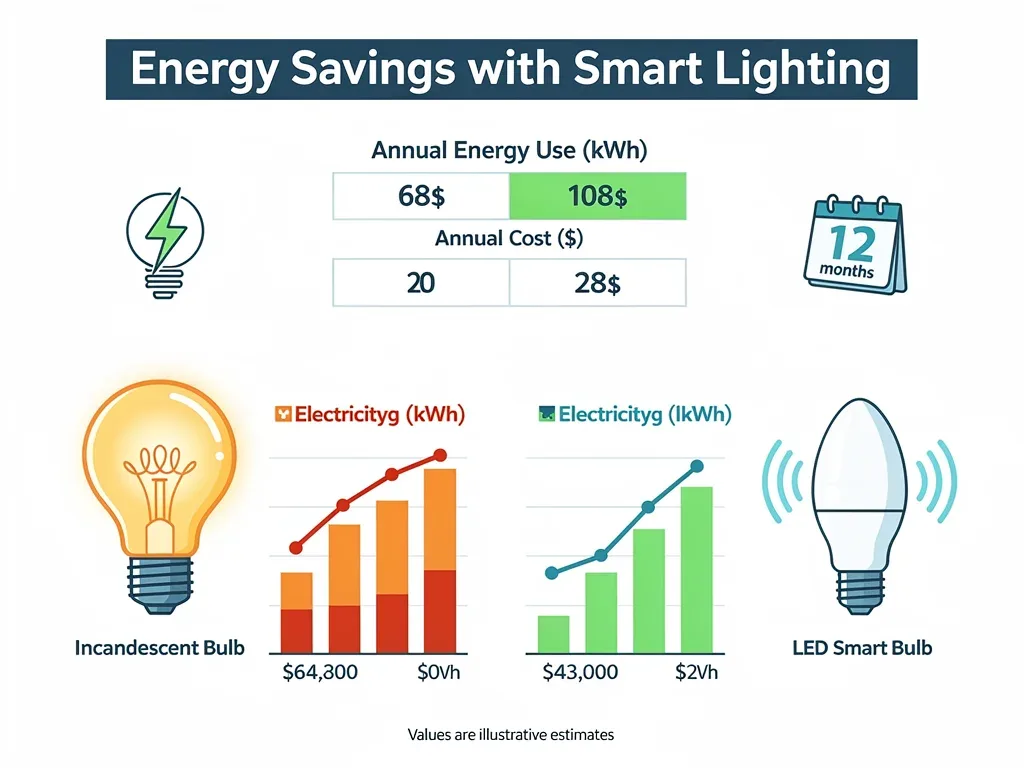
One of the most significant advantages of adopting smart lighting systems is the substantial energy savings they offer. Traditional incandescent bulbs are notoriously inefficient, converting most of their energy into heat rather than light. Smart lighting, almost exclusively powered by LED technology, drastically reduces energy consumption, leading to lower utility bills and a smaller carbon footprint.
The efficiency of LED technology
LED (Light Emitting Diode) bulbs are inherently more energy-efficient than their traditional counterparts. They consume up to 80% less energy and last significantly longer, often for tens of thousands of hours. When integrated into a smart system, these efficiencies are further maximized through intelligent controls.
- Reduced Wattage: LEDs use significantly fewer watts to produce the same lumen output.
- Longer Lifespan: Less frequent bulb replacement saves money and reduces waste.
- Dimming Capabilities: Dimming lights reduces energy usage, a feature easily managed by smart systems.
- Automated Shut-off: Lights turn off when not needed, preventing wasteful energy consumption.
Beyond the inherent efficiency of LEDs, smart lighting systems introduce layers of control that prevent energy waste. Features like occupancy sensors ensure lights are only on when a room is occupied, while scheduling allows homeowners to automate lighting based on their daily routines, avoiding unnecessary illumination during daylight hours or when away from home. These automated controls are crucial for optimizing energy use.
The financial benefits extend beyond just lower electricity bills. Many utility companies offer rebates or incentives for upgrading to energy-efficient smart home products, further sweetening the deal for homeowners. This combination of advanced technology and financial incentives makes smart lighting a smart investment for any U.S. household focused on sustainability and cost reduction. The long-term savings often outweigh the initial investment, making it a financially sound decision.
Customization: tailoring light to your lifestyle
Beyond energy efficiency, the unparalleled customization offered by smart lighting systems is a primary driver for their adoption. Imagine being able to transform the ambiance of any room with a tap of your finger or a simple voice command. Smart lighting makes this a reality, allowing users to fine-tune every aspect of their home’s illumination to match their mood, activity, or time of day.
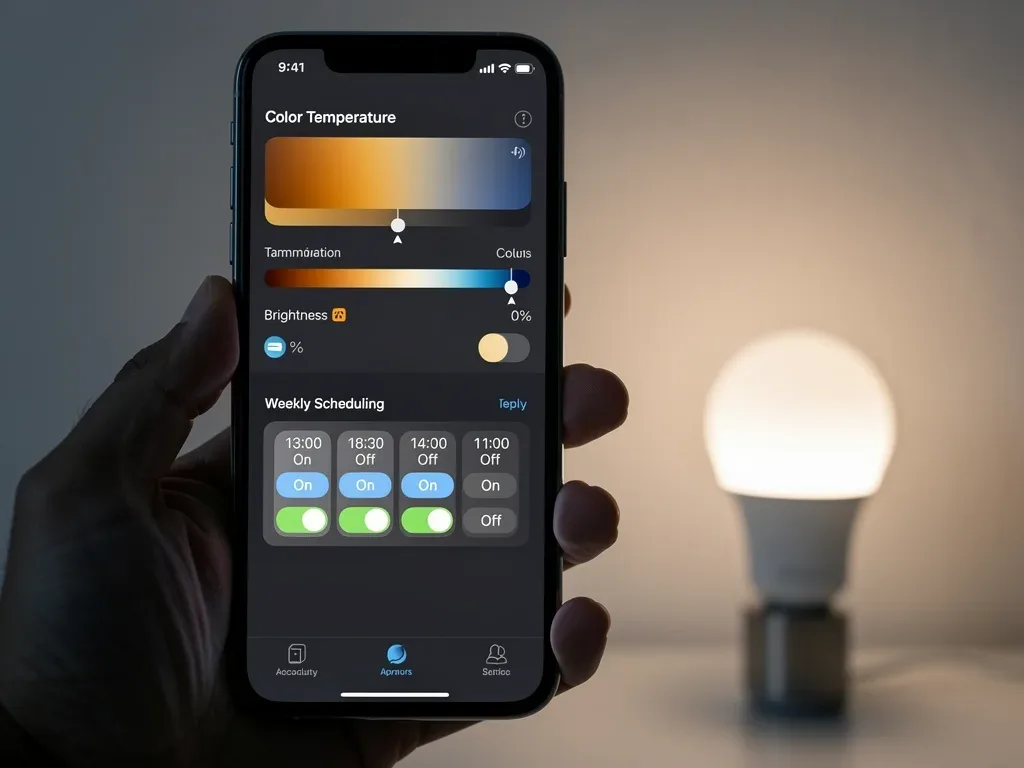
The ability to control not just brightness but also color temperature and hue opens up a world of possibilities. From cool, crisp whites for morning productivity to warm, inviting yellows for evening relaxation, the right lighting can significantly impact comfort and well-being. This level of control was previously only available in professional lighting setups but is now readily accessible to homeowners.
Personalized scenes and schedules
Most smart lighting systems allow users to create and save personalized lighting scenes. A ‘movie night’ scene might dim the main lights to a warm glow and highlight accent lights, while a ‘reading’ scene could provide bright, focused illumination. These scenes can be activated instantly, eliminating the need to adjust multiple switches manually.
- Dynamic Color Changes: Choose from millions of colors to match decor, holidays, or moods.
- Adjustable Color Temperature: Shift from cool daylight (bluish-white) to warm white (yellowish) light.
- Scene Creation: Program specific lighting configurations for different activities or times.
- Routines and Automations: Link lighting changes to schedules, motion, or other smart home triggers.
The integration with smart home routines means your lights can automatically adjust throughout the day. For instance, lights could gradually brighten in the morning to simulate a sunrise, gently easing you awake. In the evening, they could transition to warmer tones, signaling your body to prepare for rest. This level of automation contributes to better sleep patterns and overall well-being.
Moreover, smart lighting can be synchronized with entertainment systems, creating immersive experiences where lights change in sync with music or movies. For homeowners who enjoy hosting or simply want to elevate their living spaces, this customization offers an unmatched level of personalization and atmospheric control, truly making a house feel like a home.
Top brands for U.S. households in 2026: Philips Hue
When discussing smart lighting systems for U.S. households in 2026, Philips Hue consistently stands out as a market leader. Renowned for its extensive ecosystem, high-quality products, and robust integration capabilities, Hue offers a comprehensive solution for both beginners and advanced smart home enthusiasts. Its longevity in the market has allowed it to build a reputation for reliability and innovation.
Philips Hue ecosystem and features
Philips Hue operates on a Zigbee-based system, requiring a Hue Bridge to connect and control most of its devices. While the Bridge is an additional cost, it provides a stable and responsive network for up to 50 lights, ensuring smooth operation even in larger homes. The system boasts an impressive array of bulbs, light strips, lamps, and outdoor lighting options, catering to every possible lighting need.
- Vast Product Range: Bulbs, light strips, lamps, outdoor lights, and smart switches.
- Superior Color Accuracy: Known for producing rich, vibrant colors and accurate white tones.
- Seamless Integrations: Works effortlessly with Apple HomeKit, Amazon Alexa, Google Assistant, and SmartThings.
- Entertainment Sync: Syncs with music, movies, and games for immersive experiences.
The Hue app is intuitive and user-friendly, allowing for easy setup of scenes, routines, and automations. Users can create complex lighting schedules, simulate presence when away from home, and even use geofencing to automatically turn lights on or off. The ‘Hue Sync’ feature, which synchronizes lights with on-screen content or audio, offers an unparalleled immersive experience for entertainment.
While Philips Hue products often come with a higher price tag compared to some competitors, the investment is justified by their quality, reliability, and the breadth of features available. For U.S. households seeking a premium, comprehensive, and future-proof smart lighting solution with extensive customization options, Philips Hue remains a top contender in 2026.
Top brands for U.S. households in 2026: Lutron Caséta
For U.S. households prioritizing reliability, precise dimming, and seamless integration with existing wiring, Lutron Caséta stands as a formidable player in the smart lighting systems market. Unlike many bulb-based systems, Caséta focuses on smart switches and dimmers, which control entire circuits of traditional bulbs, offering a different approach to smart illumination.
Lutron has a long-standing reputation in lighting control, and their Caséta line brings that expertise into the smart home era. This system is particularly appealing for those who prefer to keep their existing light fixtures and bulbs while still gaining smart control over their lighting. The installation of Caséta switches typically requires basic electrical knowledge or professional assistance, but once installed, they offer unparalleled performance.
Lutron Caséta’s focus on switches and dimmers
The core of the Lutron Caséta system is its smart dimmers and switches, which replace standard wall switches. This allows for smart control over any dimmable bulb connected to that switch, including incandescent, halogen, CFL, and LED. The system operates on Lutron’s proprietary Clear Connect RF technology, which is highly reliable and avoids Wi-Fi congestion.
- Flawless Dimming: Known for smooth, flicker-free dimming down to very low levels.
- Switch-Based Control: Controls entire circuits, not just individual bulbs.
- Highly Reliable: Uses proprietary Clear Connect RF for stable communication.
- Integrates Widely: Compatible with Alexa, Google Assistant, HomeKit, Ring, Sonos, and more.
A Caséta Smart Bridge is required for smart home integration and app control, similar to the Hue Bridge. The Lutron app allows users to create scenes, set schedules, and manage lights from anywhere. One of its unique features is the Pico remote, a wireless, battery-powered remote that can be mounted on a wall or used handheld, offering convenient control without a smartphone.
While Caséta might not offer the vibrant color-changing capabilities of some other systems, its strength lies in its rock-solid reliability, superior dimming performance, and the ability to smart-enable existing lighting infrastructure. For homeowners seeking a robust, professional-grade smart lighting solution with excellent compatibility and energy-saving dimming features, Lutron Caséta is an exceptional choice in 2026.
Top brands for U.S. households in 2026: TP-Link Kasa
For U.S. households seeking an affordable, easy-to-install, and hub-free entry into smart lighting systems, TP-Link Kasa presents an attractive option. Kasa smart bulbs and switches connect directly to your home’s Wi-Fi network, eliminating the need for a separate bridge or hub, which simplifies setup and often reduces initial costs. This direct-connect approach makes it a favorite for those new to smart home technology.
TP-Link Kasa’s accessible smart lighting
TP-Link, a well-known name in networking equipment, has successfully leveraged its Wi-Fi expertise to create a user-friendly smart home ecosystem. The Kasa line includes a variety of smart bulbs (dimmable, tunable white, and multicolor), smart switches, and smart plugs, providing a flexible range of options for different needs and budgets. The emphasis is on straightforward functionality and ease of use.
- No Hub Required: Connects directly to existing Wi-Fi, simplifying installation.
- Budget-Friendly: Offers competitive pricing for smart bulbs and switches.
- Good Feature Set: Provides dimming, color change, scheduling, and scene creation.
- Voice Control: Works with Amazon Alexa and Google Assistant.
The Kasa Smart app is intuitive and provides all the essential controls for managing your lights. Users can set schedules, create custom scenes, track energy usage (on some models), and even activate an ‘Away Mode’ to randomly turn lights on and off, giving the appearance that someone is home. While it might not offer the same depth of integration or advanced features as Philips Hue, it covers all the fundamental smart lighting functionalities effectively.
One potential consideration with Wi-Fi direct connect devices is the potential for network congestion if you have many smart devices. However, for most households starting with a few smart lights, Kasa performs admirably. Its combination of affordability, ease of use, and solid performance makes TP-Link Kasa an excellent choice for U.S. households looking for an accessible and effective smart lighting system without the commitment of a dedicated hub in 2026.
Choosing the right smart lighting system for your home
Selecting the ideal smart lighting system for your U.S. household in 2026 involves weighing several factors, including your budget, desired features, existing smart home ecosystem, and technical comfort level. Each brand reviewed—Philips Hue, Lutron Caséta, and TP-Link Kasa—offers distinct advantages, catering to different homeowner priorities.
Key considerations for selection
Before making a purchase, it’s crucial to assess what truly matters for your specific living situation. Do you prioritize vibrant color customization and extensive third-party integrations, or is reliable dimming and control over existing fixtures more important? Perhaps ease of installation and affordability are your primary concerns. Understanding these priorities will guide you toward the most suitable system.
- Budget: Determine your initial investment and long-term costs.
- Features: Identify essential functionalities like color, dimming, scheduling, and automation.
- Compatibility: Ensure the system integrates with your existing smart home devices and voice assistants.
- Installation: Consider whether you prefer DIY bulb replacement or require professional electrical work.
- Scalability: Think about future expansion and the ability to add more lights or devices.
For those seeking the most comprehensive and feature-rich experience, Philips Hue remains the gold standard, particularly if you desire dynamic color changes and deep integration with entertainment. If stability, professional-grade dimming, and the ability to control traditional bulbs via smart switches are paramount, Lutron Caséta offers an unmatched solution. And for homeowners seeking an economical, hub-free entry point into smart lighting with straightforward functionality, TP-Link Kasa provides excellent value.
Ultimately, the best smart lighting system is one that seamlessly integrates into your daily life, enhances your home’s ambiance, and contributes to energy savings without adding unnecessary complexity. By carefully considering these factors and the strengths of each brand, U.S. households can make an informed decision and illuminate their homes intelligently in 2026.
| Key Aspect | Brief Description |
|---|---|
| Customization | Smart lighting allows extensive control over color, brightness, and scenes, tailoring ambiance to mood or activity. |
| Energy Savings | LED-based smart systems drastically reduce energy consumption through efficiency and automated controls. |
| Top Brands | Philips Hue (ecosystem), Lutron Caséta (switches), and TP-Link Kasa (affordability) lead the market. |
| Integration | All top systems offer integration with voice assistants and other smart home platforms for unified control. |
Frequently Asked Questions about Smart Lighting
What are the main benefits of installing smart lighting systems?▼The primary benefits include enhanced customization of lighting scenes and colors, significant energy savings through LED technology and automation, improved home security with scheduling, and convenient control via apps or voice commands. These systems also integrate well with broader smart home ecosystems.
Do I need a hub for all smart lighting systems?▼No, not all smart lighting systems require a hub. Brands like TP-Link Kasa offer Wi-Fi direct connect bulbs and switches that operate without a separate hub. However, systems like Philips Hue and Lutron Caséta utilize hubs (Bridges) for enhanced stability, range, and advanced features.
How much energy can I really save with smart lighting?▼You can save a substantial amount of energy, often up to 80% compared to traditional incandescent bulbs. This is due to the inherent efficiency of LED technology combined with smart features like dimming, scheduling, and occupancy sensors that prevent unnecessary illumination, directly lowering your electricity bills.
Are smart lighting systems compatible with voice assistants?▼Yes, most leading smart lighting systems, including Philips Hue, Lutron Caséta, and TP-Link Kasa, offer robust compatibility with popular voice assistants such as Amazon Alexa, Google Assistant, and Apple HomeKit. This allows for convenient hands-free control of your home’s illumination.
Is smart lighting difficult to install for an average homeowner?▼Installation difficulty varies by system. Smart bulbs are typically plug-and-play. Smart switches, like Lutron Caséta, might require basic electrical knowledge or professional installation. Hubs are generally easy to set up. Many brands focus on user-friendly installation processes to make smart lighting accessible.
Conclusion
As 2026 unfolds, smart lighting systems have cemented their place as essential upgrades for U.S. households, offering a powerful blend of stylistic customization and practical energy savings. The reviewed brands—Philips Hue, Lutron Caséta, and TP-Link Kasa—each provide compelling solutions, whether your priority is a vibrant, feature-rich ecosystem, unparalleled dimming reliability, or an affordable, hub-free entry point. By carefully evaluating your personal needs and preferences, homeowners can confidently choose a system that not only illuminates their spaces but also intelligently enhances their lifestyle, contributing to both comfort and a more sustainable future.