Global Economic Indicators 2026: US Consumer Spending Forecast
Advertisements
Understanding the interplay of global economic indicators in 2026 is crucial for forecasting US consumer spending, as factors like inflation, interest rates, and geopolitical stability directly influence household purchasing power and confidence.
As we approach 2026, the intricate web of global economic indicators 2026 offers a fascinating, yet complex, lens through which to view the future of US consumer spending. This analysis delves into key macroeconomic trends, comparing projections and dissecting their potential impact on American households and businesses. Understanding these dynamics is not just for economists; it’s vital for every consumer, investor, and policymaker navigating the evolving financial landscape.
The Global Economic Landscape in 2026: A Macro Perspective
The global economy in 2026 is anticipated to be shaped by a confluence of lingering effects from past crises, ongoing technological advancements, and emerging geopolitical shifts. While some regions may experience robust growth, others could face headwinds, creating a diverse and interconnected environment that directly influences the United States.
Forecasting the global economic landscape requires a careful examination of several foundational elements. These include the trajectory of global GDP growth, which serves as a primary barometer of economic health, as well as the stability of international trade relations and supply chains, which have seen significant disruptions in recent years. Understanding these broader trends is essential before narrowing our focus to the specifics of US consumer behavior.
Key Global Growth Drivers and Constraints
Several factors will act as both drivers and constraints on global economic growth in 2026. Technological innovation, particularly in AI and green energy, is expected to be a significant accelerant. However, demographic shifts and persistent inflation in some economies could temper this growth.
- Technological Innovation: Advancements in artificial intelligence, automation, and biotechnology are poised to boost productivity and open new markets, contributing to overall economic expansion.
- Green Transition Investments: Increased global spending on renewable energy and sustainable infrastructure will generate new jobs and stimulate economic activity, particularly in developed nations.
- Geopolitical Stability: Ongoing conflicts and trade tensions could create uncertainty, deter investment, and disrupt global supply chains, acting as a significant drag on economic performance.
- Demographic Pressures: Aging populations in many advanced economies may lead to labor shortages and increased pressure on social security systems, impacting long-term growth prospects.
The interplay of these forces will determine the overall pace and distribution of global economic expansion. While innovation offers a strong tailwind, the potential for instability and structural challenges means that growth will likely remain uneven across different nations and sectors. This variability will inevitably ripple through to the US economy.
In conclusion, the 2026 global economic outlook presents a mixed picture of opportunities and challenges. While technological progress and green initiatives offer pathways to growth, geopolitical risks and demographic shifts demand careful monitoring. These overarching trends will establish the fundamental context for US economic performance and, consequently, consumer spending.
Inflation and Interest Rates: The Dual Impact on US Consumers
Inflation and interest rates are perhaps the most immediate and tangible economic indicators for the average American consumer. Their movements directly influence purchasing power, borrowing costs, and investment decisions. As we look towards 2026, the projected paths of these two critical metrics will significantly shape household budgets and spending habits.
Central banks globally, including the Federal Reserve, have been navigating a complex environment of elevated inflation and subsequent interest rate hikes. The question for 2026 is whether these efforts will have successfully brought inflation back to target levels, and what implications this will have for borrowing costs and economic activity. A stable, predictable inflation environment is generally conducive to confident consumer spending, whereas volatility can lead to caution.
Projected Inflationary Pressures for 2026
While inflation has shown signs of moderation, several factors could keep it elevated or bring it down further by 2026. Supply chain resilience, energy prices, and wage growth will be key determinants.
- Supply Chain Normalization: Continued improvement in global supply chains could ease price pressures by increasing the availability of goods and reducing transportation costs.
- Energy Market Volatility: Geopolitical events or shifts in global demand could lead to renewed spikes in oil and gas prices, directly impacting consumer costs and business expenses.
- Wage-Price Spiral Concerns: Persistent strong wage growth, if not matched by productivity gains, could contribute to a wage-price spiral, making it harder to bring inflation down sustainably.
- Fiscal Policy Impact: Government spending and taxation policies will also play a role, either contributing to or alleviating inflationary pressures depending on their nature and scale.
The consensus among many economists suggests a gradual return to central bank inflation targets, but the path is unlikely to be smooth. Consumers should anticipate continued vigilance from monetary authorities, which directly impacts interest rate decisions.
Interest rates, particularly the federal funds rate, dictate the cost of borrowing for everything from mortgages and car loans to credit card debt. The Federal Reserve’s stance in 2026 will be crucial. If inflation is tamed, there’s potential for rate cuts, easing financial burdens for consumers and stimulating investment. Conversely, if inflation proves stubborn, rates could remain elevated, dampening demand.
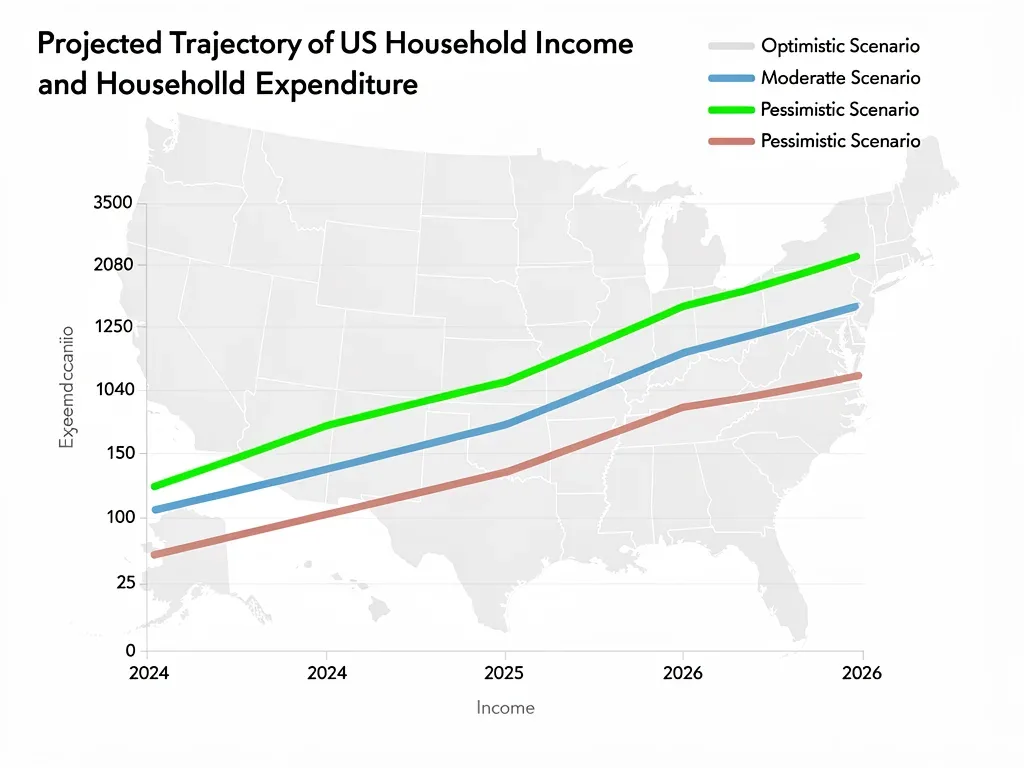
In essence, the dance between inflation and interest rates will be a critical determinant of consumer financial health in 2026. A favorable environment, with stable prices and manageable borrowing costs, would undoubtedly bolster confidence and spending. However, any deviation from this ideal scenario could lead to more constrained consumer behavior.
Employment and Wage Growth: Foundations of Consumer Confidence
A robust labor market, characterized by low unemployment and healthy wage growth, forms the bedrock of strong consumer spending. When people feel secure in their jobs and see their incomes rising, they are more likely to spend on goods and services, invest, and contribute to economic expansion. Heading into 2026, the state of the US job market will be a pivotal indicator.
The US labor market has shown remarkable resilience in recent years, often defying predictions of slowdowns. However, structural changes, such as automation and the evolving demands for skilled labor, continue to reshape employment opportunities. The challenge for 2026 will be to maintain this strength while adapting to these shifts, ensuring broad-based wage gains rather than concentrated increases.
Analyzing Unemployment and Labor Participation
Unemployment rates are a straightforward measure of labor market health. Low unemployment generally signals a tight job market where employers compete for talent, often leading to higher wages. Labor force participation rates, meanwhile, indicate the proportion of the working-age population actively employed or seeking work, reflecting broader economic engagement.
- Continued Low Unemployment: If current trends persist, 2026 could see sustained low unemployment rates, empowering workers and supporting consumer purchasing power.
- Sectoral Shifts in Employment: Growth might be concentrated in specific sectors like technology, healthcare, and green energy, while traditional industries may see slower job creation or even declines.
- Impact of Automation and AI: The increasing adoption of automation and artificial intelligence could displace some jobs while creating new, often higher-skilled, roles, necessitating workforce retraining and adaptation.
- Labor Force Participation: Efforts to encourage older workers to remain in the workforce and to address childcare barriers could boost participation rates, expanding the labor pool.
Wage growth is another crucial component. While nominal wage increases have been strong, real wage growth (adjusted for inflation) is what truly matters for consumer spending power. If real wages grow consistently, consumers will have more discretionary income, fueling demand across various sectors.
In summary, a healthy employment picture, characterized by low unemployment and positive real wage growth, is fundamental for sustained consumer confidence and spending. Policymakers and businesses will need to focus on fostering an environment that supports job creation and skill development to ensure the labor market remains a robust engine for the US economy in 2026.
Global Trade Dynamics and Supply Chain Resilience
The interconnectedness of the global economy means that trade dynamics and the resilience of supply chains profoundly influence the availability and pricing of goods for US consumers. By 2026, the lessons learned from recent disruptions will likely have solidified into new strategies, but potential vulnerabilities remain.
Recent years have highlighted the fragility of global supply chains, with events ranging from pandemics to geopolitical conflicts causing significant bottlenecks and price surges. For 2026, the focus will be on diversification, nearshoring, and technological solutions to build more robust and adaptable supply networks. A stable and efficient global trade environment is critical for ensuring consumers have access to a wide variety of affordable products.
Key Shifts in International Trade Policy
Trade policies, both bilateral and multilateral, will continue to evolve, impacting tariffs, trade agreements, and market access for US businesses and consumers.
- Regional Trade Blocs: The strengthening of regional trade agreements could lead to more integrated supply chains within specific geographical areas, potentially reducing reliance on distant suppliers.
- Tariff Adjustments: Ongoing negotiations and geopolitical considerations may lead to adjustments in tariffs on various goods, which can either increase or decrease import costs for consumers.
- Focus on Critical Goods: Increased national security concerns may prompt governments to prioritize domestic production or diversified sourcing for critical goods, such as semiconductors and pharmaceuticals.
- Digital Trade Norms: The development of new international norms for digital trade will impact cross-border e-commerce and the flow of data, influencing how businesses operate and consumers shop online.
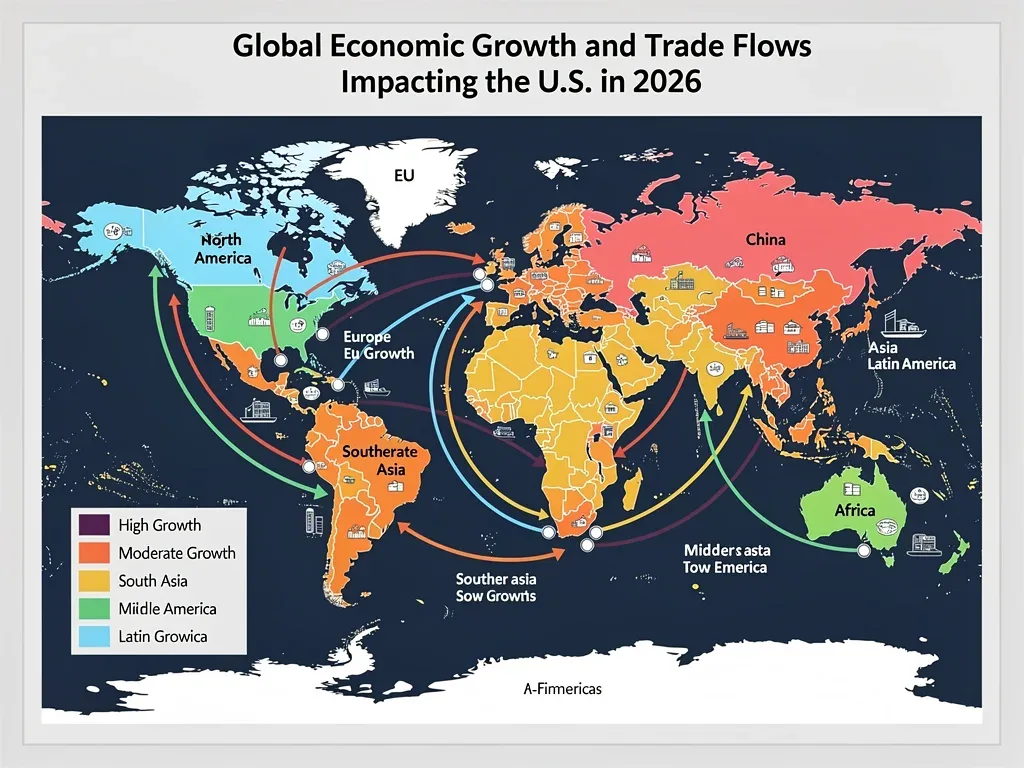
The resilience of supply chains will be measured by their ability to withstand shocks and adapt quickly. Investments in automation, real-time tracking, and diversified sourcing strategies are expected to mature by 2026, leading to more predictable availability of goods.
Ultimately, a stable and efficient global trade environment, underpinned by resilient supply chains, directly benefits US consumers through competitive pricing and consistent product availability. Any significant disruptions, however, could lead to inflationary pressures and reduced choices, impacting overall consumer spending patterns.
Technological Advancement and Consumer Behavior Evolution
Technological advancement is a relentless force reshaping every facet of life, and its influence on consumer behavior is profound. By 2026, we can anticipate further integration of advanced technologies into daily routines, fundamentally altering how consumers interact with products, services, and brands. This evolution will not only impact what consumers buy but also how they research, purchase, and experience goods.
The rapid pace of innovation in areas like artificial intelligence, virtual reality, and personalized digital experiences is setting the stage for significant shifts. Consumers are becoming increasingly sophisticated, expecting seamless, personalized, and efficient interactions. Businesses that fail to adapt to these evolving expectations risk being left behind, while those that embrace technological integration will likely capture a larger share of consumer spending.
Emerging Technologies and Their Consumer Impact
- AI-Powered Personalization: Artificial intelligence will enable hyper-personalized recommendations and experiences, making shopping more efficient and tailored to individual preferences, potentially increasing conversion rates.
- Augmented and Virtual Reality Shopping: AR/VR technologies could revolutionize online shopping by offering immersive product previews, virtual try-ons, and enhanced remote shopping experiences, blurring the lines between physical and digital retail.
- Seamless Payment Systems: Advancements in digital wallets, biometric payments, and potentially central bank digital currencies (CBDCs) could make transactions faster, more secure, and more convenient, reducing friction in the purchasing process.
- Subscription Economy Expansion: The growth of subscription models for a wider array of goods and services, from software to everyday essentials, will continue to shape how consumers allocate their recurring expenditures.
Beyond these specific technologies, the overarching trend is towards greater convenience, efficiency, and customization. Consumers will increasingly prioritize brands that can deliver these attributes, influencing their spending decisions and brand loyalty. The digital divide, however, could also become more pronounced, impacting equitable access to these advancements.
In conclusion, technological advancements will be a powerful catalyst for change in US consumer behavior by 2026. Businesses that strategically leverage AI, AR/VR, and seamless payment solutions to enhance the customer journey will likely thrive, while consumers will benefit from more personalized, efficient, and engaging shopping experiences.
Geopolitical Stability and Consumer Confidence
Geopolitical stability, or the lack thereof, casts a long shadow over economic forecasts and directly impacts consumer confidence. In an increasingly interconnected world, conflicts, political tensions, and policy shifts in one region can send ripples across the globe, influencing everything from energy prices to investment decisions and, ultimately, US consumer spending. By 2026, the global geopolitical landscape will be a critical factor in shaping the economic mood.
Uncertainty stemming from international affairs can cause consumers to become more cautious, leading to reduced discretionary spending and increased savings. Conversely, periods of relative peace and stability tend to foster optimism, encouraging greater economic activity. The challenge for 2026 is to assess potential flashpoints and their likely economic fallout, understanding that consumer confidence is highly sensitive to perceived risks.
Assessing Geopolitical Risks and Their Economic Fallout
Several areas of geopolitical concern could pose risks to global stability and, consequently, to US consumer confidence and spending.
- Regional Conflicts: Ongoing or new regional conflicts can disrupt global supply chains, drive up commodity prices (especially energy), and create widespread economic uncertainty.
- US-China Relations: The state of economic and political relations between the US and China will heavily influence global trade flows, technological development, and investment climates, with direct implications for US markets.
- Cybersecurity Threats: State-sponsored cyberattacks or large-scale data breaches could erode consumer trust in digital commerce and financial systems, impacting online spending.
- Energy Security: Geopolitical events in major oil and gas producing regions can directly affect global energy prices, which then translate into higher costs for US consumers at the pump and for utilities.
Beyond direct economic impacts, geopolitical tensions can also influence government spending priorities, potentially diverting resources from domestic programs or leading to increased defense expenditures. Such shifts can have indirect, but significant, impacts on the domestic economy.
Ultimately, a stable and predictable international environment is conducive to robust consumer confidence. Should geopolitical tensions escalate, US consumers may adopt a more conservative approach to spending, prioritizing necessities over discretionary purchases. Monitoring these global dynamics will be essential for any accurate forecast of 2026 consumer behavior.
Policy Responses and Future Outlook for US Spending
Government policies and central bank actions serve as crucial levers in influencing economic outcomes and, by extension, consumer spending. As we look to 2026, the nature of fiscal and monetary policy responses to prevailing economic conditions will significantly shape the environment for American consumers. These policy decisions can either stimulate growth and confidence or introduce headwinds, depending on their design and implementation.
Policymakers will be balancing multiple objectives: managing inflation, fostering job growth, ensuring financial stability, and addressing long-term structural challenges. The effectiveness and coordination of these responses will be paramount in determining the trajectory of US consumer spending. A proactive and well-calibrated policy framework can mitigate risks and capitalize on opportunities, creating a more favorable economic climate.
Key Policy Areas Influencing Consumer Spending
Several policy domains will be particularly relevant in shaping the consumer landscape by 2026.
- Monetary Policy (Federal Reserve): Decisions on interest rates and quantitative easing/tightening will directly affect borrowing costs for consumers and businesses, influencing everything from mortgage rates to credit card APRs.
- Fiscal Policy (Government Spending & Taxation): Government expenditures on infrastructure, social programs, or tax cuts/hikes can inject or withdraw money from the economy, directly impacting disposable income and consumer demand.
- Regulatory Environment: Regulations across various sectors, including finance, energy, and technology, can influence business investment, market competition, and consumer protections, indirectly affecting spending patterns.
- Trade Policy: Agreements and tariffs will continue to shape the prices and availability of imported goods, directly impacting consumer purchasing power and choices.
The interplay between these policy areas is complex. For instance, aggressive monetary tightening to combat inflation might be offset by expansionary fiscal policy, leading to mixed signals for the economy. The political climate will also play a significant role, as policy decisions are often influenced by electoral cycles and partisan priorities.
Considering the future outlook, if policymakers successfully navigate the challenges of inflation and geopolitical instability, while fostering innovation and job growth, US consumer spending in 2026 could see steady, albeit moderate, expansion. However, missteps or uncoordinated responses could lead to volatility and a more cautious consumer base.
In conclusion, the policy responses enacted between now and 2026 will be instrumental in setting the stage for US consumer spending. A balanced approach that addresses both immediate economic concerns and long-term structural issues will be crucial for fostering a stable and prosperous environment for American households.
| Key Economic Factor | 2026 Impact on US Consumer Spending |
|---|---|
| Inflation & Interest Rates | Directly affects purchasing power and borrowing costs; moderation could boost spending. |
| Employment & Wage Growth | Strong labor market and real wage gains underpin consumer confidence and discretionary spending. |
| Global Trade & Supply Chains | Stability ensures product availability and competitive pricing, supporting consumer choice. |
| Technological Advancements | Drives new consumption patterns, personalized experiences, and efficient purchasing. |
Frequently Asked Questions About 2026 Economic Outlook
How will global GDP growth affect US consumers in 2026?▼Global GDP growth in 2026 will indirectly influence US consumers by impacting international trade, commodity prices, and financial market stability. Strong global growth typically supports US exports and corporate earnings, which can translate into better job prospects and higher incomes for American households, boosting spending.
What role will interest rates play in US consumer spending by 2026?▼Interest rates will be crucial. If inflation is contained and rates stabilize or decline, borrowing costs for mortgages, auto loans, and credit cards will decrease, freeing up disposable income for other purchases. Conversely, persistently high rates could dampen consumer demand and investment.
Will geopolitical events significantly impact US consumer confidence in 2026?▼Yes, geopolitical events can significantly impact consumer confidence. Major conflicts or political instability can lead to uncertainty, driving up energy prices and disrupting supply chains. Such events often cause consumers to become more cautious, reducing discretionary spending and increasing savings as a hedge against future economic shocks.
How might technological advancements change US consumer spending habits?▼Technological advancements, particularly in AI, AR/VR, and seamless payments, will lead to more personalized, efficient, and immersive shopping experiences. This could drive new consumption patterns, increase online spending, and foster demand for innovative products and services that integrate these new technologies into daily life.
What are the main risks to US consumer spending projections for 2026?▼Key risks include a resurgence of inflation, unexpected geopolitical conflicts, significant supply chain disruptions, and a potential slowdown in global economic growth. Any of these factors could erode consumer purchasing power, reduce confidence, and lead to a more conservative approach to spending by American households.
Conclusion: Navigating the Future of US Consumer Spending
The journey into 2026 reveals a complex interplay of global economic indicators that will profoundly shape US consumer spending. From the delicate balance of inflation and interest rates to the foundational strength of the labor market, and from the resilience of global supply chains to the transformative power of technology and the ever-present specter of geopolitical shifts, each factor contributes significantly to the overall economic narrative. While forecasts suggest a path towards continued, albeit moderate, growth, the sensitivity of consumer confidence to these varied influences cannot be overstated. For businesses and individuals alike, an informed understanding of these dynamics will be crucial for strategic planning and financial resilience. Adapting to evolving economic landscapes and embracing innovation will be key to thriving in the years ahead, ensuring that US consumer spending remains a vibrant engine of the economy.