Dollar’s Strength 2026: Key Economic Indicators for US Importers
Advertisements
US importers need to closely monitor four key economic indicators – inflation, interest rates, trade balances, and GDP growth – to strategically navigate the dollar’s projected strength in 2026, mitigating risks and optimizing procurement.
As U.S. importers look ahead to 2026, understanding the trajectory of the dollar’s strength in 2026 is paramount. This article delves into the critical economic indicators that will shape the dollar’s value, offering insights crucial for strategic planning and risk management in the evolving global economic landscape.
Understanding the Dollar’s Influence on U.S. Imports
The strength of the U.S. dollar profoundly impacts the landscape for American importers. A stronger dollar means that U.S. businesses can purchase more foreign goods and services for the same amount of dollars, effectively making imports cheaper. While this might seem like an immediate boon for importers, the reality is more nuanced, involving a complex interplay of market dynamics, competitive pressures, and long-term strategic considerations.
When the dollar appreciates significantly, it can lead to increased import volumes as the purchasing power of U.S. consumers and businesses rises. This can fuel domestic consumption and provide a wider array of goods at potentially lower prices. However, a persistently strong dollar can also create challenges. It can make U.S. exports more expensive, potentially hurting domestic manufacturers who rely on international sales and creating an imbalance in trade.
Competitive Advantages and Disadvantages
For importers, a strong dollar can translate into several direct and indirect benefits. The most obvious is the reduced cost of goods, which can improve profit margins or allow for more competitive pricing in the domestic market. This competitive edge can be significant, especially in sectors heavily reliant on imported raw materials or finished products.
- Lower Sourcing Costs: Direct reduction in the cost of acquiring goods from abroad.
- Increased Purchasing Power: Ability to buy more goods or higher quality goods with the same investment.
- Broader Supplier Base: Access to a wider range of international suppliers due to favorable exchange rates.
- Enhanced Consumer Options: A greater variety of imported products available to U.S. consumers at attractive prices.
Conversely, a strong dollar can also present hidden disadvantages. Domestic producers might struggle to compete with cheaper imports, potentially leading to calls for protectionist measures or tariffs. Furthermore, businesses that both import and export might find their export revenues diminished, offsetting any gains from cheaper imports. The balance between these forces is delicate and requires careful monitoring.
In essence, while a strong dollar generally favors importers by making foreign goods more affordable, its broader economic implications demand a comprehensive strategic approach. Understanding these dynamics is the first step in preparing for the economic realities of 2026.
Inflation Rates: A Double-Edged Sword for Importers
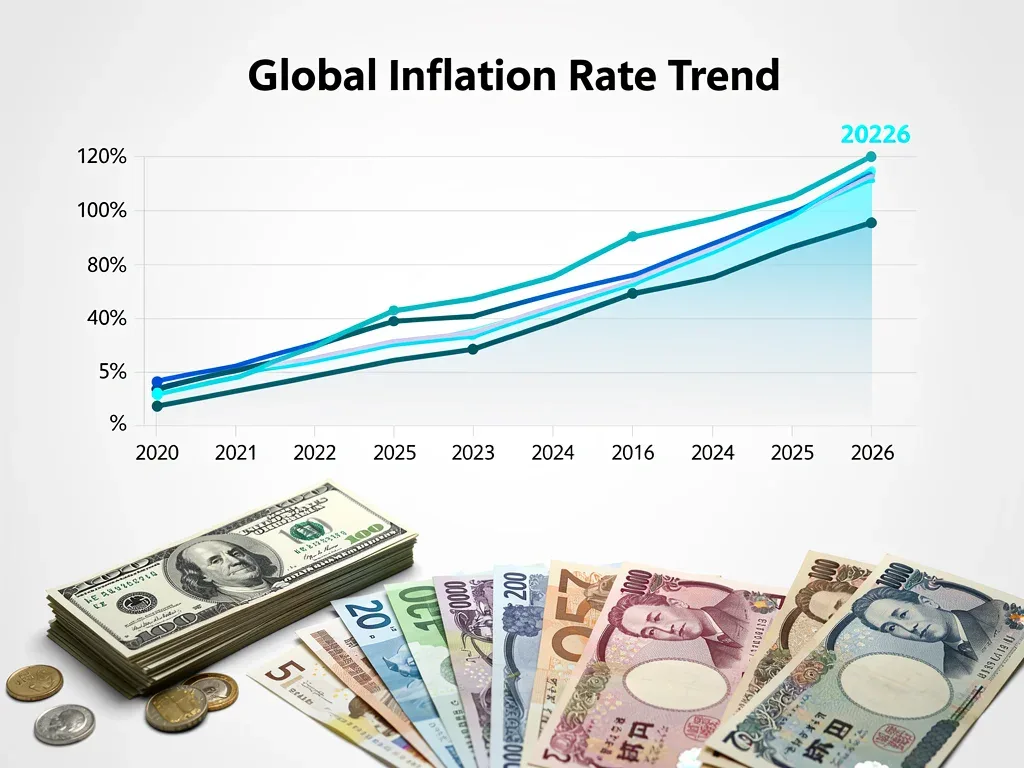
Inflation, or the rate at which the general level of prices for goods and services is rising, serves as a crucial indicator for U.S. importers. Its impact on the dollar’s strength is multifaceted, directly influencing purchasing power and the overall cost of doing business internationally. High domestic inflation can erode the dollar’s value internally, but its relative strength against other currencies is what truly matters for import costs.
When analyzing inflation, importers must consider both domestic and global trends. If U.S. inflation is lower than that of its trading partners, the dollar tends to strengthen, as its purchasing power is relatively preserved. Conversely, higher U.S. inflation compared to other nations can weaken the dollar, making imports more expensive. The Federal Reserve’s monetary policy, often a response to inflation, plays a pivotal role in these dynamics.
Domestic vs. Global Inflation Differentials
The differential between U.S. inflation and that of key exporting countries directly affects import costs. A scenario where U.S. inflation is moderate, while inflation in major supplier nations is high, would generally lead to a stronger dollar relative to those currencies. This means U.S. importers can buy more goods from those countries for fewer dollars.
- Favorable for Importers: U.S. inflation lower than trading partners’ inflation.
- Unfavorable for Importers: U.S. inflation higher than trading partners’ inflation.
- Monetary Policy Response: Federal Reserve actions to control inflation can indirectly strengthen or weaken the dollar.
However, if global inflation is rampant and the U.S. dollar is perceived as a safe haven, it can attract foreign investment, further bolstering its strength. This capital inflow can create a positive feedback loop, where the dollar strengthens due to its stability, even if domestic inflation is a concern. Importers must therefore track inflation not just as a standalone metric, but in relation to global economic conditions and central bank responses.
Monitoring inflation rates in both the U.S. and major exporting countries is essential for predicting currency movements and adjusting import strategies. Understanding these differentials allows importers to anticipate changes in their cost structures and plan accordingly for 2026.
Interest Rate Differentials and Capital Flows
Interest rates are a fundamental driver of currency values, and their differentials between countries significantly influence capital flows, directly impacting the dollar’s strength. Higher interest rates in the U.S. relative to other major economies tend to attract foreign investment, as investors seek better returns on their capital. This increased demand for dollar-denominated assets strengthens the dollar.
The Federal Reserve’s policy decisions on interest rates are therefore critical for U.S. importers. A hawkish stance, where the Fed signals or enacts rate hikes, typically supports a stronger dollar. Conversely, a dovish approach, indicating lower rates or quantitative easing, can put downward pressure on the dollar. These decisions are often made in response to inflation, employment data, and overall economic stability.
The Magnet of Higher Returns
When U.S. interest rates offer a more attractive return compared to those in Europe, Japan, or other significant economic blocs, global investors are incentivized to convert their local currencies into dollars to invest in U.S. bonds, equities, or other financial instruments. This surge in demand for the dollar in foreign exchange markets directly increases its value.
- Investment Attraction: Higher U.S. interest rates draw foreign capital.
- Currency Appreciation: Increased demand for dollars strengthens its value.
- Fed Policy Impact: Federal Reserve decisions are key predictors of rate movements.
- Global Economic Stability: In times of uncertainty, the U.S. dollar often acts as a safe-haven currency, further boosting demand.
For importers, a stronger dollar dueated by interest rate differentials means that their foreign currency purchases become cheaper. This can lead to lower input costs for goods sourced from abroad. However, it also means that the cost of borrowing in foreign currencies might increase if they have operations or financing abroad, adding another layer of complexity to their financial planning.
Therefore, keeping a close watch on the Federal Reserve’s statements, minutes from FOMC meetings, and economic forecasts from other central banks is vital. These insights provide valuable clues about future interest rate movements and, consequently, the dollar’s potential trajectory in 2026, enabling importers to make informed decisions.
Trade Balances: The Supply and Demand of Currency
The U.S. trade balance, which measures the difference between its exports and imports, is a significant indicator of the dollar’s underlying demand and supply in global markets. A trade deficit, where imports exceed exports, typically suggests that more dollars are flowing out of the U.S. economy to pay for foreign goods than are flowing in from the sale of U.S. goods abroad. This can, in theory, weaken the dollar over time as the supply of dollars in international markets increases.
Conversely, a trade surplus, where exports outweigh imports, implies a higher demand for dollars from foreign buyers, which can strengthen the currency. However, the relationship between trade balances and currency strength is not always straightforward and can be influenced by other factors like capital flows and global economic conditions.
Impact of Import Volumes and Export Competitiveness
For U.S. importers, a persistent trade deficit might seem counterintuitive to a strong dollar. Yet, if the deficit is driven by robust domestic demand and a strong U.S. economy, it can actually signal underlying economic health that supports the dollar. Foreign investors might view a strong U.S. economy as an attractive place for investment, offsetting the downward pressure from the trade deficit through capital inflows.
- Trade Deficit: More dollars flow out to pay for imports.
- Trade Surplus: More foreign currency flows in from exports, increasing demand for dollars.
- Capital Flows: Can offset trade balance effects on currency strength.
- Domestic Demand: Strong U.S. consumer and business demand can drive imports, influencing the deficit.
Moreover, the competitiveness of U.S. exports plays a crucial role. If U.S. goods and services are highly sought after globally, it can generate significant demand for dollars, even if import volumes are high. Technological innovation, product quality, and global market trends all contribute to this competitiveness.
Importers need to analyze the components of the trade balance – not just the headline number. Understanding what types of goods are being imported and exported, and the underlying reasons for these trends, provides a more accurate picture of the dollar’s valuation. This detailed analysis is key to forecasting the dollar’s strength in 2026 and adjusting procurement strategies accordingly.
Gross Domestic Product (GDP) Growth and Economic Health
Gross Domestic Product (GDP) growth is perhaps the most comprehensive indicator of a nation’s economic health, and a strong U.S. GDP growth rate typically correlates with a stronger dollar. A robust economy signals to investors that the country is a safe and profitable place to invest, attracting foreign capital and increasing demand for the dollar. For U.S. importers, this translates into a more favorable exchange rate when purchasing goods from abroad.
Sustained economic expansion means higher consumer spending, business investment, and overall productivity. This, in turn, can lead to higher employment rates and increased wages, further boosting domestic demand. While a booming economy might lead to increased imports to meet this demand, the underlying strength it provides to the dollar often outweighs the currency-weakening effects of a trade deficit.
The Attractiveness of a Growing Economy
When the U.S. economy is growing faster than its peers, it becomes a magnet for international investment. Foreign direct investment (FDI) and portfolio investments flow into the U.S., increasing the demand for dollars. This capital inflow helps to strengthen the dollar, making imports cheaper for U.S. businesses.
- Strong GDP Growth: Signals economic health and attracts foreign investment.
- Increased Demand for Dollar: Capital inflows boost the dollar’s value.
- Consumer Confidence: Higher employment and wages encourage spending, including on imports.
- Global Competitiveness: A strong economy enhances the U.S.’s position in global trade.
However, it is crucial for importers to differentiate between sustainable growth and overheating. Unsustainable growth can lead to inflationary pressures, which might prompt the Federal Reserve to raise interest rates, potentially strengthening the dollar in the short term but also risking a slowdown. The quality of GDP growth – whether it’s driven by productivity gains or simply fiscal stimulus – also matters.
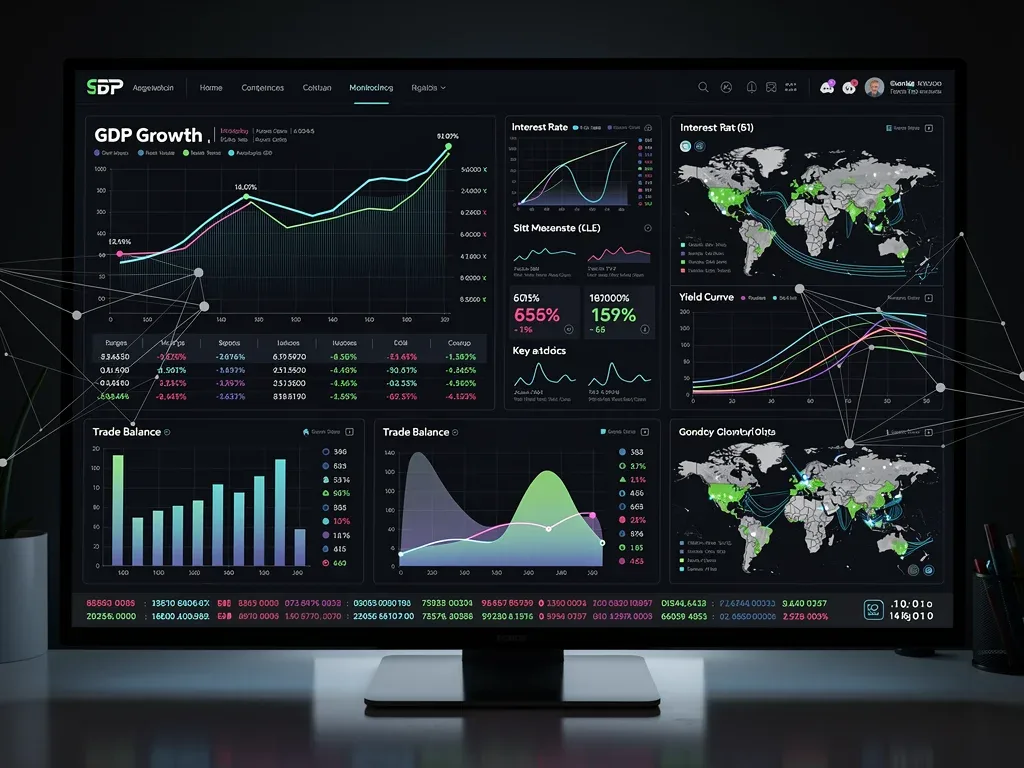
Monitoring GDP growth projections for 2026, alongside other leading economic indicators, will provide U.S. importers with a clearer understanding of the dollar’s likely trajectory. This comprehensive view allows for proactive adjustments to purchasing agreements and supply chain management, ensuring resilience in a dynamic global market.
Geopolitical Factors and Safe-Haven Status
Beyond traditional economic indicators, geopolitical events significantly influence currency markets, often causing rapid shifts in the dollar’s strength. In times of global uncertainty, political instability, or economic crises elsewhere in the world, the U.S. dollar frequently assumes a ‘safe-haven’ status. This means that investors flock to the dollar, viewing it as a stable and reliable store of value when other currencies or assets are perceived as risky.
This flight to safety can dramatically increase demand for the dollar, strengthening it against other major currencies, regardless of immediate U.S. economic data. For U.S. importers, this can present both opportunities and challenges. While a stronger dollar makes imports cheaper, the underlying global instability might disrupt supply chains, increase shipping costs, or create unforeseen market volatility.
Impact of Global Instability
Geopolitical tensions, such as conflicts, trade wars, or political upheavals in key regions, can trigger a surge in demand for the dollar. For example, if there is significant political unrest in Europe or economic turmoil in Asia, investors might pull their capital from those regions and invest it in U.S. treasuries or other dollar-denominated assets. This capital migration strengthens the dollar.
- Global Conflicts: Wars or regional tensions boost dollar demand as a safe haven.
- Political Uncertainty: Instability in major economies drives capital to the U.S.
- Trade Wars: Tariffs and trade disputes can create uncertainty, strengthening the dollar.
- Economic Crises: Financial instability abroad leads investors to seek dollar safety.
Furthermore, the U.S.’s role as the world’s largest economy and the primary reserve currency means that its financial markets are often seen as the most liquid and secure. This inherent advantage reinforces its safe-haven appeal. However, it’s important to note that prolonged global instability can also have negative repercussions on global trade and economic growth, which could eventually impact U.S. economic performance and, by extension, the dollar.
Therefore, U.S. importers must not only track economic figures but also stay abreast of global political developments and international relations. Integrating geopolitical analysis into their strategic planning will be crucial for anticipating the dollar’s movements in 2026 and mitigating potential disruptions to their import operations.
Strategic Implications for U.S. Importers in 2026
Navigating the potential strength of the U.S. dollar in 2026 requires U.S. importers to adopt proactive and adaptive strategies. The interplay of inflation rates, interest rate differentials, trade balances, GDP growth, and geopolitical factors creates a dynamic environment that demands continuous monitoring and strategic adjustments. Ignoring these indicators could lead to missed opportunities or unexpected cost increases.
For importers, a strengthening dollar offers the immediate benefit of reduced purchasing costs for goods from abroad. This provides an opportunity to enhance profit margins, offer more competitive pricing to consumers, or invest in higher-quality products. However, relying solely on this advantage without considering the broader implications can be risky. Long-term contracts, currency hedging, and diversification of sourcing are key components of a robust import strategy.
Mitigating Risks and Maximizing Opportunities
One of the primary strategies for importers is to engage in currency hedging. This involves using financial instruments, such as forward contracts or options, to lock in an exchange rate for future transactions, thereby protecting against adverse currency movements. While a strong dollar might make hedging seem less urgent, unexpected shifts can occur, making it a valuable risk management tool.
- Currency Hedging: Secure exchange rates for future transactions.
- Diversified Sourcing: Reduce reliance on single countries or currencies.
- Negotiate Favorable Terms: Leverage stronger dollar to negotiate better prices with suppliers.
- Monitor Global Supply Chains: Assess geopolitical risks and potential disruptions.
- Utilize Technology: Employ predictive analytics for currency forecasting.
Furthermore, diversifying sourcing locations can help mitigate risks associated with currency fluctuations in any single country. By sourcing from multiple regions, importers can spread their currency exposure and potentially benefit from weaker currencies in other markets. This also builds resilience against supply chain disruptions stemming from geopolitical events or localized economic downturns.
Ultimately, a comprehensive understanding of the factors driving the dollar’s strength in 2026 empowers U.S. importers to make informed decisions. By integrating economic forecasts with strategic financial planning and supply chain management, businesses can not only weather currency volatility but also capitalize on opportunities presented by a powerful dollar, ensuring sustained growth and competitiveness in the global marketplace.
| Key Economic Indicator | Impact on Dollar Strength & Importers |
|---|---|
| Inflation Rates | Lower U.S. inflation relative to trading partners strengthens the dollar, making imports cheaper. |
| Interest Rate Differentials | Higher U.S. rates attract foreign capital, increasing dollar demand and strengthening its value. |
| Trade Balances | Trade deficits can weaken the dollar, but strong capital inflows or robust economy can offset this. |
| GDP Growth | Strong U.S. economic growth attracts investment, boosting dollar demand and strengthening its value. |
Frequently Asked Questions About the Dollar’s Strength in 2026
How will U.S. inflation influence the dollar’s strength in 2026?▼U.S. inflation relative to other countries is key. If U.S. inflation is lower than its trading partners, the dollar tends to strengthen, making imports cheaper. Conversely, higher U.S. inflation could weaken the dollar’s international purchasing power.
What role do interest rates play in the dollar’s value for importers?▼Higher U.S. interest rates relative to other major economies attract foreign capital, increasing demand for the dollar and strengthening its value. This makes foreign goods more affordable for U.S. importers, reducing their acquisition costs.
Can a U.S. trade deficit coexist with a strong dollar in 2026?▼Yes, a trade deficit can coexist with a strong dollar if it’s offset by significant capital inflows. If the U.S. economy is robust and attracts foreign investment, the demand for dollars from investors can outweigh the outflow from importing more goods.
How does U.S. GDP growth affect importers regarding the dollar?▼Strong U.S. GDP growth signals a healthy economy, which typically attracts foreign investment and increases demand for the dollar, thereby strengthening it. This enhances the purchasing power of U.S. importers, making imported goods more cost-effective.
What other factors should importers monitor besides economic indicators?▼Beyond core economic indicators, U.S. importers should closely monitor geopolitical developments. Global instability often leads to the dollar being seen as a safe-haven currency, causing it to strengthen unexpectedly, which can impact supply chains and pricing.
Conclusion
The journey through 2026 for U.S. importers will be significantly shaped by the evolving strength of the U.S. dollar. By diligently monitoring inflation rates, interest rate differentials, trade balances, and GDP growth, businesses can gain a strategic advantage. These four economic indicators, combined with an awareness of geopolitical shifts, provide a comprehensive framework for understanding currency movements. Proactive planning, including currency hedging and diversified sourcing, will be essential for mitigating risks and capitalizing on the opportunities presented by a potentially strong dollar, ensuring resilience and profitability in the dynamic global marketplace.