2026 Global Debt Crisis: Impact on U.S. Interest Rates
Advertisements
The projected 2026 global debt crisis is poised to exert significant pressure on U.S. interest rates, potentially leading to increased borrowing costs and economic instability, according to expert analysis.
As we approach 2026, the specter of a significant global debt crisis 2026 looms large, raising critical questions about its potential ripple effects on the U.S. economy. How might this impending financial challenge reshape the landscape of U.S. interest rates, and what does this mean for American households and businesses? Let’s delve into an expert analysis of this complex and evolving situation.
Understanding the Looming Global Debt Crisis
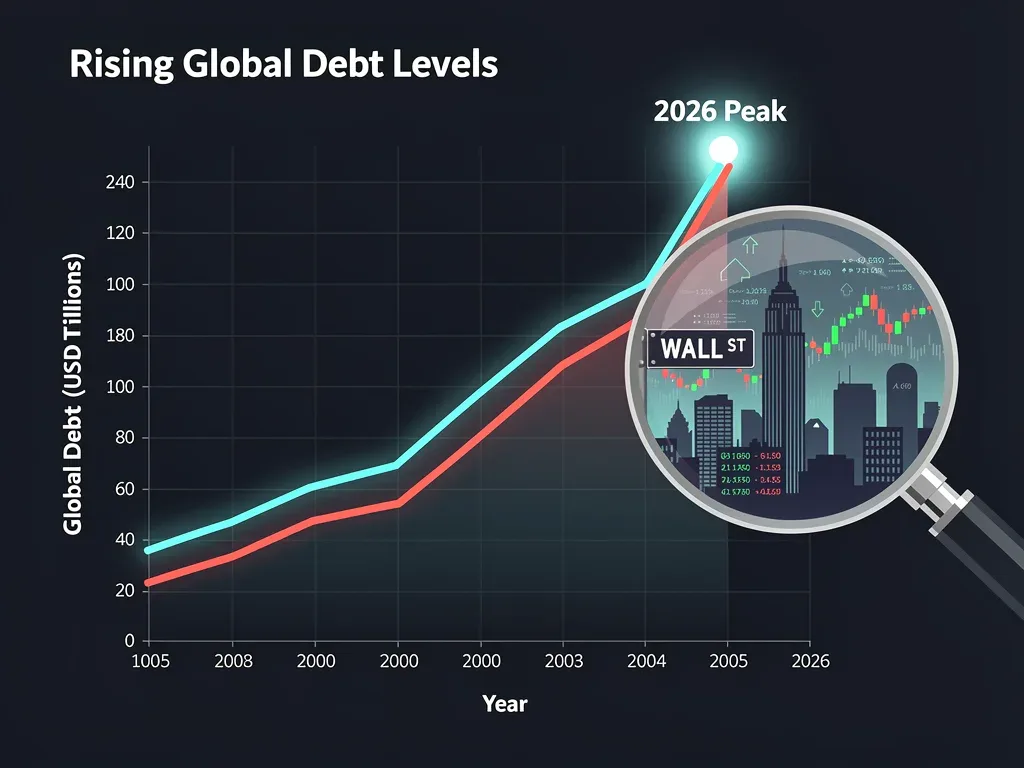
The global economy is currently navigating unprecedented levels of debt, a situation exacerbated by years of accommodative monetary policies and massive fiscal stimuli in response to various crises. This accumulation of debt, both public and private, across developed and emerging economies, creates a fragile financial environment. Experts project that by 2026, this debt could reach a critical juncture, testing the resilience of national economies and international financial systems.
Several factors contribute to this escalating debt problem. Governments worldwide have taken on substantial obligations to fund social programs, infrastructure projects, and emergency responses. Simultaneously, corporations have leveraged low interest rates to borrow heavily, often for share buybacks or mergers rather than productive investments. This over-reliance on debt financing makes the global financial system vulnerable to shocks, such as sudden shifts in investor sentiment or unexpected economic downturns.
The Genesis of Excessive Debt
The roots of the current global debt situation are multifaceted, stemming from a confluence of historical events and policy choices. The 2008 financial crisis, followed by the European sovereign debt crisis, prompted central banks to adopt quantitative easing and near-zero interest rates. While these measures averted immediate collapse, they also encouraged an environment of cheap money, leading to increased borrowing.
- Post-2008 Stimulus: Central banks globally lowered rates and injected liquidity.
- COVID-19 Response: Unprecedented fiscal and monetary support during the pandemic.
- Low-Interest Rate Environment: Encouraged both governments and corporations to borrow more.
The pandemic further accelerated this trend, as governments issued vast amounts of debt to cushion economic blows and fund vaccine development and distribution. This necessary but costly intervention pushed global debt-to-GDP ratios to historic highs. The challenge now lies in unwinding these positions without triggering a new crisis, a task made more complicated by geopolitical tensions and persistent inflation.
In essence, the looming global debt crisis 2026 is not a sudden phenomenon but the culmination of decades of borrowing, amplified by recent global events. Understanding its origins is crucial for anticipating its potential effects and formulating effective responses, particularly for economies like the U.S. that are deeply integrated into the global financial fabric.
Direct Transmission Channels to U.S. Interest Rates
A global debt crisis, even if originating outside U.S. borders, can significantly impact U.S. interest rates through various direct transmission channels. These channels include capital flows, safe-haven demand, and the Federal Reserve’s policy responses to international financial instability. When global markets experience distress, the interconnectedness of financial systems ensures that no major economy remains untouched.
One primary channel is the flight to safety. During periods of global economic uncertainty or crisis, investors tend to move their capital into perceived safe-haven assets. Historically, U.S. Treasury bonds have been the ultimate safe haven due to the perceived stability of the U.S. government and the depth and liquidity of its financial markets. An increased demand for U.S. Treasuries would typically drive up their prices and, consequently, lower their yields, which are inversely related to interest rates.
Capital Flight and Treasury Demand
Should the global debt crisis 2026 intensify, we could observe a significant surge in demand for U.S. government debt. This capital flight from riskier assets in other nations towards U.S. Treasuries would create downward pressure on U.S. benchmark interest rates. However, this effect is not always straightforward and can be counteracted by other forces.
- Increased Demand for Treasuries: Drives bond prices up, yields down.
- Lower U.S. Borrowing Costs: Potentially beneficial for the U.S. government.
- Currency Appreciation: Stronger dollar could impact U.S. exports.
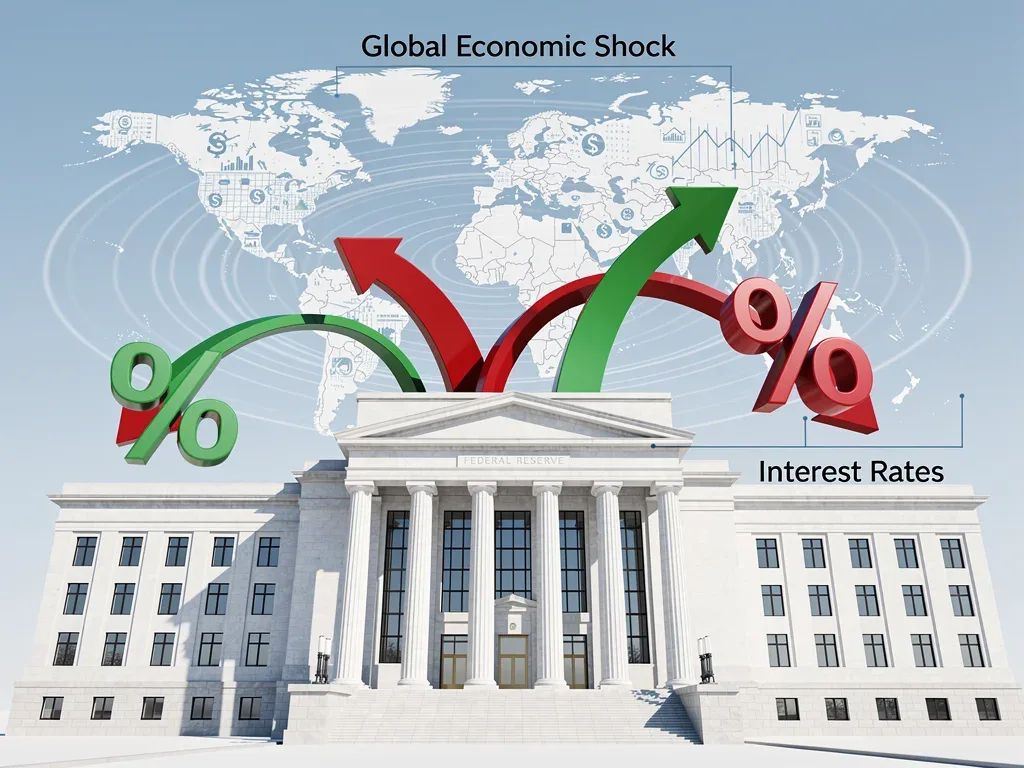
Conversely, if the crisis is perceived as deeply destabilizing to the entire global financial system, including the U.S., or if the U.S. itself is seen as part of the problem due to its own high debt levels, investors might demand higher yields to compensate for perceived risk. This scenario would lead to an increase in U.S. interest rates, making borrowing more expensive for the government, businesses, and consumers. The Federal Reserve’s actions would also play a pivotal role in mediating these effects, as it balances domestic stability with global financial conditions.
Therefore, the direct impact on U.S. interest rates from a global debt crisis is a dynamic interplay between safe-haven flows and risk perception. The severity and nature of the crisis will largely determine whether U.S. rates fall due to increased demand for safety or rise due to heightened risk aversion across the board.
Indirect Economic Linkages and Monetary Policy
Beyond direct capital flows, a global debt crisis can indirectly influence U.S. interest rates through broader economic linkages and the resultant monetary policy responses. The U.S. economy is deeply intertwined with global trade, supply chains, and financial markets. Disruptions overseas inevitably reverberate within the American economic landscape, compelling the Federal Reserve to adjust its monetary policy stance.
One significant indirect channel is through global economic growth. A severe global debt crisis would likely trigger a slowdown, or even a recession, in many parts of the world. This would reduce demand for U.S. exports, dampen corporate profits for multinational companies, and potentially lead to job losses in export-oriented sectors. Such a scenario would put disinflationary or even deflationary pressure on the U.S. economy, prompting the Federal Reserve to consider lowering interest rates to stimulate growth and avoid a prolonged downturn.
Global Recessionary Pressures
A widespread global economic contraction, fueled by debt defaults and financial instability, would certainly impact U.S. growth prospects. The Federal Reserve’s dual mandate of maximum employment and price stability would be severely tested. Faced with weakening economic activity and potentially falling inflation, the Fed would likely lean towards an easing monetary policy, which typically involves reducing the federal funds rate.
- Reduced Global Demand: Impacts U.S. exports and corporate earnings.
- Disinflationary Pressures: Could lead to lower U.S. inflation.
- Fed Easing: Potential for interest rate cuts to stimulate economy.
However, the Fed’s response would also depend on the nature of the crisis. If the debt crisis leads to significant financial market contagion, risking the stability of the U.S. banking system, the Fed might intervene with liquidity injections and other emergency measures, which could have complex effects on short-term rates. Furthermore, if the crisis sparks a flight to quality that strengthens the dollar excessively, it could further hinder U.S. exports and exacerbate disinflationary trends, reinforcing the case for lower U.S. interest rates.
Therefore, the indirect impacts stemming from a global debt crisis 2026 on U.S. interest rates are primarily mediated by its effects on global economic growth and inflation, compelling the Federal Reserve to react with appropriate monetary policy adjustments aimed at preserving domestic economic stability.
The Role of the Federal Reserve in Crisis Management
In the face of a looming global debt crisis 2026, the Federal Reserve would undoubtedly play a critical role in managing its fallout and mitigating its impact on U.S. interest rates and the broader economy. The Fed possesses a powerful toolkit, including its ability to set the federal funds rate, conduct open market operations, and act as a lender of last resort. Its decisions would be crucial in shaping the trajectory of U.S. financial markets.
Should the crisis lead to significant financial market stress and illiquidity, the Fed might resort to unconventional monetary policies, similar to those employed during the 2008 financial crisis and the COVID-19 pandemic. This could involve large-scale asset purchases (quantitative easing) to inject liquidity into the system and push down long-term interest rates. Such measures aim to stabilize financial markets, restore confidence, and support economic activity, even if short-term policy rates are already near zero.
Navigating Policy Dilemmas
The Fed’s challenge would be to balance competing objectives. While a global crisis might warrant lower interest rates to stimulate a slowing economy, persistently high inflation, if still a concern, could complicate this decision. The Fed would need to carefully assess the source of inflation – whether it’s demand-driven or supply-side related – to determine the most effective policy response.
- Interest Rate Adjustments: Lowering rates to stimulate growth.
- Quantitative Easing: Asset purchases to inject liquidity.
- Lender of Last Resort: Providing emergency funding to banks.
Furthermore, the Fed would also need to consider the international implications of its actions. Unilateral decisions could have unintended consequences for global capital flows and exchange rates. Coordination with other major central banks, such as the European Central Bank and the Bank of Japan, would be essential to ensure a coherent and effective global response to the debt crisis. This international cooperation could involve currency swap lines to provide dollar liquidity to foreign central banks, easing global financial tensions.
Ultimately, the Federal Reserve’s response to a global debt crisis 2026 would be a delicate balancing act, requiring flexibility, foresight, and a willingness to deploy both conventional and unconventional tools to safeguard the U.S. economy and maintain financial stability amidst global turmoil.
Historical Precedents and Future Projections
Examining historical financial crises offers valuable insights into how a future global debt crisis 2026 might impact U.S. interest rates. While no two crises are identical, patterns of investor behavior, central bank responses, and economic fallout often share common threads. The Asian Financial Crisis of 1997-98, the Russian default of 1998, and the 2008 global financial crisis all provide context for understanding potential future scenarios.
During the Asian Financial Crisis, for instance, there was an initial flight to safety, boosting demand for U.S. Treasuries and putting downward pressure on U.S. interest rates. The Federal Reserve, under Alan Greenspan, also cut interest rates slightly in 1998 to cushion the U.S. economy from global contagion. Similarly, in 2008, the Fed drastically cut rates to near zero and implemented quantitative easing to combat the severe economic downturn and financial market collapse, demonstrating a proactive stance in crisis management.
Lessons from Past Crises
The key takeaway from these historical events is that global financial distress often leads to an initial flight to U.S. dollar assets, which can temporarily push down U.S. Treasury yields. However, the extent and duration of this effect depend on the severity of the crisis and the Fed’s subsequent actions. If the crisis leads to a deep global recession, the Fed is likely to respond with significant easing, driving U.S. interest rates lower.
- Flight to Safety: Historically lowers U.S. rates temporarily.
- Fed Easing: Aggressive rate cuts during severe crises.
- Global Contagion: Requires coordinated international response.
Looking ahead to 2026, projections suggest a more complex picture. The current environment features higher inflation and more elevated U.S. debt levels compared to previous crises. This could limit the Fed’s room for maneuver. If inflation remains sticky, the Fed might be hesitant to cut rates aggressively, even in the face of a global downturn, to avoid further inflationary pressures. This could mean that while a flight to safety might occur, the overall downward pressure on rates might be less pronounced, or even reversed if investors perceive significant risk in U.S. fiscal sustainability.
Therefore, while history provides a guide, the unique confluence of factors in 2026, particularly the interplay of high debt, inflation, and geopolitical risks, will shape how the global debt crisis 2026 ultimately influences U.S. interest rates, potentially diverging from past patterns.
Impact on U.S. Households and Businesses
The ramifications of a global debt crisis 2026, particularly through its effects on U.S. interest rates, would extend directly to American households and businesses. Interest rates are the lifeblood of credit markets, influencing everything from mortgage payments to corporate borrowing costs. Understanding these impacts is crucial for individuals and companies to prepare for potential economic shifts.
For households, changes in interest rates directly affect borrowing costs. If U.S. interest rates rise due to global financial instability or the Fed’s response, mortgage rates would likely increase, making homeownership more expensive and potentially cooling the housing market. Similarly, interest rates on credit cards, auto loans, and student loans could climb, placing a greater financial burden on consumers. Conversely, if rates fall, borrowing becomes cheaper, potentially stimulating consumer spending and investment.
Borrowing Costs and Investment Decisions
Businesses, especially those reliant on debt financing for expansion or daily operations, would also feel the effects keenly. Higher interest rates mean increased costs for loans and corporate bonds, which can reduce profitability and deter new investments. Small businesses, often more sensitive to credit conditions, could face significant challenges in securing affordable financing, potentially leading to slower growth or even closures.
- Mortgage Rates: Direct impact on home affordability.
- Consumer Loans: Higher costs for credit cards, auto loans.
- Corporate Debt: Increased burden for businesses, affecting investment.
Furthermore, the broader economic fallout from a global debt crisis, such as reduced demand for U.S. goods and services, could lead to job losses and decreased wages. This, combined with potentially higher borrowing costs, could squeeze household budgets and reduce overall economic activity. The stock market could also experience volatility, impacting retirement savings and investment portfolios.
In summary, the way the global debt crisis 2026 influences U.S. interest rates will have profound and widespread implications for the financial well-being of American households and the operational viability and growth prospects of businesses, necessitating careful financial planning and adaptation.
Strategies for Mitigation and Future Preparedness
Given the potential severity of a global debt crisis 2026 and its expected impact on U.S. interest rates, both policymakers and individuals need to consider strategies for mitigation and future preparedness. Proactive measures can help cushion the blow and foster greater economic resilience, minimizing the negative consequences of global financial turbulence.
From a policy perspective, governments and central banks can work towards strengthening fiscal discipline and reducing national debt levels. This involves making difficult choices about spending and taxation, but it builds a stronger foundation for responding to future crises without resorting to excessive borrowing. International cooperation is also paramount, with synchronized efforts to address debt sustainability in vulnerable nations and coordinate monetary policy responses.
Building Economic Resilience
The Federal Reserve, in particular, must maintain its independence and flexibility to respond effectively. This includes having a clear communication strategy to manage market expectations and being prepared to deploy a full range of tools, both conventional and unconventional, as circumstances demand. Strengthening financial regulations to prevent excessive risk-taking in the banking sector is another crucial element of preparedness.
- Fiscal Responsibility: Reducing national debt and deficits.
- International Coordination: Harmonized global economic policies.
- Financial Regulation: Bolstering banking system stability.
For individuals and businesses, preparedness involves prudent financial management. Households should prioritize reducing personal debt, building emergency savings, and diversifying investments. Businesses should focus on maintaining healthy balance sheets, diversifying revenue streams, and hedging against interest rate risks where appropriate. Understanding the potential for fluctuating interest rates and economic slowdowns can help in making informed decisions about borrowing, investing, and spending.
Ultimately, while the prospect of a global debt crisis 2026 presents significant challenges, a combination of responsible policymaking, international collaboration, and individual financial prudence can significantly mitigate its adverse effects on U.S. interest rates and the broader economy, fostering a more stable and resilient financial future.
| Key Point | Brief Description |
|---|---|
| Global Debt Accumulation | Years of low rates and stimuli led to unprecedented global public and private debt, creating fragility. |
| U.S. Interest Rate Impact | Crisis could lead to safe-haven demand (lower rates) or risk aversion (higher rates), depending on severity. |
| Federal Reserve Role | The Fed would manage crisis fallout through rate adjustments, QE, and liquidity provisions, balancing inflation. |
| Household & Business Effects | Changes in U.S. rates directly impact mortgage costs, consumer loans, and corporate borrowing, affecting economic activity. |
Frequently Asked Questions About the 2026 Global Debt Crisis
What is the primary cause of the projected 2026 global debt crisis?▼The projected 2026 global debt crisis stems from a prolonged period of low interest rates and massive fiscal spending, particularly after the 2008 financial crisis and the COVID-19 pandemic. This led to unprecedented accumulation of both public and private debt worldwide, making economies vulnerable to shocks.
How might a global debt crisis specifically affect U.S. mortgage rates?▼A global debt crisis could increase U.S. mortgage rates if financial market instability leads to a general increase in risk premiums or if the Federal Reserve raises rates to combat inflation. Conversely, a flight to safety into U.S. Treasuries could temporarily lower long-term rates, including mortgages.