U.S.-China Tech Rivalry 2026: Sanctions, Supply Chains, and Key Sectors
Advertisements
The 2026 U.S.-China tech rivalry is significantly escalating, characterized by increased sanctions and profound supply chain disruptions impacting critical sectors like semiconductors, artificial intelligence, and quantum computing.
As we approach 2026, the geopolitical landscape is increasingly defined by the intensifying U.S.-China Tech Rivalry. This complex competition is not merely about economic dominance; it’s a fundamental struggle for technological leadership that will shape global power dynamics for decades to come. The stakes are incredibly high, influencing everything from national security to everyday consumer goods.
The Escalating Nature of the U.S.-China Tech Rivalry
The strategic competition between the United States and China has been a defining feature of the early 21st century, and by 2026, this rivalry has reached new heights, particularly in the technological sphere. What began as trade disputes has evolved into a comprehensive contest for supremacy in foundational and emerging technologies. Both nations view technological leadership as paramount to their economic prosperity, national security, and global influence.
This escalation is driven by several factors, including differing geopolitical ambitions, ideological divergence, and a race to control the next generation of critical technologies. The U.S. aims to maintain its technological edge and prevent China from leveraging advanced tech for military or authoritarian purposes, while China seeks to achieve self-sufficiency and become a global innovation leader, reducing its reliance on Western technology.
Geopolitical Drivers and Strategic Stakes
The U.S.-China tech rivalry is deeply intertwined with broader geopolitical considerations. Control over key technologies translates directly into military advantage, economic leverage, and diplomatic power. Nations that lead in areas like AI, quantum computing, and advanced manufacturing will set global standards, dictate terms of trade, and influence international norms.
- National Security Imperatives: Both countries see technological independence as crucial for protecting their national interests and projecting power globally.
- Economic Dominance: Leadership in high-tech sectors promises immense economic growth, job creation, and global market share.
- Ideological Clash: The rivalry reflects a deeper tension between democratic values and an authoritarian model, with technology often serving as a battleground for influence.
Understanding these underlying drivers is essential to grasping the intensity and long-term implications of the current tech standoff. The policies implemented now will have ripple effects across global economies and international relations for decades.
Increased Sanctions and Export Controls: A New Normal
By 2026, sanctions and export controls have become the primary tools in the U.S. arsenal to curb China’s technological advancement. These measures are designed to limit China’s access to critical components, software, and intellectual property, particularly in areas deemed vital for national security. The scope and frequency of these restrictions have dramatically increased, creating a complex and challenging environment for businesses operating in both nations.
The U.S. administration has expanded its entity list, targeting more Chinese companies and research institutions suspected of supporting military modernization or human rights abuses. This includes not just direct technology transfers but also restrictions on U.S. persons supporting certain Chinese tech development activities, making compliance a significant concern for global firms.
Impact on Global Supply Chains
The proliferation of sanctions has profound implications for global supply chains. Companies that once relied on seamless international collaboration now face fragmented networks and increased operational risks. The push for ‘decoupling’ or ‘de-risking’ has led to efforts to reshore production or diversify supply chains away from China, though this is a costly and time-consuming process.
- Supply Chain Redundancy: Companies are investing in multiple suppliers and production sites to mitigate risks associated with geopolitical tensions.
- Increased Costs: Rerouting supply chains, building new factories, and complying with complex regulations add significant expenses, often passed on to consumers.
- Innovation Bottlenecks: Restrictions on technology sharing can slow down collaborative research and development, potentially hindering global innovation.
The new normal of increased sanctions means businesses must constantly adapt to evolving regulatory landscapes, invest in robust compliance programs, and strategically re-evaluate their global footprint to ensure resilience and continuity.
Sector 1: Semiconductors – The Foundation of Modern Tech
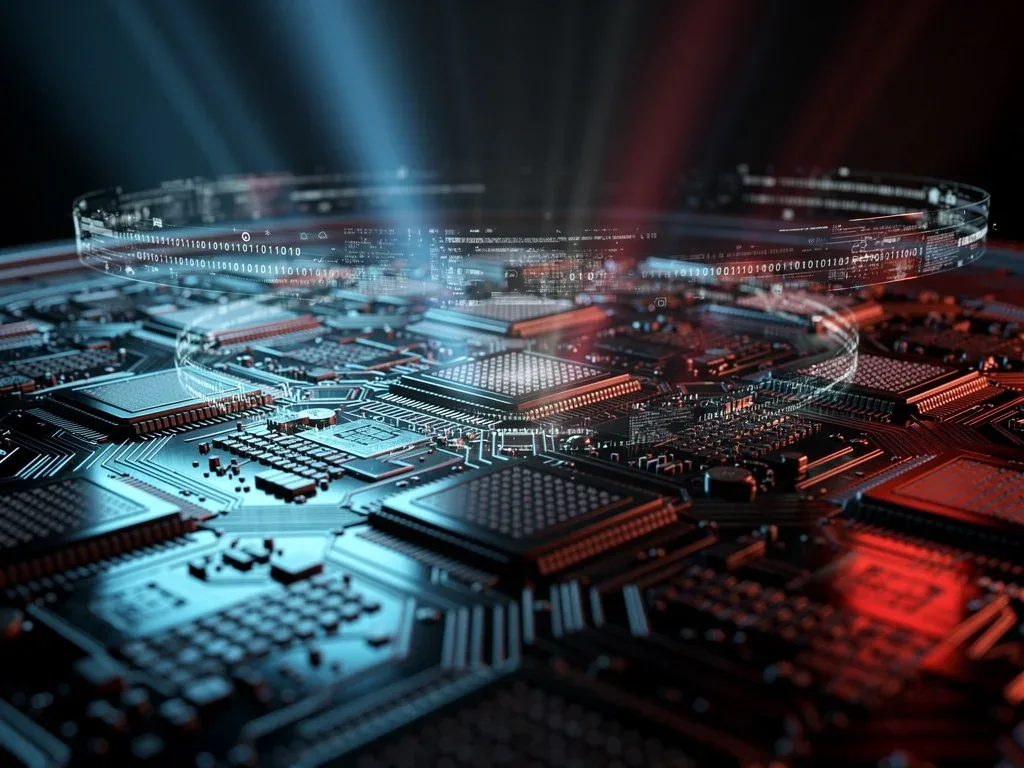
The semiconductor industry stands as the most critical battleground in the U.S.-China tech rivalry. Semiconductors are the brains of all modern electronics, from smartphones and cars to advanced military systems and artificial intelligence. China’s reliance on foreign-made advanced chips and manufacturing equipment is a significant vulnerability, and the U.S. has strategically targeted this dependency.
By 2026, U.S. export controls on semiconductor manufacturing equipment and advanced chip designs have severely impacted China’s ability to produce cutting-edge chips domestically. This has prompted China to double down on its indigenous chip development efforts, investing massive sums into its domestic semiconductor industry, aiming for self-sufficiency.
Strategic Importance and Vulnerabilities
The strategic importance of semiconductors cannot be overstated. They are foundational to virtually every other advanced technology. The current global supply chain for chips is incredibly complex and geographically concentrated, making it susceptible to disruptions from geopolitical tensions, natural disasters, or trade conflicts.
- Taiwan’s Pivotal Role: Taiwan Semiconductor Manufacturing Company (TSMC) produces the vast majority of the world’s most advanced chips, making Taiwan a critical flashpoint in the tech rivalry.
- Equipment Monopoly: Key equipment for manufacturing advanced chips is largely controlled by a handful of companies in the U.S., Netherlands, and Japan.
- Material Dependencies: The supply chain also relies on specialized materials and chemicals, often sourced from a limited number of suppliers globally.
The U.S. strategy aims to maintain its lead in chip design and exert control over the tools and technology needed to manufacture advanced chips, thereby limiting China’s military and technological ambitions. Meanwhile, China’s aggressive push for domestic alternatives highlights the long-term nature of this competition.
Sector 2: Artificial Intelligence – The Future of Innovation
Artificial Intelligence (AI) is another critical sector where the U.S.-China tech rivalry is intensely playing out. AI is poised to revolutionize industries, economies, and military capabilities, making leadership in this field a top national priority for both nations. From advanced algorithms to computing infrastructure, the competition is fierce.
By 2026, both countries have invested heavily in AI research and development, seeking to dominate areas such as machine learning, natural language processing, computer vision, and autonomous systems. The U.S. benefits from a strong ecosystem of innovation, leading research universities, and a vibrant private sector. China, with its vast data resources and government-backed initiatives, has made significant strides, particularly in AI applications for surveillance and public administration.
Ethical Dilemmas and Control of Data
The race for AI supremacy also brings forth significant ethical considerations and concerns over data control. The development and deployment of AI technologies raise questions about privacy, bias, and the potential for misuse. Both nations approach these issues from different philosophical and political perspectives.
- Data Access: China’s centralized data collection and less stringent privacy laws provide a massive dataset for training AI models, which can be an advantage.
- Ethical Frameworks: The U.S. emphasizes responsible AI development with a focus on fairness, transparency, and accountability, often through industry self-regulation and emerging governmental guidelines.
- Military Applications: The development of AI for defense purposes, including autonomous weapons systems, is a particularly sensitive area, raising international concerns about arms control and stability.
The U.S. has imposed restrictions on the export of certain AI technologies and components, particularly those with potential military applications, to China. This aims to slow China’s progress in advanced AI, especially in areas that could enhance its military capabilities or bolster its surveillance state, further complicating global AI development.

Sector 3: Quantum Computing – The Next Frontier
Quantum computing represents the ultimate frontier in computing technology, promising to solve problems currently intractable for even the most powerful classical supercomputers. This emerging field is another critical domain in the U.S.-China tech rivalry, with both nations pouring resources into research and development to achieve quantum supremacy.
By 2026, significant breakthroughs in quantum computing are anticipated, though widespread practical applications are still some years away. However, the potential for quantum computers to revolutionize cryptography, drug discovery, materials science, and artificial intelligence is immense, making it a high-priority area for strategic investment and competition.
Challenges and Strategic Investments
Developing viable quantum computers presents enormous scientific and engineering challenges. The technology is incredibly complex, requiring ultra-cold temperatures, sophisticated control systems, and new algorithms. Despite these hurdles, both the U.S. and China recognize its transformative potential and are investing heavily.
- Research Funding: Both governments are funding national quantum initiatives, establishing research centers, and fostering collaboration between academia and industry.
- Talent Acquisition: There is a global race to attract and retain top quantum scientists and engineers, with both countries seeking to build a leading talent pool.
- Intellectual Property: Securing patents and controlling key intellectual property in quantum computing is a major strategic objective, as it could confer long-term advantages.
The U.S. has implemented measures to prevent the transfer of sensitive quantum technology and expertise to China, fearing its potential military applications, particularly in breaking current encryption standards. This sector highlights the long-term, forward-looking nature of the tech rivalry, focusing on technologies that are still in their nascent stages but hold immense future power.
Adapting to a Fragmented Tech Landscape
The intensifying U.S.-China tech rivalry is fundamentally reshaping the global technology landscape, leading to a more fragmented and bifurcated system. Businesses, governments, and academic institutions worldwide are grappling with the implications of this new reality, forced to navigate complex regulatory environments, dual supply chains, and competing technological standards. The era of a truly globalized, open technological ecosystem appears to be waning, replaced by one characterized by strategic competition and national interests.
Companies are increasingly being pressured to choose sides or at least to clearly delineate their operations between the two major tech blocs. This ‘two-stack’ world, where different technological ecosystems operate with minimal interoperability, poses significant challenges for global commerce and innovation. Businesses must develop robust contingency plans and build resilience against further disruptions.
Strategies for Resilience and Innovation
In this fragmented environment, strategies for resilience and continued innovation are paramount. Governments are investing in domestic capabilities, supporting local industries, and forming alliances with like-minded nations to secure critical supply chains and foster technological development. For businesses, this means re-evaluating their global strategies.
- Diversification: Spreading investments and operations across multiple regions to reduce dependence on any single market or supply chain.
- Localization: Developing local R&D and manufacturing capabilities to serve specific regional markets and comply with local regulations.
- Strategic Partnerships: Collaborating with trusted partners in allied nations to pool resources and accelerate innovation in critical sectors.
The long-term implications of this fragmentation are still unfolding, but it is clear that adaptability, strategic foresight, and a deep understanding of geopolitical currents will be essential for success in the evolving global tech landscape. The shift away from pure economic efficiency towards national security and technological sovereignty is a defining trend of our time.
| Key Sector | Description of Impact |
|---|---|
| Semiconductors | U.S. export controls limit China’s access to advanced chips and manufacturing equipment, driving China’s push for indigenous production. |
| Artificial Intelligence | Intense competition in AI algorithms, computing, and applications, with U.S. sanctions targeting dual-use technologies. |
| Quantum Computing | Race for quantum supremacy with strategic investments and measures to prevent technology transfer due to potential military uses. |
| Supply Chain Disruptions | Sanctions and decoupling efforts lead to fragmented global networks, increased costs, and a push for supply chain redundancy. |
Frequently Asked Questions about the U.S.-China Tech Rivalry
What are the primary drivers of the U.S.-China tech rivalry in 2026?▼The rivalry is primarily driven by a competition for global technological leadership, national security concerns, and economic dominance. Both nations seek to control critical emerging technologies to secure their long-term strategic interests and influence international norms and standards.
Which key sectors are most affected by the increased sanctions?▼Three critical sectors are most affected: semiconductors, artificial intelligence (AI), and quantum computing. These areas are foundational for future innovation and military capabilities, making them central to U.S. efforts to restrict China’s technological advancement through sanctions and export controls.
How do these sanctions impact global supply chains?▼Sanctions create significant disruptions, leading to fragmented supply networks, increased operational costs, and a push for ‘de-risking’ or ‘decoupling’ from China. Companies are forced to seek supply chain redundancy, diversify manufacturing, and invest in local production to mitigate geopolitical risks.
What is China’s response to U.S. tech sanctions?▼China is aggressively pursuing technological self-sufficiency, investing massively in domestic research and development, particularly in semiconductors and AI. Its strategy focuses on indigenous innovation and building robust domestic supply chains to reduce reliance on foreign technology and circumvent U.S. restrictions.
What are the long-term implications of this tech rivalry for the global economy?▼The rivalry is likely to lead to a more fragmented global tech landscape, potentially creating distinct technological ecosystems. This could result in higher costs, slower innovation in some areas due to restricted collaboration, and a shift from efficiency-driven globalization to a system prioritizing national security and technological sovereignty.
Conclusion
The 2026 U.S.-China tech rivalry is a multifaceted and evolving challenge with profound implications for the global order. The strategic targeting of critical sectors like semiconductors, artificial intelligence, and quantum computing through increased sanctions and export controls highlights the depth of this competition. As both nations continue to vie for technological supremacy, businesses and policymakers worldwide must adapt to an increasingly fragmented and complex tech landscape. The future will likely be defined by continuous innovation, strategic diversification, and a careful balance between global cooperation and national interests in the pursuit of technological leadership.