U.S. Foreign Aid Reassessment 2026: Key Shifts and Geopolitics
Advertisements
The 2026 U.S. foreign aid reassessment critically examines how geopolitical shifts and national interests are redirecting financial support, leading to reduced funding for specific countries and reshaping global alliances.
Understanding the 2026 U.S. Foreign Aid Reassessment
The landscape of international relations is in constant flux, and few areas demonstrate this more clearly than foreign aid. In 2026, the United States is undertaking a significant U.S. foreign aid reassessment, a comprehensive review of its global financial assistance programs. This reevaluation is not merely a bureaucratic exercise; it reflects deep-seated geopolitical shifts, evolving national interests, and a strategic recalibration of American influence abroad.
This reassessment process involves a detailed analysis of aid effectiveness, recipient country stability, alignment with U.S. strategic objectives, and the emergence of new global challenges. The decisions made during this period will have profound implications for development, security, and diplomatic relations worldwide, signaling a new era in how America engages with the international community.
The drivers behind the aid review
Several key factors are compelling Washington to scrutinize its foreign aid budget. Economic pressures at home, coupled with a desire for greater accountability, are certainly influential. However, the most potent drivers are geopolitical, reflecting a world grappling with renewed great power competition and regional instabilities.
- Shifting Geopolitical Priorities: The rise of new global powers and the re-emergence of strategic competition have forced a re-evaluation of where U.S. aid can best serve American interests.
- Domestic Economic Pressures: Internal economic considerations and budget constraints often lead to calls for greater efficiency and selectivity in foreign spending.
- Effectiveness and Accountability: A continuous push to ensure that aid achieves its intended goals, fostering sustainable development and stability, rather than perpetuating dependency or corruption.
- Emerging Global Challenges: New threats like climate change, pandemics, and cyber warfare require adaptive and targeted aid responses that might necessitate reallocating resources.
The reassessment aims to streamline aid, making it more agile and responsive to contemporary global dynamics. It’s about optimizing impact and ensuring that every dollar spent aligns with a coherent foreign policy vision.
Ultimately, this reassessment signifies a strategic pivot. It moves beyond traditional aid models to embrace a more integrated approach where development assistance, security cooperation, and diplomatic engagement are closely intertwined. Understanding these underlying motives is crucial to comprehending the specific decisions regarding funding reductions for certain nations.
Geopolitical Undercurrents Shaping Aid Decisions
The decisions to reduce foreign aid to specific countries are rarely unilateral or solely based on economic metrics. Instead, they are often deeply embedded in a complex web of geopolitical considerations. The 2026 U.S. foreign aid reassessment is no exception, with strategic alliances, regional power balances, and emerging threats playing a pivotal role in determining who receives less funding.
These undercurrents reflect a broader re-thinking of American foreign policy, moving towards a more transactional and outcome-oriented approach. Nations that once received substantial aid might now find themselves marginalized if their strategic importance diminishes or if their actions diverge from U.S. interests.
The role of strategic competition
In an increasingly multipolar world, the U.S. is acutely aware of the influence exerted by rival powers. Foreign aid can be a tool in this strategic competition, either to bolster allies or to counter the growing presence of adversaries. Reductions in aid can thus signal a withdrawal of support or a punitive measure.
- Countering Rival Influence: Aid might be reduced to countries perceived as aligning too closely with competing global powers, or where U.S. influence is seen as waning.
- Strengthening Key Alliances: Conversely, aid may be redirected to strengthen crucial alliances in strategically vital regions.
- Promoting Democratic Values: Aid decisions often reflect a commitment to human rights and democratic governance, with reductions occurring where these values are perceived to be eroding.
The strategic calculus extends beyond immediate security concerns, encompassing economic partnerships, technological collaboration, and even cultural exchange. Every aid decision is now viewed through a lens of long-term geopolitical advantage and stability.
Furthermore, the U.S. is increasingly scrutinizing how aid recipients manage their own governance and economic development. Countries demonstrating poor governance, high levels of corruption, or a lack of commitment to self-sufficiency are more likely to see their aid packages curtailed. This emphasis on good governance is a critical component of the broader reassessment framework, linking financial support directly to internal reforms and accountability.
Country 1: Geopolitical Shifts and Aid Reduction
Our first country facing reduced U.S. foreign aid in 2026 is a nation in Southeast Asia, historically a recipient of significant development and security assistance. The decision to scale back aid reflects a complex interplay of factors, including its evolving relationship with China, internal political dynamics, and a perceived shift in its alignment with U.S. strategic objectives in the Indo-Pacific region.
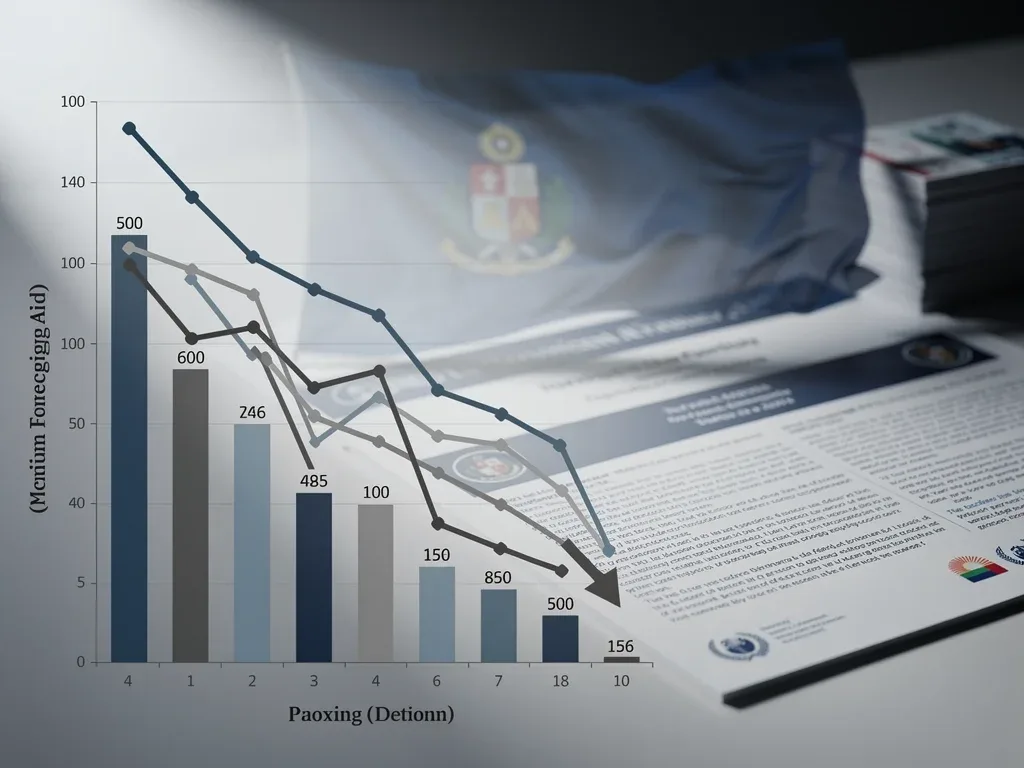
For decades, U.S. aid to this country focused on poverty reduction, health initiatives, and counter-terrorism efforts. However, recent years have seen a gradual pivot in the country’s foreign policy orientation, leading to a re-evaluation of its partnership status by Washington.
Reasons for the aid reduction
The primary reason for the reduction stems from the country’s increasing economic and diplomatic ties with Beijing. While not an outright adversarial stance, the U.S. views this growing relationship as potentially undermining regional stability and U.S. influence. This has led to a strategic reconsideration of the benefits derived from continued high levels of aid.
- Deepening Ties with China: Significant infrastructure investments from China and increased trade have shifted the country’s economic and political allegiances.
- Internal Political Instability: Recent political upheavals and a perceived weakening of democratic institutions have raised concerns in Washington regarding the effective use of aid.
- Divergence in Regional Security Priorities: The country’s approach to certain regional disputes no longer fully aligns with U.S. strategic interests, particularly concerning maritime security.
The U.S. is not abandoning the country entirely, but the reduction signals a clear message: future aid will be more conditional and targeted, focusing on areas where direct U.S. interests are unequivocally served, such as humanitarian assistance or very specific security cooperation.
The long-term implications of this aid reduction are substantial. It could lead to increased reliance on other global powers, potentially further entrenching the country within a different sphere of influence. Moreover, critical development programs that previously relied on U.S. funding may face significant shortfalls, impacting local populations and potentially exacerbating existing socio-economic challenges. This decision underscores the transactional nature of modern foreign policy, where aid is often a lever for strategic alignment.
Country 2: Shifting Alliances and Funding Adjustments
The second country facing reduced U.S. foreign aid is an African nation that has historically been a key partner in regional security and counter-terrorism initiatives. The reassessment of aid for this country is largely influenced by a complex interplay of internal governance challenges, a perceived lack of progress in democratic reforms, and the emergence of new security threats that demand a different strategic approach from the U.S.
For many years, U.S. assistance to this nation was pivotal in bolstering its military capabilities, supporting public health programs, and fostering economic development. However, recent developments have led Washington to question the efficacy and strategic value of continued high levels of funding.
Factors contributing to aid reduction
A primary factor in the decision to reduce aid is the country’s struggle with persistent corruption and a lack of accountability in its government. These issues have raised concerns about whether U.S. aid is genuinely reaching its intended beneficiaries and contributing to long-term stability rather than being siphoned off by corrupt elements.
- Governance Deficits: Ongoing issues with corruption, human rights abuses, and a slow pace of democratic reform have made continued broad-based aid difficult to justify.
- Evolving Security Landscape: While counter-terrorism remains a concern, the nature of threats in the region has diversified, requiring more specialized and less generalized security assistance.
- Lack of Sustainable Development Progress: Despite years of aid, fundamental economic and social indicators have shown slow improvement, prompting questions about the effectiveness of current aid strategies.
The U.S. aims to shift its engagement towards more targeted programs that support civil society, promote human rights, and build institutional capacity, rather than providing direct budgetary support or broad-based security aid that may not be effectively utilized.
This recalibration is part of a broader U.S. strategy to ensure that aid fosters genuine self-reliance and good governance, rather than inadvertently supporting problematic regimes. The reduction in aid is intended to incentivize reforms and encourage greater transparency. While potentially disruptive in the short term, the long-term goal is to cultivate a more stable and accountable partner, even if it means a temporary reduction in direct financial support. This move highlights a growing emphasis on conditional aid, linking assistance directly to tangible progress in governance and human rights.
Country 3: Regional Instability and Realigned Priorities
The third country experiencing a reduction in U.S. foreign aid is a nation in the Middle East, a region historically central to U.S. foreign policy due to energy security and geopolitical stability concerns. The reasons for this aid reduction are multifaceted, stemming from altered regional dynamics, the country’s own foreign policy choices, and a reassessment of U.S. strategic interests in a rapidly changing Middle Eastern landscape.

For decades, this country received substantial military and economic aid, intended to maintain regional balance and support specific U.S. objectives. However, the shifting alliances and emerging power vacuums across the Middle East have necessitated a fresh look at where U.S. resources can be most effectively deployed.
Underlying causes of the aid cut
A significant factor is the country’s perceived alignment with certain regional actors whose agendas diverge from or even contradict U.S. interests. This has created a dilemma for Washington, leading to a decision to scale back aid as a signal of displeasure and a means to pressure for policy changes.
- Divergent Regional Policies: The country’s foreign policy stances on key regional conflicts and alliances have increasingly clashed with U.S. objectives.
- Reduced Strategic Importance: While still important, the country’s strategic value to the U.S. has been re-evaluated in light of evolving energy markets and new geopolitical priorities.
- Human Rights Concerns: Persistent human rights issues and internal political repression have drawn international criticism, impacting the U.S.’s willingness to provide unconditional aid.
The U.S. is seeking to diversify its partnerships in the region, focusing on countries that demonstrate stronger alignment with its strategic goals and a greater commitment to democratic principles and human rights.
The reduction in aid to this Middle Eastern nation is indicative of a broader trend where the U.S. is becoming more selective and pragmatic in its regional engagements. It underscores a pivot away from unconditional support towards a more performance-based model, where aid is directly tied to a recipient’s adherence to certain political and strategic expectations. This move is likely to prompt a re-evaluation within the recipient country regarding its international positioning and internal policies, potentially leading to a period of diplomatic tension but also an opportunity for recalibration.
Impact and Repercussions of Aid Reductions
The reduction of U.S. foreign aid to these three countries, and potentially others, is not without significant consequences. These decisions ripple through the global economy and geopolitical landscape, affecting not only the recipient nations but also regional stability, international development efforts, and the broader perception of U.S. foreign policy. Understanding these impacts is crucial for grasping the full scope of the 2026 reassessment.
The immediate effects often manifest as budget shortfalls in critical sectors such as health, education, and infrastructure within the recipient countries. Over time, these reductions can lead to more profound geopolitical shifts, as affected nations seek alternative partnerships or face increased internal instability.
Economic and social consequences
For countries heavily reliant on U.S. aid, a reduction can create substantial economic strain. Development projects may be halted, social programs scaled back, and vulnerable populations could face increased hardship. This can, in turn, fuel social unrest and political instability, ironically creating new challenges for international security.
- Development Project Stalls: Essential infrastructure, health, and education initiatives often funded by U.S. aid may face immediate funding gaps.
- Increased Vulnerability: Populations reliant on aid for basic services, particularly in humanitarian contexts, could suffer significant setbacks.
- Economic Instability: Aid reductions can impact national budgets, currency stability, and overall economic growth, potentially leading to recessionary pressures.
Beyond the direct financial impact, there is also the loss of technical expertise and capacity building that often accompanies U.S. aid programs. This can hinder long-term institutional development and governance improvements.
Geopolitical shifts and new alliances
From a geopolitical standpoint, aid reductions can compel recipient nations to seek assistance from other global powers, potentially leading to a realignment of international alliances. This can complicate existing power balances and create new spheres of influence, particularly in regions where the U.S. is vying for strategic advantage.
- Diversification of Partnerships: Countries may turn to China, Russia, or other emerging donors for financial and technical assistance.
- Regional Power Vacuums: A reduced U.S. presence, even if subtle, can create opportunities for other nations to expand their influence.
- Diplomatic Strain: Aid reductions can strain bilateral relations, leading to diplomatic tensions and a less cooperative international environment.
The long-term implications are complex and unpredictable, ranging from new collaborative opportunities to increased regional rivalries. The U.S. must carefully weigh these potential repercussions, ensuring that aid reassessments serve its strategic interests without inadvertently creating greater instability or empowering adversaries.
The Future of U.S. Foreign Aid Policy
The 2026 U.S. foreign aid reassessment signals a pivotal moment, moving towards a more strategic and condition-based approach. This shift reflects a broader evolution in American foreign policy, prioritizing national interests, accountability, and the effective use of resources in a highly competitive global environment. The future of U.S. foreign aid will likely be characterized by greater selectivity, a focus on measurable outcomes, and closer alignment with defense and trade policies.
This reorientation is not about abandoning global engagement but rather refining it to maximize impact and reinforce American leadership in a world grappling with multifaceted challenges. It implies a departure from blanket aid programs towards more tailored interventions.
Key trends in future aid policy
Several distinct trends are emerging that will shape how the U.S. allocates its foreign assistance in the coming years. These trends emphasize strategic competition, private sector engagement, and a focus on resilience.
- Strategic Prioritization: Aid will increasingly be directed towards countries and regions deemed critical to U.S. national security and economic interests, often in competition with rival powers.
- Leveraging Private Sector Investment: A greater emphasis on attracting private capital and fostering self-sustaining economic growth, reducing reliance on direct governmental aid.
- Conditionality and Accountability: Aid will be more explicitly tied to good governance, democratic reforms, human rights, and measurable development outcomes.
- Focus on Resilience: Programs aimed at building climate resilience, pandemic preparedness, and economic stability will gain prominence, addressing systemic global risks.
The U.S. will also likely seek to enhance multilateral partnerships, working with international organizations and other donor countries to amplify the impact of its aid and share the burden of global development challenges.
Adapting to a changing world
The U.S. foreign aid apparatus is adapting to a world where traditional development challenges intersect with new geopolitical realities. This requires flexibility, innovation, and a willingness to adjust long-standing relationships. The goal is to ensure that aid remains a potent tool for advancing U.S. interests while contributing to a more stable and prosperous world.
This adaptation also involves a more nuanced understanding of local contexts and a commitment to empowering local actors. Sustainable development is best achieved when solutions are locally driven and owned. Therefore, future aid initiatives will likely incorporate more robust mechanisms for local participation and capacity building.
The reassessment is an ongoing process, and the specific details of future aid allocations will continue to evolve. However, the overarching direction is clear: U.S. foreign aid is becoming a more deliberate and strategically integrated component of its overall foreign policy toolkit, designed to navigate the complexities of the 21st century effectively.
| Key Point | Brief Description |
|---|---|
| Aid Reassessment 2026 | U.S. is reviewing foreign aid due to geopolitical shifts and national interests. |
| Geopolitical Drivers | Strategic competition, evolving alliances, and internal governance issues influence funding. |
| Impact on Recipients | Economic strain, social program cuts, and seeking alternative international partners. |
| Future Aid Policy | More strategic, conditional, and aligned with U.S. national security and economic goals. |
Frequently asked questions about U.S. foreign aid
Why is the U.S. reassessing its foreign aid in 2026?▼The U.S. is reassessing its foreign aid due to evolving geopolitical landscapes, increased strategic competition with other global powers, domestic economic pressures, and a desire to ensure aid effectiveness and accountability. This reevaluation aims to align aid more closely with current national interests and global challenges.
What factors lead to a reduction in U.S. foreign aid for a country?▼Factors leading to aid reduction include a country’s shifting alliances towards rival powers, persistent internal governance issues like corruption, lack of democratic reforms, human rights concerns, and a perceived divergence from U.S. strategic objectives in regional or global affairs. Aid is increasingly conditional on measurable progress.
How do aid reductions impact recipient countries?▼Aid reductions can lead to significant economic strain, stalled development projects, cuts in social programs like health and education, and increased vulnerability for populations. Geopolitically, it may compel recipient nations to seek partnerships with other global powers, potentially altering regional power balances and creating new spheres of influence.
What is the future direction of U.S. foreign aid policy?▼Future U.S. foreign aid policy is expected to be more strategic, selective, and outcome-oriented. It will prioritize national security and economic interests, leverage private sector investment, emphasize conditionality and accountability, and focus on building resilience against global threats like climate change and pandemics in key regions.
Are all U.S. foreign aid programs being cut?▼Not all U.S. foreign aid programs are being cut. The reassessment is a strategic recalibration, meaning some aid will be reduced or reallocated, while other programs, particularly those aligning with new strategic priorities or humanitarian needs, may be maintained or even increased. The goal is optimization, not complete withdrawal.
Conclusion
The 2026 U.S. foreign aid reassessment represents a critical inflection point in American foreign policy, reflecting a dynamic global environment characterized by shifting geopolitical alignments and evolving national interests. The decisions to reduce funding for specific countries are not arbitrary but are deeply rooted in a strategic recalibration aimed at optimizing the impact of U.S. assistance. This comprehensive review underscores a move towards more conditional, accountable, and strategically aligned foreign aid, ensuring that every dollar spent serves to advance U.S. objectives while fostering greater global stability and development. The repercussions for recipient nations will be significant, prompting them to re-evaluate their own international stances and seek diversified partnerships in an increasingly complex world.