Global Tax Policy Shifts by 2026: U.S. Multinationals’ Urgent Restructuring Guide
Advertisements
U.S. multinationals must proactively address the impending global tax policy shifts by 2026, particularly those stemming from the OECD’s BEPS 2.0 initiative, to redesign their operational and financial structures for sustained compliance and competitive advantage.
The landscape of international taxation is undergoing a seismic transformation, with profound implications for businesses worldwide. For U.S. multinationals, understanding and adapting to the impending global tax policy shifts by 2026 is not merely a compliance exercise but a strategic imperative that could define their future profitability and operational efficiency. Are your current structures robust enough to withstand these changes?
Understanding the Core of Global Tax Policy Shifts
The global tax environment is evolving rapidly, driven by a collective desire among nations to ensure multinational enterprises pay their fair share of taxes where economic activity occurs. This push is largely spearheaded by the Organization for Economic Co-operation and Development (OECD) through its Inclusive Framework on Base Erosion and Profit Shifting (BEPS 2.0). These initiatives aim to address the tax challenges arising from the digitalization of the economy and to establish a global minimum corporate tax rate. For U.S. multinationals, these shifts are not abstract concepts but tangible realities that will demand significant operational and financial re-evaluation. The traditional models of international tax planning are being fundamentally reshaped, requiring a proactive stance rather than a reactive one.
The two pillars of BEPS 2.0 are at the heart of these changes. Pillar One focuses on reallocating taxing rights to market jurisdictions, particularly for highly digitalized businesses, ensuring that profits are taxed where sales are made, regardless of physical presence. Pillar Two, on the other hand, introduces a global minimum corporate tax rate of 15%, designed to limit tax competition and prevent profit shifting to low-tax jurisdictions. Both pillars represent a departure from long-standing international tax principles and will require U.S. companies to scrutinize their existing structures, supply chains, and intercompany arrangements to ensure compliance and minimize adverse impacts. The complexity lies in the intricate details of implementation across various jurisdictions, each with its own interpretation and legislative process.
Pillar One: Reallocating Taxing Rights
Pillar One seeks to reallocate a portion of the profits of the largest and most profitable multinational enterprises to the jurisdictions where their customers are located, even if they lack a physical presence there. This is a significant shift from the traditional nexus-based taxation model. The aim is to ensure that taxing rights are more equitably distributed in an increasingly digitalized global economy.
- Scope of Application: Applies to multinational enterprises with global revenues above €20 billion and profitability above 10%.
- Amount A: Reallocates 25% of residual profit (profit exceeding 10% of revenue) to market jurisdictions.
- Unilateral Measures: Aims to replace existing and prevent new digital service taxes (DSTs) and similar unilateral measures.
The implementation of Pillar One will necessitate a granular understanding of revenue streams by jurisdiction and a re-evaluation of how profits are attributed. U.S. multinationals will need to develop sophisticated systems for tracking and reporting these figures, ensuring they can accurately calculate and allocate profits according to the new rules. This will likely involve significant investment in data analytics and tax technology solutions. The complexity is further compounded by the need to navigate diverse domestic legal frameworks that will transpose these international agreements into national law.
Pillar Two: The Global Minimum Tax and Its Impact
Pillar Two introduces a global minimum effective tax rate of 15% for multinational enterprises with annual revenues exceeding €750 million. This measure is designed to reduce incentives for profit shifting and to address concerns about tax competition among jurisdictions. The implications for U.S. multinationals are far-reaching, particularly for those with operations in low-tax countries or those that have historically benefited from tax holidays and incentives.
The core of Pillar Two is the Income Inclusion Rule (IIR) and the Undertaxed Profits Rule (UTPR). The IIR imposes a top-up tax on a parent entity with respect to the low-taxed income of its constituent entities. The UTPR acts as a backstop, denying deductions or requiring an equivalent adjustment to the extent that the low-taxed income of a constituent entity is not subject to tax under an IIR. These rules create a complex web of calculations and reporting requirements that will demand meticulous attention to detail.
Navigating the Income Inclusion Rule (IIR) and Undertaxed Profits Rule (UTPR)
The IIR and UTPR are central to Pillar Two, fundamentally altering how multinational income is taxed. U.S. multinationals must understand how these rules interact with existing U.S. tax provisions, such as GILTI (Global Intangible Low-Taxed Income), to avoid double taxation or unexpected liabilities. This requires a comprehensive review of their global effective tax rate and an assessment of potential top-up tax exposures.
- Effective Tax Rate Calculation: Requires a detailed calculation of the effective tax rate for each jurisdiction where a multinational operates.
- Top-Up Tax: The difference between the 15% minimum rate and the effective tax rate in a low-tax jurisdiction will be subject to a top-up tax.
- Interaction with GILTI: U.S. companies must analyze how Pillar Two rules will interact with the U.S. GILTI regime, potentially leading to additional complexities.
The implementation of Pillar Two will necessitate significant changes to financial reporting and tax compliance processes. Companies will need to gather and analyze vast amounts of data from their global operations to accurately calculate their effective tax rates and determine any top-up tax liabilities. This will likely require new systems and processes, as well as a significant investment in training for tax and finance teams. The interplay between Pillar Two and existing U.S. tax laws, particularly GILTI, presents a unique challenge that demands careful analysis and strategic planning.
The U.S. Response and Domestic Tax Implications
While the global consensus on BEPS 2.0 is strong, the specific implementation in the United States remains a critical factor for U.S. multinationals. The U.S. has its own set of international tax rules, notably GILTI, FDII (Foreign-Derived Intangible Income), and the BEAT (Base Erosion and Anti-abuse Tax), which already aim to address some of the issues targeted by BEPS 2.0. The challenge for U.S. policymakers is to align domestic legislation with the new global framework without disadvantaging U.S. companies or creating unnecessary complexity.
There is ongoing debate within the U.S. regarding how to best integrate Pillar Two into the existing tax code. Potential legislative changes could include modifications to GILTI to make it more compliant with the Pillar Two framework, or the introduction of new provisions to ensure U.S. companies are not subject to excessive top-up taxes in other jurisdictions. These domestic legislative developments will directly impact the restructuring strategies of U.S. multinationals, making it crucial to monitor policy discussions closely. The uncertainty surrounding the U.S. response adds another layer of complexity to an already intricate global tax landscape.
Potential Legislative Changes in the U.S.
The U.S. Treasury and Congress are actively evaluating how to adapt U.S. tax law to the new global minimum tax. The outcome of these discussions will significantly influence how U.S. multinationals structure their operations and manage their tax liabilities. Companies need to model various scenarios based on potential U.S. legislative actions.
- GILTI Modifications: The U.S. may adjust GILTI to align more closely with Pillar Two’s effective tax rate calculation.
- Domestic Minimum Tax: Consideration of a domestic minimum tax could help the U.S. retain taxing rights on U.S. multinational profits.
- Tax Treaty Adjustments: Existing U.S. tax treaties may need renegotiation or modification to accommodate the new global rules.
U.S. multinationals must engage with policymakers and tax advisors to understand the potential impact of proposed legislative changes. Proactive engagement can help shape the final form of U.S. tax law and ensure that business interests are adequately represented. Furthermore, understanding the interplay between potential U.S. changes and the Pillar Two rules implemented by other countries will be essential for effective global tax planning. This is a dynamic situation that requires constant vigilance and adaptability.
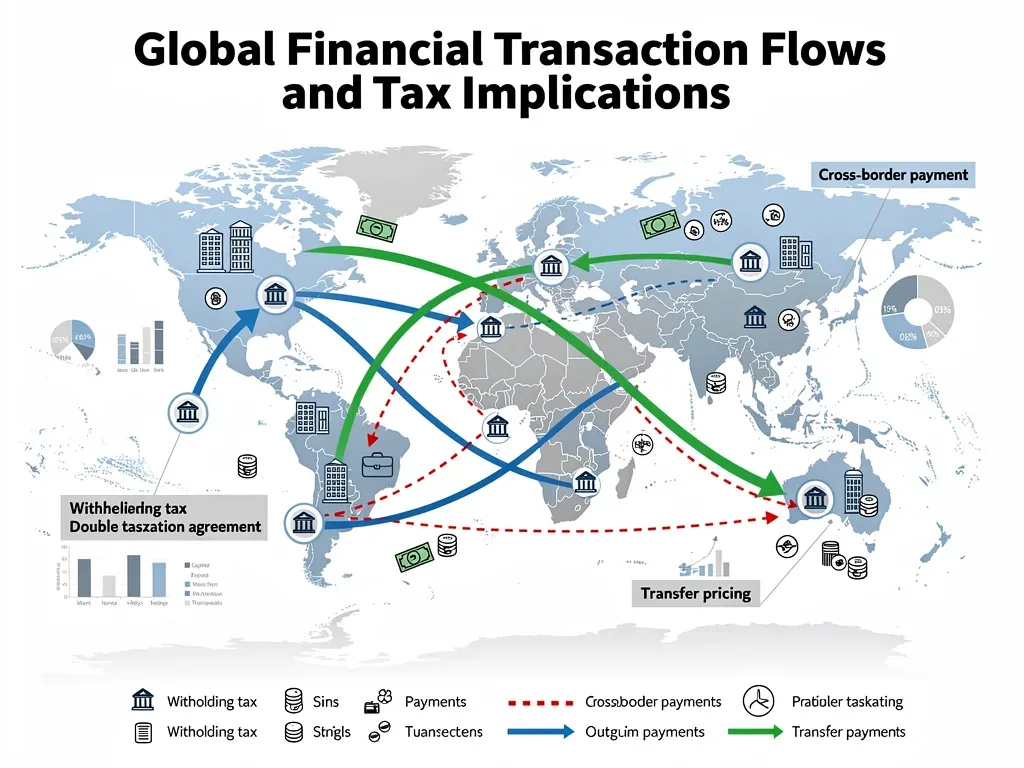
Restructuring Operational Frameworks for 2026
The impending global tax policy shifts by 2026 necessitate a comprehensive re-evaluation of operational frameworks for U.S. multinationals. This goes beyond mere tax compliance; it involves fundamental changes to legal entity structures, supply chain management, and the allocation of functions, assets, and risks across various jurisdictions. Companies that fail to adapt their operational models risk increased tax liabilities, administrative burdens, and potential disputes with tax authorities.
One key area of focus will be the location of intellectual property (IP) and research and development (R&D) activities. Historically, IP has often been housed in low-tax jurisdictions to minimize tax exposure. However, under Pillar Two, the benefits of such structures may be significantly diminished. Multinationals will need to assess whether their current IP structures still make economic sense or if a reallocation of IP ownership and development activities is warranted. Similarly, the physical location of key operational functions and decision-making centers will come under scrutiny, as taxing rights become more closely tied to economic substance. This could lead to a decentralization of certain functions or a consolidation in jurisdictions with a more favorable overall tax and regulatory environment.
Re-evaluating Supply Chains and Legal Entity Structures
The global minimum tax and revised profit allocation rules will directly impact the tax efficiency of existing supply chain models. U.S. multinationals need to analyze their end-to-end supply chains to identify areas of potential tax exposure and opportunities for optimization. This includes examining intercompany pricing, manufacturing locations, and distribution networks.
- Intercompany Pricing: Review and adjust transfer pricing policies to align with new profit allocation rules and avoid challenges from tax authorities.
- Manufacturing Footprint: Evaluate the tax implications of current manufacturing locations and consider relocating or diversifying production.
- Legal Entity Rationalization: Streamline legal entity structures to reduce complexity and administrative costs, while ensuring compliance with new regulations.
Beyond supply chains, the legal entity structure of a multinational group is a fundamental component of its tax profile. Companies should consider whether their current legal entities are optimally positioned to navigate the new tax landscape. This might involve consolidating entities, establishing new ones in strategic locations, or even divesting non-core operations. The goal is to create a lean, efficient, and tax-compliant structure that supports the business’s strategic objectives. This is not a one-time exercise but an ongoing process of adaptation to a dynamic tax environment.
Financial Restructuring and Capital Allocation
The impending global tax policy shifts by 2026 will also have significant implications for financial restructuring and capital allocation strategies for U.S. multinationals. Changes in effective tax rates and the introduction of top-up taxes can alter the attractiveness of certain investments and financing arrangements. Companies will need to reassess their capital structures, dividend policies, and intercompany financing strategies to optimize their global tax position and ensure efficient capital deployment.
For instance, the global minimum tax may reduce the benefits of using certain debt financing structures in low-tax jurisdictions. Multinationals might need to re-evaluate their internal funding models, considering factors such as interest deductibility limitations and the impact on their overall effective tax rate. Similarly, decisions regarding where to reinvest earnings, undertake share buybacks, or distribute dividends will be influenced by the new tax landscape. A comprehensive financial modeling exercise will be essential to understand the quantitative impact of these changes and to inform strategic financial decisions. The objective is to maintain financial flexibility and ensure that capital is allocated in a manner that maximizes shareholder value while remaining compliant with the new global tax rules.
Optimizing Intercompany Financing and Treasury Functions
Intercompany financing arrangements are a critical aspect of multinational financial structures and will be directly affected by Pillar Two. U.S. multinationals must review their intercompany loans, guarantees, and cash pooling arrangements to ensure they remain tax-efficient and compliant under the new rules. Treasury functions will also need to adapt to manage cash flows and liquidity in a more complex tax environment.
- Debt-Equity Mix: Reassess the optimal debt-to-equity ratio for various entities within the group, considering limitations on interest deductions.
- Cash Pooling and Management: Optimize global cash pooling structures to minimize tax friction and maximize efficiency under the new rules.
- Dividend Repatriation: Evaluate the tax efficiency of different dividend repatriation strategies and their impact on the overall effective tax rate.
The treasury function plays a pivotal role in managing a multinational’s global cash and liquidity. With the advent of Pillar Two, treasury teams will need to work even more closely with tax departments to understand the tax implications of their decisions. This might involve adjusting funding sources, hedging strategies, and investment policies to align with the new tax realities. The goal is to ensure that the multinational’s financial operations are not only efficient but also resilient to the evolving tax landscape, providing a strong foundation for future growth and profitability.

Leveraging Technology for Compliance and Efficiency
As global tax policy shifts by 2026 introduce unprecedented complexity, U.S. multinationals must increasingly rely on advanced technology solutions for effective compliance and operational efficiency. Manual processes and outdated systems will prove inadequate for managing the volume and intricacy of data required for Pillar One and Pillar Two calculations and reporting. Investing in robust tax technology is no longer an option but a necessity for navigating the new tax landscape successfully.
Tax technology can automate data collection, calculation, and reporting processes, significantly reducing the risk of errors and improving efficiency. This includes solutions for transfer pricing documentation, effective tax rate calculations, and the generation of country-by-country reports. Furthermore, advanced analytics and artificial intelligence (AI) can provide valuable insights into potential tax exposures and optimization opportunities, enabling proactive decision-making. The right technology infrastructure can transform the tax function from a cost center to a strategic enabler, providing real-time visibility into global tax positions and supporting informed business decisions. The sheer volume of data required for compliance under BEPS 2.0 makes manual processing virtually impossible for large multinationals.
Implementing Advanced Tax Technology Solutions
The adoption of specialized tax technology solutions is crucial for U.S. multinationals to manage the complexities of BEPS 2.0. These tools can streamline processes, enhance data accuracy, and provide the necessary audit trails for compliance. The focus should be on integrated platforms that can handle various aspects of international taxation.
- Data Management Systems: Implement systems to centralize and standardize financial and operational data from all global entities.
- Calculation Engines: Utilize specialized software to perform complex Pillar One and Pillar Two calculations, including effective tax rate and top-up tax computations.
- Reporting Tools: Adopt tools that can generate accurate and compliant tax reports for various jurisdictions, including country-by-country reporting.
Beyond mere compliance, advanced tax technology can offer strategic advantages. By providing granular data and analytical capabilities, companies can gain a deeper understanding of their global tax footprint and identify areas for potential tax optimization. This allows for more informed decision-making regarding operational structures, supply chains, and investment locations. Moreover, robust technology solutions can improve communication and collaboration between tax, finance, and operational teams, ensuring a unified approach to managing global tax challenges. The strategic use of technology will be a key differentiator for successful multinationals in the post-2026 tax environment.
Proactive Engagement and Future-Proofing Strategies
For U.S. multinationals, navigating the global tax policy shifts by 2026 requires a proactive and continuous engagement strategy. This involves not only understanding the current legislative developments but also anticipating future changes and adapting business models accordingly. A future-proof strategy goes beyond mere compliance; it aims to build resilience and agility into the organization’s tax and operational frameworks.
One critical aspect of this strategy is ongoing monitoring of legislative developments in key jurisdictions. The implementation of Pillar One and Pillar Two is a dynamic process, with countries continuously issuing guidance, regulations, and interpretations. Companies need dedicated resources to track these changes and assess their potential impact. Furthermore, engaging with industry associations, tax advisors, and policymakers can provide valuable insights and opportunities to influence the development of future tax policies. By staying informed and actively participating in the dialogue, multinationals can better position themselves to respond to emerging challenges and opportunities. The goal is to avoid being caught off guard by new regulations and to transform potential threats into strategic advantages.
Building a Resilient Global Tax Strategy
Developing a resilient global tax strategy involves a continuous cycle of assessment, adaptation, and monitoring. U.S. multinationals need to establish robust internal processes and external relationships to effectively manage the evolving tax landscape. This includes fostering a culture of tax awareness throughout the organization.
- Continuous Monitoring: Establish processes for continuous monitoring of global tax legislative and regulatory changes.
- Scenario Planning: Develop various tax scenarios to assess the potential impact of different policy outcomes on profitability and cash flow.
- Stakeholder Collaboration: Foster collaboration between tax, legal, finance, and operational teams to ensure a holistic approach to tax management.
Ultimately, future-proofing a multinational’s tax strategy means building a flexible and adaptable framework that can withstand unforeseen changes. This involves not only optimizing for current regulations but also designing structures that can be easily modified in response to future policy shifts. Investing in talent development for tax professionals, implementing advanced analytics, and fostering a robust compliance culture are all integral components of this long-term strategy. The era of static tax planning is over; the future demands dynamic and adaptive approaches to global taxation. Those who embrace this reality will be best positioned for sustained success in the years to come.
| Key Policy Shift | Brief Description and Impact |
|---|---|
| Pillar One (Amount A) | Reallocates taxing rights of large multinationals to market jurisdictions, impacting digital service providers and consumer-facing businesses. |
| Pillar Two (Global Minimum Tax) | Establishes a 15% global minimum corporate tax rate, requiring top-up taxes for low-taxed income; affects entities with revenues over €750M. |
| U.S. Domestic Response | Potential modifications to GILTI and other U.S. international tax rules to align with global standards, impacting U.S. multinationals’ compliance. |
| Operational Restructuring | Necessitates re-evaluation of legal entity structures, supply chains, and IP location to optimize for new tax rules. |
Frequently Asked Questions About Global Tax Shifts
What are the primary drivers behind the global tax policy shifts by 2026?▼The main drivers are the digitalization of the economy and concerns about base erosion and profit shifting. The OECD’s BEPS 2.0 initiative, comprising Pillar One and Pillar Two, aims to ensure multinational corporations pay a fair share of taxes where economic activity and value creation occur globally.
How will Pillar One specifically affect U.S. digital service companies?▼Pillar One will reallocate a portion of taxing rights to market jurisdictions where sales are made, regardless of physical presence. U.S. digital service companies exceeding revenue and profitability thresholds will need to track and report revenues by jurisdiction more meticulously to comply with these new profit allocation rules.
What is the global minimum tax under Pillar Two, and who does it impact?▼Pillar Two introduces a 15% global minimum corporate tax rate. It primarily impacts multinational enterprises with annual revenues exceeding €750 million. Companies with entities taxed below this rate in certain jurisdictions will face a top-up tax, potentially increasing their overall tax burden.
What kind of operational restructuring should U.S. multinationals consider?▼Restructuring may involve re-evaluating legal entity structures, optimizing supply chains, and reassessing the location of intellectual property and R&D activities. Companies should aim to align their operational models with the new tax substance requirements to minimize adverse tax impacts and ensure compliance.
Why is technology crucial for managing these global tax changes?▼Advanced tax technology is essential for managing the increased data volume and complexity introduced by Pillar One and Pillar Two. It automates data collection, calculation, and reporting, reducing errors, improving efficiency, and providing crucial insights for strategic decision-making in a rapidly evolving tax landscape.
Conclusion
The impending global tax policy shifts by 2026 represent a watershed moment for U.S. multinationals. The transition to a new international tax framework, driven by BEPS 2.0, demands more than just incremental adjustments; it necessitates a fundamental rethinking of corporate strategy, operational structures, and financial management. Proactive engagement, meticulous planning, and strategic investments in technology will be paramount for navigating this complex landscape. Companies that embrace these changes as an opportunity for strategic re-evaluation, rather than merely a compliance burden, will be best positioned to maintain their competitive edge, optimize their global tax footprint, and ensure sustainable growth in the years ahead. The time to restructure is now, to transform potential challenges into definitive advantages.