Biometric Apparel: 2026 Health-Monitoring Clothes in the US
Advertisements
By 2026, biometric apparel in the US will transform health monitoring, integrating advanced sensors into clothing for continuous, non-invasive data collection, offering practical solutions for preventive care and personalized wellness management.
Imagine a world where your clothes do more than just make a fashion statement; they actively monitor your health, providing real-time insights and potentially life-saving alerts. This isn’t science fiction anymore. The future of health monitoring is woven directly into our daily lives, and by 2026, biometric apparel will be a tangible reality across the United States, offering practical solutions for proactive wellness management.
The Dawn of Biometric Apparel: A Technological Leap
The concept of smart clothing has been around for some time, but the advancements in materials science, miniaturized electronics, and data processing have propelled biometric apparel from niche prototypes to viable consumer products. We are witnessing a fundamental shift in how we perceive and interact with our personal health data, moving from episodic check-ups to continuous, passive monitoring.
This technological leap is not merely about convenience; it’s about empowerment. Individuals can gain an unprecedented understanding of their body’s responses to daily activities, stress, and even subtle changes that might indicate an underlying health issue. The integration of these capabilities into everyday clothing makes health monitoring seamless and non-intrusive, a stark contrast to traditional wearable devices that often require conscious effort to wear or maintain.
Evolution of Smart Textiles
The foundation of biometric apparel lies in smart textiles, which are fabrics that can sense, react, and adapt to environmental stimuli or human input. Early smart textiles focused on aesthetic changes or temperature regulation. However, the latest generation incorporates conductive fibers, embedded micro-sensors, and flexible circuits capable of capturing complex physiological data.
- Conductive Yarns: These allow for the seamless integration of electrical pathways directly into the fabric, connecting sensors to processing units without bulky wires.
- Embedded Sensors: Tiny, flexible sensors can measure heart rate, respiration, skin temperature, and even bio-electrical signals like ECG.
- Energy Harvesting: Research is rapidly progressing on materials that can generate power from body movement or ambient light, reducing the need for frequent charging.
The seamless integration of these technologies ensures that the clothing remains comfortable, durable, and washable, critical factors for widespread adoption. This evolution promises a future where health monitoring is as natural and effortless as wearing clothes.
The transition from clunky gadgets to invisible integration is crucial. Consumers are increasingly seeking solutions that blend into their lifestyles rather than demanding conscious interaction. Biometric apparel delivers on this promise, making health data collection an inherent part of daily living. This marks a significant paradigm shift in personal health management.
Practical Applications Across Demographics in the US
The utility of biometric apparel extends far beyond the realm of professional athletes or tech enthusiasts. Its practical applications are poised to benefit a diverse range of demographics across the United States, offering tailored solutions for various health needs and lifestyles. From chronic disease management to enhancing athletic performance, the scope is vast and impactful.
For the aging population, biometric apparel can provide peace of mind for both individuals and their families. Continuous monitoring of vital signs can detect anomalies early, potentially preventing serious health crises. For those managing chronic conditions like diabetes or heart disease, these garments offer a discreet way to track key indicators and share data with healthcare providers, facilitating more personalized and timely interventions.
Enhancing Athlete Performance and Recovery
Athletes have long embraced technology to optimize training and recovery. Biometric apparel provides an advanced toolkit for performance enhancement, moving beyond simple step counters or heart rate monitors. These garments can track muscle exertion, lactic acid build-up, hydration levels, and even form during exercise.
- Real-time Feedback: Coaches and athletes can receive immediate data on performance metrics, allowing for on-the-fly adjustments to training regimens.
- Injury Prevention: By monitoring biomechanics and stress on specific muscle groups, apparel can alert users to potential injury risks before they manifest.
- Optimized Recovery: Data on sleep patterns, core body temperature, and physiological stress aids in tailoring recovery protocols for faster, more effective recuperation.
The precision offered by biometric clothing allows for highly individualized training programs, pushing the boundaries of human potential while simultaneously safeguarding against overtraining and injury.

Beyond sports, consider the implications for workers in physically demanding jobs, such as construction or emergency services. Monitoring their physiological state in real-time can prevent heatstroke, exhaustion, or other work-related health incidents. This proactive approach to health and safety could revolutionize workplace wellness programs.
Addressing Data Privacy and Security Concerns
As with any technology that collects sensitive personal information, data privacy and security are paramount concerns for biometric apparel. The intimate nature of health data necessitates robust safeguards to prevent unauthorized access, misuse, or breaches. Consumer trust will hinge on the transparency and reliability of these security measures.
Companies developing biometric apparel are acutely aware of these challenges and are investing heavily in encryption, anonymization techniques, and secure data storage. Regulations like HIPAA in the US provide a framework for protecting health information, but the unique characteristics of biometric data collected continuously from clothing require even more stringent protocols.
Ensuring User Control and Consent
A key aspect of building trust is empowering users with control over their data. This involves clear consent mechanisms, easy-to-understand privacy policies, and the ability to choose what data is collected, how it’s used, and with whom it’s shared. Users should feel confident that their personal health information is not being exploited or sold without their explicit permission.
- Opt-in Data Sharing: Users should have granular control over sharing data with healthcare providers, family members, or third-party wellness apps.
- Data Anonymization: For research and aggregate trend analysis, personal identifiers should be stripped from data to protect individual privacy.
- Regular Security Audits: Companies must regularly audit their systems and processes to identify and mitigate potential vulnerabilities, ensuring continuous protection.
The legal and ethical frameworks surrounding biometric data are still evolving. As biometric apparel becomes more prevalent, there will be an increased need for clear guidelines and industry standards to protect consumer rights and foster a secure data ecosystem. Open communication between developers, regulators, and consumers will be vital.
Ultimately, the success and widespread adoption of biometric apparel will depend not only on its technological capabilities but also on its ability to inspire confidence in users regarding the safety and privacy of their most personal information. Transparency and user empowerment will be the cornerstones of this trust.
Integration with Healthcare Systems and Personalized Medicine
The true transformative potential of biometric apparel lies in its integration with existing healthcare systems and its contribution to the burgeoning field of personalized medicine. Moving beyond simple self-monitoring, these garments can become integral tools for clinicians, enabling a more holistic and proactive approach to patient care. The continuous stream of physiological data offers an unprecedented window into a patient’s health status.
Imagine a scenario where your physician can access a longitudinal record of your vital signs, activity levels, and sleep patterns, not just from a single office visit, but over weeks or months. This rich dataset allows for more accurate diagnoses, tailored treatment plans, and early detection of deteriorating conditions, often before symptoms become severe enough to warrant a hospital visit.
Facilitating Remote Patient Monitoring
Remote patient monitoring (RPM) has gained significant traction, especially in managing chronic diseases and post-operative care. Biometric apparel elevates RPM by providing a less intrusive and more comprehensive data collection method than traditional devices. Patients can go about their daily lives while their health is continuously observed.
- Chronic Disease Management: For conditions like hypertension, congestive heart failure, or COPD, continuous monitoring helps track disease progression and medication efficacy from the comfort of the patient’s home.
- Post-operative Recovery: Early detection of complications like infections or cardiac irregularities can significantly improve recovery outcomes and reduce readmission rates.
- Preventive Care: Long-term data trends can highlight subtle shifts in health, allowing for early intervention and lifestyle adjustments to prevent more serious conditions from developing.
The data collected by biometric apparel can feed directly into electronic health records (EHRs), creating a comprehensive and up-to-date patient profile. This seamless data flow reduces administrative burden and ensures that healthcare providers have the most current information at their fingertips, leading to more informed clinical decisions.
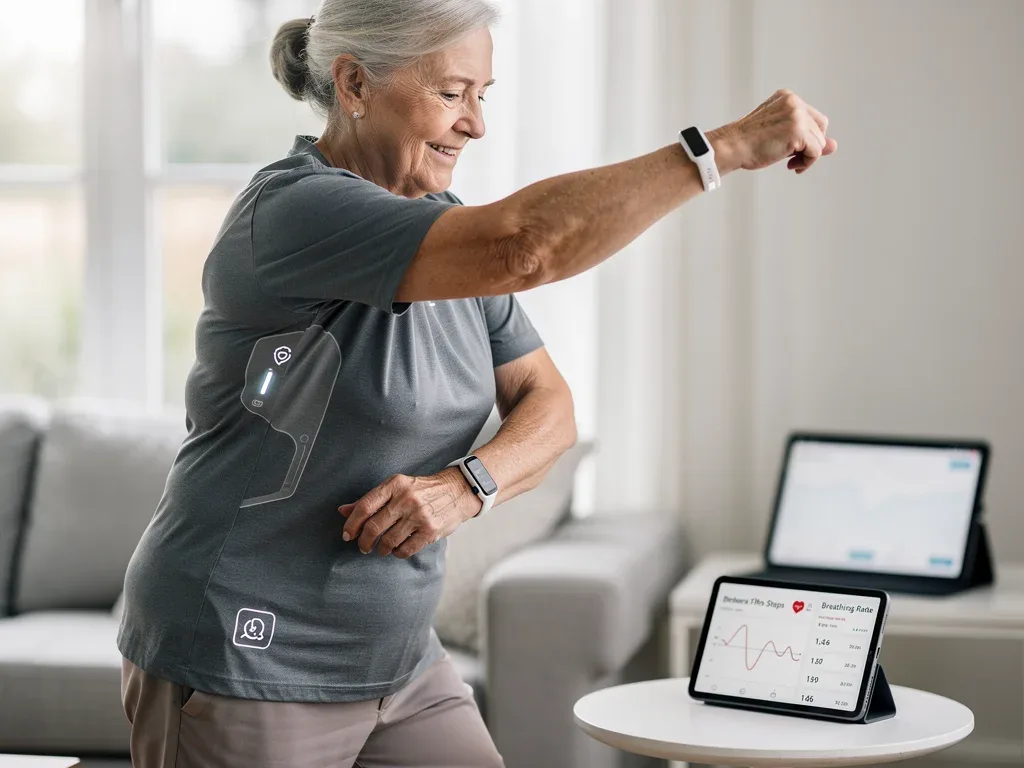
Personalized medicine, which tailors medical treatment to the individual characteristics of each patient, stands to benefit immensely. With detailed, real-time physiological data, treatments can be fine-tuned to a person’s unique biological responses, moving away from a one-size-fits-all approach. This promises more effective therapies and better patient outcomes.
Challenges and the Road Ahead for Widespread Adoption
Despite the immense promise of biometric apparel, several challenges must be overcome for widespread adoption in the US by 2026. These hurdles range from technological refinements and standardization to consumer education and cost. Addressing these issues proactively will be critical for unlocking the full potential of smart clothing.
One significant challenge is ensuring the accuracy and reliability of the data collected. While current sensors are highly capable, producing medical-grade data consistently in varied real-world conditions (e.g., during intense exercise or in different environmental temperatures) remains an area of ongoing research and development. Consumers need confidence in the data’s integrity for health-related decisions.
Technological Refinements and Standardization
The miniaturization of sensors, improved battery life, and enhanced data processing capabilities are continuously advancing. However, there is a need for industry-wide standardization to ensure interoperability between different brands of apparel and various health platforms. Without common protocols, data silos could emerge, hindering comprehensive health management.
- Battery Life: Extending the lifespan of integrated power sources without compromising comfort or washability is a key engineering challenge.
- Data Accuracy: Rigorous testing and validation are required to ensure that biometric apparel meets clinical accuracy standards for medical applications.
- Interoperability: Developing universal data formats and communication protocols will enable seamless integration with EHRs and other health applications.
The cost of biometric apparel is another barrier. While prices are expected to decrease with mass production, initial costs might be prohibitive for some consumers, particularly for advanced medical-grade garments. Making these technologies accessible and affordable will be crucial for equitable health benefits.
Furthermore, consumer education is vital. Many individuals may not fully understand the capabilities or limitations of biometric apparel, leading to either unrealistic expectations or underutilization. Clear communication about the benefits, proper use, and data privacy will be essential for fostering trust and encouraging adoption.
The Economic and Social Impact of Biometric Apparel
The proliferation of biometric apparel in the US will undoubtedly have profound economic and social impacts, reshaping industries and influencing societal norms around health and wellness. From job creation in advanced manufacturing to shifts in healthcare delivery models, the ripple effects will be extensive and transformative.
Economically, the smart textile industry is poised for significant growth, driving innovation in materials science, electronics, and software development. This will create new job opportunities and stimulate investment in research and development. Established apparel brands will likely integrate biometric capabilities, while new specialized companies will emerge, fostering a competitive and dynamic market.
Reshaping Insurance Models and Public Health
The availability of continuous, real-time health data could revolutionize the insurance industry. Insurers might offer incentives for individuals who actively monitor their health through biometric apparel, potentially leading to lower premiums for healthier lifestyles. This data could also inform public health initiatives, allowing for more targeted interventions and resource allocation.
- Preventive Care Focus: Insurance models could shift towards rewarding preventive behaviors, reducing the burden of chronic diseases.
- Epidemiological Insights: Aggregated, anonymized data from biometric apparel could provide invaluable insights into population health trends and disease outbreaks.
- Personalized Health Coaching: Data-driven insights can empower individuals with personalized recommendations for diet, exercise, and stress management, fostering a culture of proactive wellness.
Socially, biometric apparel could normalize continuous health monitoring, making it an accepted and even expected part of daily life. This could lead to a more health-conscious society, where individuals are more attuned to their body’s signals and more proactive in managing their well-being. The stigma associated with certain health conditions might diminish as data-driven insights become commonplace.
However, it’s also important to consider the potential for digital divides, where access to these advanced technologies might be unevenly distributed. Ensuring equitable access and addressing ethical considerations related to data interpretation and potential discrimination will be crucial for maximizing the positive social impact of biometric apparel.
Future Outlook: Beyond 2026 and Emerging Innovations
While 2026 marks a significant milestone for biometric apparel in the US, the trajectory of innovation extends far beyond this immediate horizon. The foundational technologies being developed now will pave the way for even more sophisticated and integrated health-monitoring solutions, blurring the lines between clothing, technology, and personal well-being.
Expect to see advancements in multi-modal sensing, where garments can simultaneously analyze a wider array of physiological parameters and even biochemical markers (e.g., sweat analysis for glucose or electrolyte levels). This comprehensive data collection will provide an even richer picture of individual health, enabling highly predictive and preventive healthcare models.
AI and Predictive Analytics in Biometric Apparel
The integration of artificial intelligence (AI) and machine learning will be transformative. AI algorithms can analyze the vast amounts of data collected by biometric apparel to identify subtle patterns, predict health risks, and offer personalized interventions. This moves beyond simply reporting data to actively interpreting it and providing actionable insights.
- Early Disease Detection: AI can detect minute physiological changes indicative of early-stage diseases, often before human perception.
- Personalized Wellness Coaching: AI-driven platforms can offer tailored advice on nutrition, exercise, and sleep based on individual biometric data and lifestyle.
- Stress and Mental Health Monitoring: Advanced sensors combined with AI could monitor physiological indicators of stress and anxiety, offering timely coping strategies or prompting professional help.
Furthermore, imagine clothing that can administer medication or deliver therapeutic interventions based on real-time biometric readings. While still in early research phases, this concept of active therapeutic apparel represents the ultimate evolution of smart clothing, turning garments into dynamic health partners.
The future of biometric apparel is not just about measuring; it’s about understanding, predicting, and actively managing health in a way that is seamlessly integrated into the fabric of our lives. The innovations emerging beyond 2026 will continue to redefine the boundaries of personal health technology, making proactive wellness an achievable reality for everyone.
| Key Aspect | Brief Description |
|---|---|
| Core Technology | Smart textiles with embedded micro-sensors and conductive fibers for physiological data collection. |
| Key Benefits | Continuous, non-invasive health monitoring, early detection, personalized wellness, and enhanced performance. |
| Main Challenges | Data privacy, security, accuracy, standardization, and initial cost for widespread adoption. |
| Future Outlook | AI integration, predictive analytics, multi-modal sensing, and active therapeutic interventions beyond 2026. |
Frequently Asked Questions About Biometric Apparel
What exactly is biometric apparel?▼Biometric apparel refers to clothing embedded with sensors and smart textiles that can continuously monitor various physiological parameters like heart rate, respiration, body temperature, and activity levels. It provides real-time health data in a non-invasive and integrated manner, blending technology seamlessly into everyday wear.
How accurate is the data collected by smart clothing?▼The accuracy varies by device and sensor type, but advancements are rapidly pushing towards medical-grade precision. For general wellness tracking, current devices are highly reliable. For critical medical applications, ongoing validation and regulatory approvals are essential to ensure the data meets clinical standards for diagnosis and treatment decisions.
What are the main privacy concerns with biometric apparel?▼Primary concerns include unauthorized access, data breaches, and the potential misuse of sensitive personal health information. Robust encryption, anonymization, and clear user consent mechanisms are being developed to safeguard data. Regulations like HIPAA also provide a framework, but specific guidelines for this emerging technology are still evolving.
Who stands to benefit most from biometric apparel?▼A wide range of individuals will benefit, including athletes seeking performance optimization, elderly individuals needing continuous monitoring, patients managing chronic diseases, and anyone interested in proactive health and wellness. Its non-intrusive nature makes it ideal for long-term, passive data collection across various demographics.
Will biometric apparel replace traditional doctor visits?▼No, biometric apparel is intended to complement, not replace, traditional medical care. It provides continuous data that can empower individuals and inform healthcare providers, leading to more personalized and proactive interventions. It enhances preventive care and remote monitoring, but professional medical diagnosis and treatment remain crucial.
Conclusion
The advent of biometric apparel by 2026 in the US is not just a technological upgrade; it represents a fundamental shift in how we approach personal health and wellness. These smart garments promise a future where health monitoring is seamless, proactive, and deeply integrated into our daily lives. While challenges related to data privacy, accuracy, and standardization remain, the benefits of continuous, non-invasive health insights are undeniable. As innovation continues and these technologies become more accessible, biometric apparel will empower individuals, transform healthcare delivery, and foster a more health-conscious society, truly weaving well-being into the fabric of our existence.