Future of Workwear: Smart Fabrics & Functionality in US 2026
Advertisements
The future of workwear in the US by 2026 is rapidly evolving, integrating smart fabrics and advanced functionality to enhance safety, comfort, and productivity for the modern workforce.
As we approach 2026, the landscape of professional attire is undergoing a significant transformation, moving beyond mere aesthetics to embrace cutting-edge technology. The future of workwear: smart fabrics and functionality for the US workforce in 2026 is no longer a distant concept but a tangible reality, reshaping how employees interact with their environment and perform their tasks. This evolution promises not only enhanced safety and comfort but also a new era of productivity and data-driven insights in various industries.
The rise of smart textiles in professional environments
The integration of smart textiles into workwear represents a pivotal shift, moving garments from passive coverings to active tools. These innovative fabrics are engineered to perform a multitude of functions, from monitoring vital signs to regulating temperature, fundamentally altering the daily experience of the US workforce. The initial adoption may focus on high-risk sectors, but the benefits are quickly becoming apparent across a broader spectrum of professions.
One of the primary drivers behind this innovation is the increasing demand for enhanced safety. Traditional protective gear, while effective, often compromises comfort and mobility. Smart textiles offer a solution that merges protection with flexibility, making work environments safer without hindering performance. This balance is crucial for maintaining morale and reducing fatigue among workers.
Advanced sensor integration for health and safety
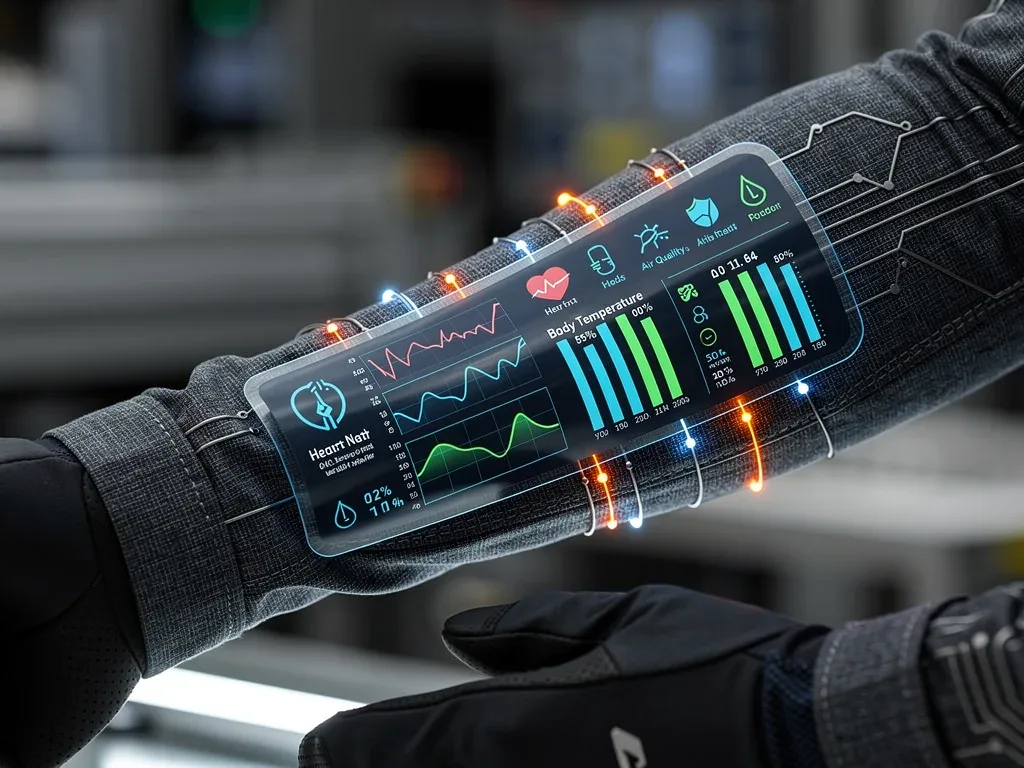
Smart workwear is increasingly incorporating miniature sensors capable of monitoring a range of physiological data points. These sensors can track heart rate, body temperature, and even detect early signs of fatigue or stress, providing invaluable real-time insights for both the individual and their supervisors.
- Biometric monitoring: Tracking vital signs to prevent heatstroke or overexertion, particularly in physically demanding jobs.
- Environmental hazard detection: Sensors that can identify exposure to harmful chemicals, radiation, or extreme temperatures.
- Fall detection: Accelerometers and gyroscopes embedded in clothing that can detect a fall and automatically alert emergency services.
- Posture correction: Garments that provide haptic feedback to help workers maintain ergonomic postures, reducing the risk of musculoskeletal injuries.
The data collected by these integrated sensors isn’t just for immediate alerts; it also provides a rich source of information for long-term health and safety protocols. By analyzing trends, companies can proactively address potential risks, optimize work schedules, and implement targeted training programs. This data-driven approach is transforming workplace safety from reactive to predictive, a significant step forward for the US workforce.
Beyond safety, smart textiles are also contributing to a more comfortable working experience. Imagine workwear that adapts to changing weather conditions, keeping you warm in the cold and cool in the heat, all without bulky layers. This level of adaptive functionality is becoming a reality, significantly improving worker well-being and, consequently, productivity.
Enhanced functionality: beyond basic protection
The evolution of workwear transcends mere protective qualities, venturing into areas of active assistance and seamless integration with digital workflows. By 2026, work garments will not only shield workers from hazards but also empower them with augmented capabilities, making their jobs more efficient and less strenuous. This new generation of workwear is a testament to how technology can be woven into our daily lives, particularly in professional contexts.
The focus is on creating a symbiotic relationship between the worker and their attire, where clothing becomes an extension of their tools and senses. This integration is particularly crucial in industries where precision, speed, and real-time information are paramount. From logistics to manufacturing, advanced functionality in workwear is set to redefine operational standards.
Consider the potential for self-cleaning fabrics or materials that actively repel stains and odors. This reduces maintenance costs and ensures a consistently professional appearance, a small but significant detail that contributes to overall worker satisfaction. The convenience offered by such innovations cannot be overstated in busy professional environments.
Adaptive clothing and climate control
One of the most anticipated functionalities is adaptive clothing that can automatically adjust to environmental conditions. This technology is especially beneficial for outdoor workers or those in environments with fluctuating temperatures, eliminating the need for multiple layers or frequent clothing changes.
- Thermo-regulating materials: Fabrics that can absorb, store, and release heat to maintain optimal body temperature.
- Moisture-wicking and quick-drying: Advanced materials that efficiently pull sweat away from the skin, preventing discomfort and chafing.
- UV protection: Integrated fabrics that offer superior protection against harmful ultraviolet rays, crucial for outdoor professions.
These innovations not only enhance comfort but also contribute to worker health by preventing issues like heat stress or hypothermia. The ability of workwear to intelligently respond to the environment means workers can focus more on their tasks and less on managing their personal comfort. This proactive approach to well-being is a hallmark of future workwear design.
Integration with IoT and wearable technology
The confluence of workwear with the Internet of Things (IoT) and other wearable technologies is creating an ecosystem of connected garments. This integration allows for a seamless flow of data, transforming how tasks are performed, monitored, and optimized across various industries. By 2026, it will be common for work attire to communicate with machinery, smart environments, and even other workers, creating a highly interconnected workplace.
The true power of this integration lies in its ability to provide real-time feedback and automation. Imagine a construction worker whose gloves provide haptic feedback when they are gripping a tool incorrectly, or a logistics professional whose jacket lights up to guide them to the next package. These scenarios, once confined to science fiction, are rapidly becoming practical applications in the US workforce.
Data-driven insights for operational efficiency
The data collected from IoT-enabled workwear offers unprecedented opportunities for optimizing operational efficiency. This includes everything from tracking worker movements to monitoring equipment usage, providing a holistic view of workplace performance.
- Asset tracking: Embedded RFID or GPS tags in uniforms to track personnel and equipment within a facility.
- Performance analytics: Data on movement patterns, task completion times, and interactions with machinery to identify bottlenecks and improve workflows.
- Proactive maintenance: Sensors in workwear that can detect vibrations or anomalies in equipment through physical contact, signaling the need for maintenance before a breakdown occurs.
- Enhanced communication: Integrated microphones and speakers for hands-free communication, improving coordination and response times.
This wealth of data empowers businesses to make informed decisions, leading to more efficient processes, reduced waste, and improved resource allocation. The insights gained from connected workwear can drive continuous improvement initiatives, ensuring that companies remain competitive and agile in a rapidly changing market. The ability to analyze data from individual workers and aggregate it for broader trends offers a powerful tool for management.
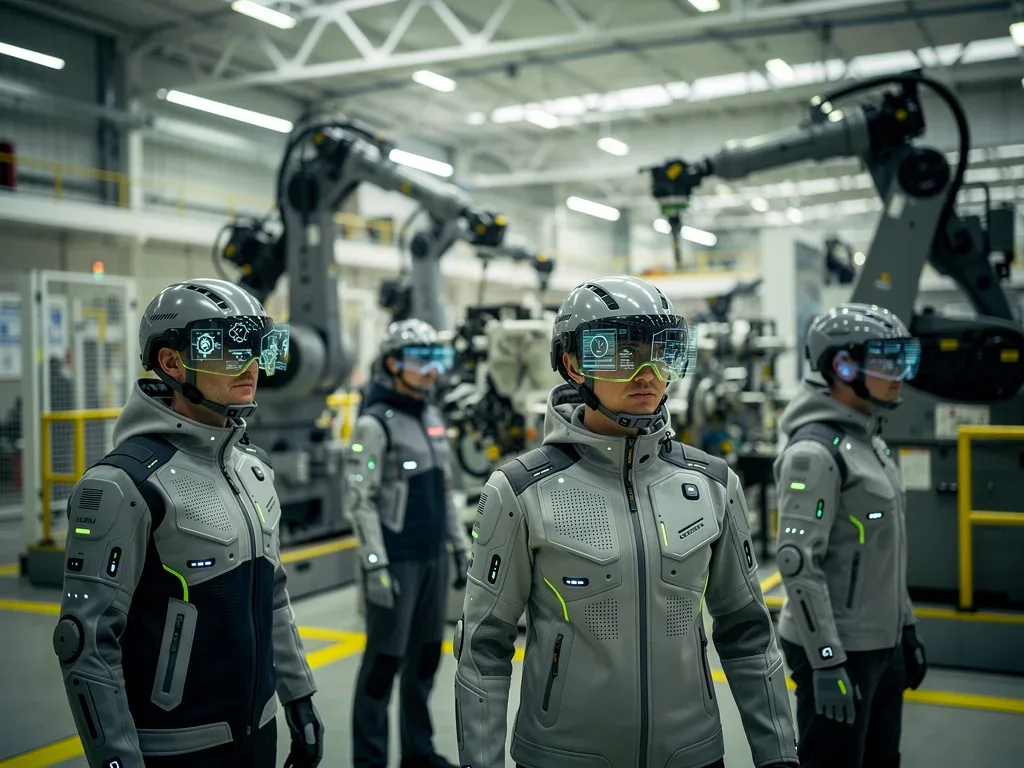
Furthermore, the integration extends to augmented reality (AR) and virtual reality (VR) devices, which can be seamlessly incorporated into headwear or safety glasses. This provides workers with overlaid digital information, interactive manuals, or even remote assistance from experts, all while keeping their hands free for tasks. This level of digital augmentation is set to revolutionize training and complex task execution.
Sustainability and ethical considerations in workwear
As technology advances, so too does our awareness of its environmental and social impact. The future of workwear in 2026 is not just about smart functionality but also about sustainable practices and ethical production. Consumers and corporations alike are demanding greater transparency and accountability from manufacturers, driving a shift towards eco-friendly materials and fair labor practices.
The lifecycle of workwear, from raw material sourcing to disposal, is coming under scrutiny. Companies are realizing that their environmental footprint is a critical component of their brand image and corporate social responsibility. This push for sustainability is leading to innovative solutions in fabric development and manufacturing processes.
Eco-friendly materials and circular economy principles
The development of sustainable textiles is a key focus, with researchers exploring new materials and methods that minimize environmental harm. This includes everything from recycled fibers to biodegradable components, aiming to create a circular economy for workwear.
- Recycled fabrics: Utilizing materials derived from post-consumer waste, such as plastic bottles or discarded textiles, to reduce landfill burden.
- Biodegradable materials: Developing fabrics that can naturally decompose at the end of their life cycle, minimizing pollution.
- Low-impact dyes: Employing dyeing processes that use less water and fewer harmful chemicals.
- Modular design: Creating garments with replaceable components to extend their lifespan and reduce waste.
Beyond materials, ethical considerations regarding labor practices are also paramount. Ensuring fair wages, safe working conditions, and preventing exploitation throughout the supply chain is becoming a non-negotiable aspect of workwear production. Companies are increasingly auditing their suppliers and adopting certifications to demonstrate their commitment to ethical sourcing.
The challenge lies in balancing advanced functionality with sustainability. Smart components often require specific materials and manufacturing processes that may not always align with eco-friendly goals. However, innovations in biodegradable electronics and energy-efficient manufacturing are helping to bridge this gap, ensuring that the workwear of the future is both smart and responsible.
Industry-specific applications and adoption trends
The adoption of smart workwear will not be uniform across all sectors. Different industries have distinct needs and priorities, which will dictate the pace and nature of integration. By 2026, we anticipate seeing particular industries at the forefront of this technological shift, leveraging smart fabrics and functionality to address their unique challenges and enhance their competitive edge.
The initial wave of adoption is likely to be concentrated in sectors where safety is paramount, and the return on investment for improved efficiency is clear. However, as costs decrease and technology becomes more refined, the benefits of smart workwear will extend to a much broader range of professions, fundamentally altering the daily routine for millions of US workers.
Understanding these industry-specific applications is crucial for anticipating the broader impact of smart workwear on the US economy. It also highlights the versatility of these technologies, demonstrating how they can be tailored to meet diverse professional demands.
Key sectors leading the innovation
Several industries are poised to be early adopters and innovators in the realm of smart workwear, driven by specific requirements for safety, precision, and data collection.
- Construction and manufacturing: Focus on injury prevention, environmental monitoring, and communication in hazardous environments.
- Healthcare: Biometric monitoring for patients and caregivers, ergonomic support, and contamination prevention.
- Logistics and warehousing: Enhanced navigation, package tracking, and fatigue monitoring for long shifts.
- First responders and military: Advanced protective gear, communication systems, and situational awareness tools.
- Agriculture: Protection from elements, pest detection, and real-time data on crop health through integrated sensors.
Each of these sectors presents unique challenges that smart workwear can effectively address, leading to significant improvements in worker safety, efficiency, and overall operational performance. The insights gained from these early adoptions will inform the development of more generalized smart workwear solutions.
Beyond these established industries, emerging sectors like renewable energy installation and advanced robotics will also see rapid adoption. The need for specialized protection and seamless interaction with complex machinery makes smart workwear an indispensable tool for these evolving fields. The trend indicates a future where workwear is not merely a uniform but a critical piece of professional equipment.
Challenges and opportunities for widespread adoption
While the benefits of smart workwear are compelling, its widespread adoption by 2026 faces several challenges. These include cost, privacy concerns, standardization, and the need for robust infrastructure. Overcoming these hurdles will be crucial for realizing the full potential of these transformative technologies across the US workforce. However, each challenge also presents an opportunity for innovation and strategic development.
Addressing these issues requires a collaborative effort from manufacturers, employers, policymakers, and workers themselves. Open dialogue and proactive solutions will pave the way for a smoother transition into this new era of professional attire. The successful integration of smart workwear will depend on careful planning and a clear understanding of both its advantages and its complexities.
Navigating the complexities of implementation
The path to pervasive smart workwear involves tackling a range of practical and ethical considerations that extend beyond technological capabilities. These are not insurmountable but require careful thought and strategic planning.
- Cost of technology: Initial investment in smart fabrics and integrated electronics can be high, requiring a clear demonstration of ROI for businesses.
- Data privacy and security: Protecting sensitive biometric and location data collected by smart workwear from unauthorized access and misuse.
- Standardization and interoperability: Establishing common protocols and standards to ensure different smart workwear components and systems can communicate effectively.
- User acceptance and training: Educating workers on the benefits and proper use of smart workwear, addressing concerns about comfort and surveillance.
- Maintenance and durability: Ensuring that smart components can withstand the rigors of various work environments and are easily repairable or replaceable.
Despite these challenges, the opportunities for innovation are immense. Developers are constantly working on reducing costs, improving battery life, and enhancing the ruggedness of smart components. Furthermore, the development of clear regulatory frameworks and ethical guidelines will build trust and facilitate broader acceptance.
The potential for increased worker safety, improved efficiency, and enhanced comfort offers a powerful incentive for overcoming these obstacles. As companies recognize the long-term value proposition, investments in smart workwear infrastructure and development will continue to grow, making it an indispensable part of the modern workplace by 2026.
The future outlook: a connected and protected workforce
Looking ahead to 2026, the trajectory for workwear in the US is clear: a future where garments are integral to worker safety, productivity, and well-being. The advancements in smart fabrics and functionality are not merely incremental improvements but represent a fundamental shift in how we conceive of professional attire. This evolution will lead to a more connected and protected workforce, capable of performing tasks with greater efficiency and in safer conditions than ever before.
The widespread adoption of these technologies will necessitate ongoing innovation, not just in materials science and electronics, but also in data analytics, cybersecurity, and ethical guidelines. The collaborative efforts of industry, academia, and government will be essential in shaping a future where smart workwear benefits everyone, from the individual worker to the largest corporations.
By embracing these changes, the US workforce will be better equipped to meet the demands of an increasingly complex and technologically advanced global economy. The investment in smart workwear is an investment in human capital, fostering a healthier, safer, and more productive professional environment for years to come.
| Key Trend | Brief Description |
|---|---|
| Smart Fabrics | Textiles with embedded sensors for biometric monitoring, environmental detection, and adaptive properties. |
| Enhanced Functionality | Workwear offering active assistance, climate control, and ergonomic support beyond basic protection. |
| IoT Integration | Seamless connection of workwear with digital workflows, providing real-time data and communication. |
| Sustainability Focus | Emphasis on eco-friendly materials and ethical production practices in workwear manufacturing. |
Frequently asked questions about future workwear
What are smart fabrics in the context of workwear?▼Smart fabrics are textiles engineered with embedded technologies like sensors, microcontrollers, and conductive fibers. In workwear, they can monitor vital signs, detect environmental hazards, regulate temperature, and provide real-time data to enhance worker safety, comfort, and productivity across various industries.
How will smart workwear improve worker safety by 2026?▼By 2026, smart workwear will significantly improve safety through continuous biometric monitoring, fall detection, and environmental hazard alerts. It can prevent overexertion, detect harmful exposures, and provide immediate alerts in emergencies, transforming safety from reactive to predictive in various US workplaces.
What role does IoT play in future workwear?▼IoT integrates workwear with digital ecosystems, allowing garments to communicate with machinery and smart environments. This enables real-time data flow for performance analytics, asset tracking, proactive maintenance, and enhanced hands-free communication, streamlining operations and improving decision-making across industries.
Are there sustainability concerns with smart workwear?▼Yes, while beneficial, smart workwear faces sustainability challenges due to complex materials and manufacturing. However, there’s a strong push for eco-friendly solutions like recycled fabrics, biodegradable components, and low-impact dyes. Ethical production and circular economy principles are also becoming crucial considerations to minimize environmental impact.
Which US industries will adopt smart workwear first?▼Industries with high safety risks and clear efficiency gains will be early adopters. This includes construction, manufacturing, healthcare, logistics, and first responders. Their specific needs for enhanced protection, real-time data, and improved communication make smart workwear an invaluable asset for their operations.
Conclusion
The journey towards 2026 reveals a transformative era for workwear in the US, characterized by the intelligent integration of smart fabrics and advanced functionality. This evolution is poised to redefine standards of safety, comfort, and productivity across diverse industries. From biometric monitoring to environmental sensing and seamless IoT integration, professional attire is transitioning from passive garments to active, data-rich tools. While challenges such as cost, privacy, and standardization remain, the overwhelming benefits—including enhanced worker well-being, operational efficiency, and a reduced environmental footprint through sustainable practices—will drive widespread adoption. The future of workwear is not just about what we wear, but how it empowers us, creating a more connected, protected, and productive workforce ready for the demands of tomorrow.